
How much water should you drink every day? The answer depends on your age, sex, activity level, climate, and overall health. According to the National Academies of Sciences, Engineering, and Medicine, most healthy adults should aim for about 3.7 litres of total daily fluids for men and 2.7 litres for women, including fluids from both drinks and food.
Understanding how much water should you drink every day can help you build healthier hydration habits and avoid both dehydration and overhydration.
There isn’t a one-size-fits-all recommendation, but understanding your body’s needs can help you stay properly hydrated and support your overall health. The truth is, your daily water intake depends on several factors, including your age, body size, activity level, diet, climate, and overall health. While water is essential for life, there isn’t a one-size-fits-all recommendation.
Staying hydrated does far more than quench your thirst. It helps regulate body temperature, supports brain function, cushions your joints, aids digestion, transports nutrients, and allows your organs to work efficiently. Even mild dehydration can leave you feeling tired, unfocused, and less productive.
In this guide, you’ll learn how much water should you drink every day, what affects your daily water intake, and how proper hydration can improve your health.
If you’re looking for a quick answer to how much water should you drink every day, here are the general recommendations for healthy adults:
| Person | Recommended Daily Fluid Intake* |
|---|---|
| Adult men | About 3.7 litres (125 oz) |
| Adult women | About 2.7 litres (91 oz) |
These recommendations include fluids from water, tea, coffee, milk, soups, and water-rich foods like fruits and vegetables. Your daily needs may be higher if you exercise regularly, live in a hot climate, are pregnant or breastfeeding, or are recovering from an illness.
Remember, these are general guidelines. Your individual needs may be higher or lower depending on your lifestyle and health.
Why Water Is Essential for Your Body
Think of water as your body’s transport system. Nearly every organ depends on it to function properly.
Water makes up roughly 60% of the adult human body, and every single cell relies on it. Without enough water, your body begins to slow down, much like a car trying to run with very little fuel.
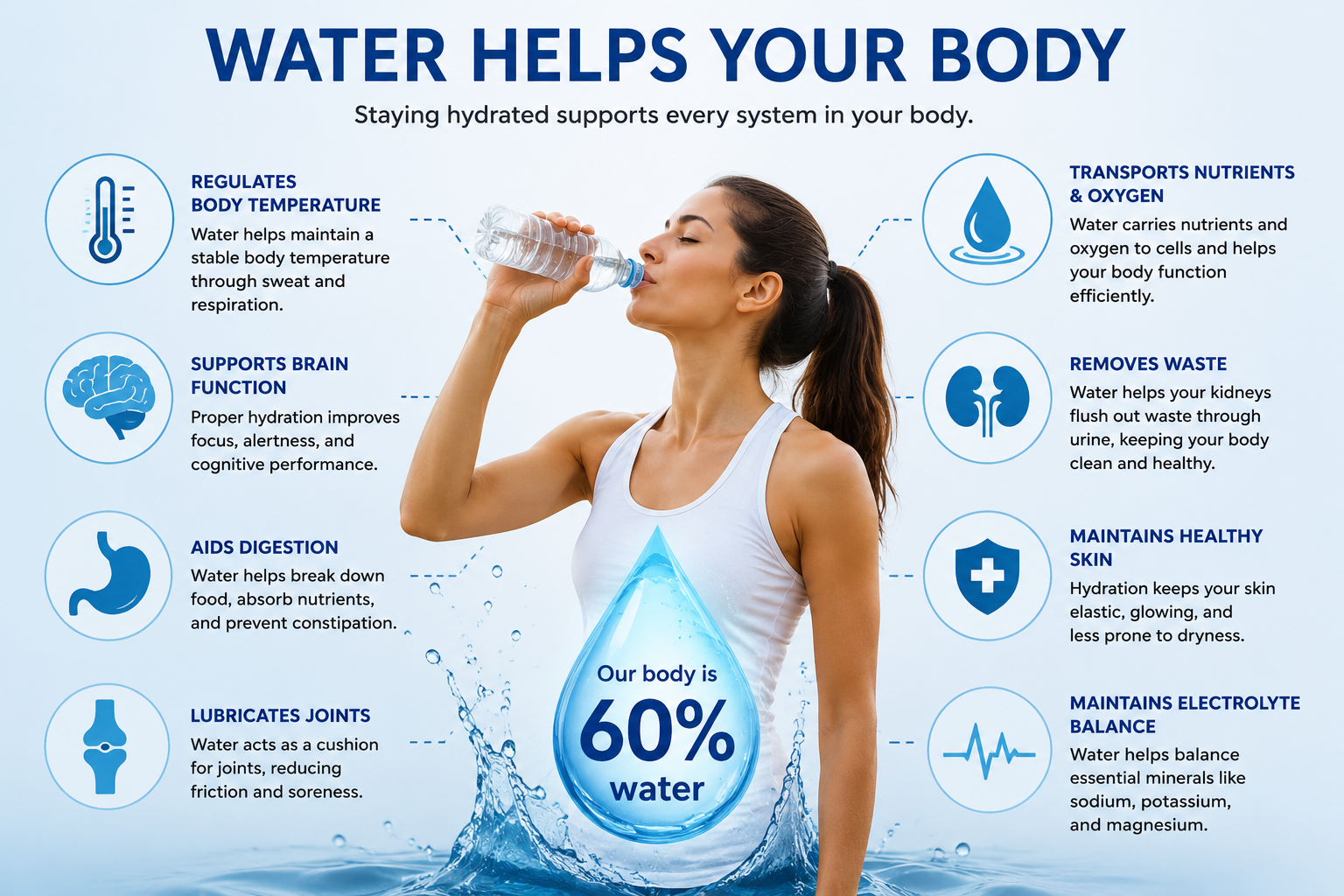
Understanding how much water should you drink every day begins with knowing why your body depends on water for nearly every essential function.
Water helps your body:
- Regulate body temperature
- Deliver oxygen and nutrients to cells
- Remove waste through urine and sweat
- Lubricate joints
- Protect the brain and spinal cord
- Support digestion
- Maintain healthy blood circulation
- Balance electrolytes
These functions happen every minute of the day. That’s why proper hydration isn’t just important during exercise—it matters from the moment you wake up until you go to sleep.
How Much Water Should You Drink Every Day?
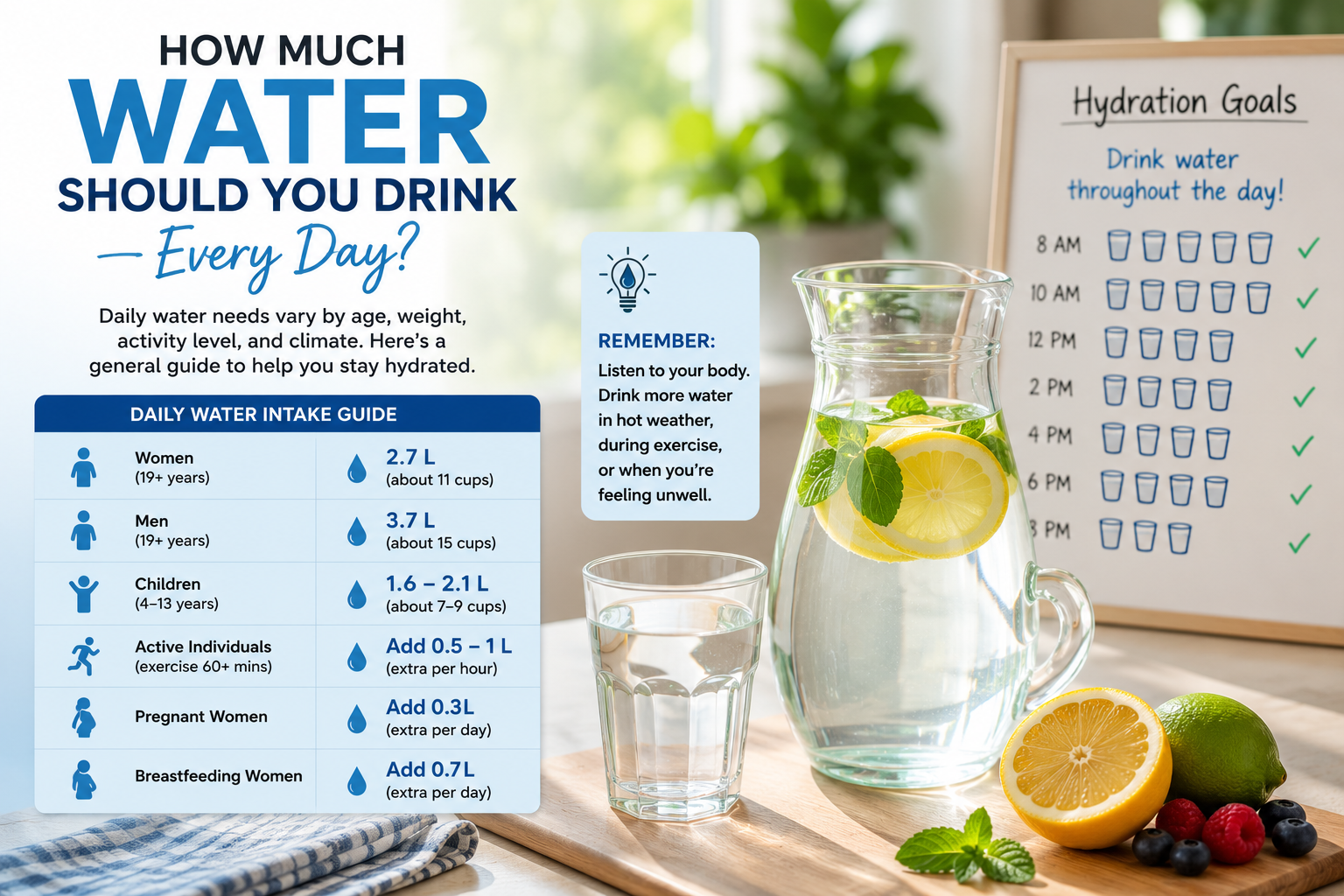
According to the National Academies of Sciences, Engineering, and Medicine, adequate daily fluid intake includes all beverages and moisture obtained from food. Since roughly 20% of daily fluids come from food, you don’t have to drink the entire amount as plain water.
The Mayo Clinic also notes that hydration needs vary depending on your age, activity level, climate, diet, medications, and overall health, which is why there is no single amount of water that is right for everyone.
There isn’t one magic number that works for everyone. Health experts generally recommend the following daily fluid intake:
Adult Men
If you’re wondering how much water should you drink every day as a man, around 3.7 litres of total daily fluids is the general recommendation for healthy adults. This includes plain water, tea, coffee, milk, soups, and moisture from food.
Adult Women
For women asking how much water should you drink every day, the recommended intake is approximately 2.7 litres of total fluids each day. Again, this includes both beverages and food.
Pregnant Women
Pregnancy increases the body’s demand for fluids because water supports both the mother and the growing baby. Most pregnant women benefit from drinking more fluids than usual.
Breastfeeding Mothers
Breastfeeding causes additional fluid loss. New mothers typically need extra water each day to stay properly hydrated while producing breast milk.
Children and Teenagers
Children require less water than adults, but their hydration needs increase as they grow. Parents should encourage regular water intake instead of sugary drinks.
Older Adults
For older adults, how much water should you drink every day may depend on medications, medical conditions, and how active they are.
Many older adults experience a reduced sense of thirst, because of this, they may become dehydrated without realising it. Drinking water consistently throughout the day is often more effective than waiting until thirst develops.
READ MORE : How To Find A Good Yoga Mat
What Determines Your Daily Water Needs?
The amount of water your body requires changes from day to day. Several factors influence how much you should drink.
1. Physical Activity
The more active you are, the more fluids you lose through sweat. Whether you’re jogging, lifting weights, or working outdoors, your body needs additional water to replace those losses.
A good habit is to drink water before, during, and after exercise. The Centers for Disease Control and Prevention (CDC) also recommends drinking water before, during, and after physical activity to replace fluids lost through sweating, especially during hot weather.
2. Weather and Climate
Hot, humid weather increases sweating, causing your body to lose more water. Likewise, high altitudes and heated indoor environments during colder months can also contribute to fluid loss. If you’re outdoors for long periods or exercising in warm conditions, increase your water intake to replace the fluids lost through sweat.
This is one reason how much water should you drink every day can change depending on where you live and the season
3. Your Diet
Your eating habits can also influence how much water should you drink every day, especially if you consume salty or high-protein foods.
Not all foods affect hydration the same way. Water-rich foods can contribute significantly to your daily fluid intake.
Examples include:
- Watermelon
- Cucumbers
- Oranges
- Strawberries
- Tomatoes
- Lettuce
- Celery
On the other hand, diets high in salt or heavily processed foods may increase your need for water.
4. Illness
Fever, diarrhoea, vomiting, and certain infections can quickly lead to dehydration. During illness, replacing lost fluids becomes especially important.
Always follow medical advice if dehydration becomes severe.
5. Your Body Size
Larger individuals generally require more water than smaller individuals because they have more body tissue that needs hydration. This is one reason why water recommendations differ between people.
6. Altitude
Travelling or living at higher elevations can increase fluid loss through faster breathing. Many people notice they become thirsty more often when visiting mountainous regions.
Is Drinking Eight Glasses of Water Enough?
The famous “8×8 rule”—drinking eight 8-ounce glasses of water each day is easy to remember. However, it isn’t a scientific rule that applies to everyone.
For some people, eight glasses may be enough. For others, especially athletes, outdoor workers, or people living in hot climates, it may not be nearly enough.
Rather than obsessing over an exact number of glasses, pay attention to your body’s hydration signals. One of the easiest ways to monitor hydration is by checking the colour of your urine.
Pale yellow usually indicates good hydration, while dark yellow often means you need more fluids. Clear urine all day isn’t necessarily better either—it may indicate you’re drinking more water than your body needs.
Does Coffee and Tea Count Towards Your Water Intake?
Yes.
One of the biggest misconceptions is that coffee and tea dehydrate the body. While caffeine has a mild diuretic effect, moderate amounts of coffee and tea still contribute to your daily fluid intake.
The same applies to milk, soups, and many other beverages.
However, plain water remains the healthiest choice because it hydrates without added sugar or excess calories.
Is Two Litres of Water Enough?
Two litres is a reasonable target for many adults. However, it isn’t the perfect amount for everyone. If you’re physically active, pregnant, breastfeeding, or living in a hot climate, your hydration needs may be much higher.
Instead of focusing on reaching an exact number, monitor how your body feels, how often you urinate, and the colour of your urine. These signs usually provide a better indication of hydration than simply counting bottles of water.
Ultimately, how much water should you drink every day depends on your individual hydration needs rather than a fixed number
Signs You’re Not Drinking Enough Water
Your body usually gives you warning signs long before dehydration becomes serious. Learning to recognise these symptoms can help you increase your water intake before they begin to affect your health.
According to the World Health Organization (WHO), dehydration can develop quickly during illness, prolonged physical activity, or exposure to high temperatures. Recognising the early signs allows you to restore fluids before symptoms become severe.
Early Signs of Dehydration
The first symptoms are often easy to overlook.
You may notice:
- Feeling thirsty
- Dry mouth or lips
- Dark yellow urine
- Headaches
- Fatigue or low energy
- Dizziness
- Difficulty concentrating
- Dry skin
- Muscle cramps
- Bad breath
Many people mistake these symptoms for stress, hunger, or lack of sleep when dehydration is actually the cause.
Signs of Severe Dehydration
If dehydration worsens, the symptoms become more serious.
Seek medical attention if you experience:
- Very little or no urination
- Confusion or disorientation
- Rapid heartbeat
- Sunken eyes
- Extreme weakness
- Fainting
- Difficulty staying awake
Children and older adults are particularly vulnerable to severe dehydration because they may not recognise or communicate their thirst as quickly.
Although overhydration is uncommon, it highlights why balance is important. Rather than forcing yourself to drink excessive amounts of water, aim to replace the fluids your body naturally loses each day.
Health Benefits of Drinking Enough Water
Making hydration a daily habit can improve many aspects of your physical and mental wellbeing. Drinking the right amount matters because how much water should you drink every day directly affects your energy, concentration, and overall wellbeing.
Here are some of the most important benefits.
Supports Brain Function
This is another reason how much water should you drink every day matters for your overall wellbeing. Your brain is highly sensitive to hydration. Even mild dehydration can make it harder to concentrate, remember information, and stay alert.
If you’ve ever struggled to focus during work or school, drinking a glass of water may help more than you think.
Boosts Physical Performance
Muscles rely on water to function efficiently. When you’re dehydrated, your body tires more quickly, making workouts feel harder than they should.
Proper hydration supports endurance, strength, and recovery, whether you’re exercising or simply staying active throughout the day.
Helps Regulate Body Temperature
Your body cools itself through sweating. Without enough fluids, this natural cooling system becomes less effective, increasing the risk of heat exhaustion during hot weather or intense exercise.
Supports Healthy Digestion
Water plays a key role in breaking down food and moving it through your digestive tract. Drinking enough water may help prevent constipation and support smoother digestion.
Promotes Kidney Health
Knowing how much water should you drink every day may also help support long-term kidney health.
Your kidneys rely on adequate hydration to filter waste products from your blood efficiently. Drinking enough water also helps your body maintain a healthy balance of minerals and may reduce the risk of developing certain kidney stones in susceptible individuals.
Keeps Your Skin Healthy
While water won’t eliminate wrinkles overnight, staying hydrated helps maintain your skin’s natural moisture and elasticity. Healthy skin starts from within.
May Support Healthy Weight Management
Sometimes your brain confuses thirst with hunger. Drinking water before reaching for a snack may help you recognise whether you’re actually hungry or simply dehydrated.
Replacing sugary drinks with water can also reduce your daily calorie intake.
Supports Heart Health
Proper hydration helps your heart pump blood more efficiently throughout your body. When you’re dehydrated, your heart works harder to maintain normal circulation.
READ MORE : HONEYMOON DESTINATIONS
Can You Drink Too Much Water?
Yes. Although dehydration receives most of the attention, drinking excessive amounts of water can also be harmful.
This condition is known as water intoxication or hyponatraemia.
It occurs when too much water dilutes the sodium in your bloodstream, disrupting your body’s electrolyte balance.
Who Is Most at Risk?
Water intoxication is uncommon but can affect:
- Marathon runners
- Endurance athletes
- Military personnel during intense training
- People participating in water-drinking contests
- Individuals with certain medical conditions
Symptoms of Overhydration
Watch for symptoms such as:
- Nausea
- Headaches
- Confusion
- Swelling of the hands or feet
- Muscle weakness
- Seizures in severe cases
The goal isn’t to drink as much water as possible.
It’s to drink the right amount for your body.
Simple Hydration Tips That Actually Work
Building healthy hydration habits doesn’t have to feel like a chore. One of the easiest ways to meet how much water should you drink every day is to build small hydration habits into your daily routine.
These practical tips can make drinking enough water much easier.

Carry a Reusable Water Bottle
Having water within reach makes you far more likely to drink regularly throughout the day.
Drink Water First Thing in the Morning
After several hours of sleep, your body wakes up slightly dehydrated. Starting your day with a glass of water is a simple way to replenish lost fluids.
Drink Before Meals
Having a glass of water before eating can support hydration and may help prevent overeating.
Eat Water-Rich Foods
Around 20% of your daily fluid intake often comes from food.
Some excellent choices include:
- Watermelon
- Cucumbers
- Tomatoes
- Spinach
- Oranges
- Pineapple
- Celery
- Strawberries
These foods provide vitamins, minerals, and hydration at the same time.
Set Daily Reminders
If you often forget to drink water while working or studying, use your phone or smartwatch to remind you every few hours.
Small reminders can build lasting habits.
Replace Sugary Drinks
Swap soft drinks and sugary juices for water whenever possible. It’s one of the simplest ways to reduce added sugar while improving hydration.
Increase Water During Exercise
If you’re sweating heavily, don’t wait until you’re thirsty. Drink fluids before, during, and after physical activity to replace what you’ve lost.
Common Myths About Drinking Water
There’s plenty of misinformation surrounding hydration.
Let’s separate fact from fiction.
Myth 1: Everyone Needs Exactly Eight Glasses of Water
Not true. Water needs vary from person to person based on age, body size, health, climate, and activity level.
Myth 2: Thirst Is the Only Sign You Need Water
By the time you feel thirsty, your body may already be mildly dehydrated. Drinking water consistently throughout the day is a better strategy.
Myth 3: Coffee and Tea Always Dehydrate You
Moderate amounts of coffee and tea still contribute to your daily fluid intake. They don’t automatically cause dehydration.
Myth 4: Drinking More Water Is Always Better
Too much water can be dangerous. Balance is the key to healthy hydration.
Healthy Hydration Habits for Everyday Life
If you’re still wondering how much water should you drink every day, let your activity level, climate, and thirst guide your intake.
Instead of aiming for a specific number of bottles each day, focus on creating sustainable habits.
Drink water:
- After waking up
- With each meal
- Before and after exercise
- During hot weather
- Whenever you’re feeling thirsty
- When your urine becomes darker than pale yellow
Research consistently shows that maintaining good hydration supports cognitive performance, physical endurance, kidney function, and overall wellbeing. The healthiest approach is to drink water regularly throughout the day instead of waiting until you become very thirsty.
By now, you should have a clear understanding of how much water should you drink every day and how to adjust your intake based on your lifestyle.
Conclusion
Knowing how much water should you drink every day is one of the simplest ways to improve your overall health. Ultimately, how much water should you drink every day depends on your body’s individual needs rather than a universal rule.
While general recommendations suggest around 3.7 litres of fluids daily for men and 2.7 litres for women, these figures include fluids from both drinks and food. Your ideal intake may vary depending on your age, activity level, health, and environment.
The simplest way to stay properly hydrated is to drink water regularly, eat water-rich foods, and pay attention to your body’s natural signals, such as thirst and urine colour.
Small habits like carrying a reusable water bottle or drinking a glass of water each morning can make a significant difference over time.
When hydration becomes part of your daily routine, you’re supporting your brain, heart, kidneys, muscles, digestion, and overall health with one of the simplest lifestyle changes you can make.
READ MORE: Safety Tips For Traveling Alone