Data centres sit at the heart of the digital economy, and How Next-Gen Networking Tech Will Power Faster Data Centres is no longer a futuristic idea, it is already reshaping how data moves, scales, and delivers value.
As AI workloads grow, cloud services expand, and real-time applications dominate, speed and efficiency have become non-negotiable.
From hyperscale cloud providers to fintech platforms and streaming services, organisations now depend on ultra-fast, resilient networking infrastructure.
Understanding How Next-Gen Networking Tech Will Power Faster Data Centres is not just for engineers; it is a critical skill area for anyone working in tech, IT operations, cybersecurity, or digital transformation.
This guide breaks down the technologies, skills, and opportunities shaping the next era of data centres in 2026 and beyond.
Key Takeaways
- Next-gen networking is essential for AI, cloud, and real-time services
- 400G/800G Ethernet dramatically improves data centre performance
- SDN and automation reduce downtime and operational costs
- Edge computing cuts latency by over 50%
- Networking skills remain among the most valuable tech skills in 2026
Why Data Centre Speed Matters More Than Ever
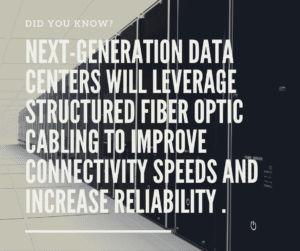
Modern businesses operate in milliseconds. A slow network can mean failed transactions, poor user experience, and lost revenue. According to Gartner, over 75% of enterprise data will be created and processed outside traditional data centres by 2026, pushing networking infrastructure to its limits.
Understanding How Next-Gen Networking Tech Will Power Faster Data Centres helps businesses prepare for:
- AI and machine learning workloads
- Real-time analytics
- Edge computing expansion
- Global remote collaboration
Faster networks no longer provide an advantage, they define survival.
See also:
Coupang Data Breach: What It Means for Online Security in 2026
AI Growth in 2026: Key Statistics Every Tech Reader Should Know
The Core Technologies Driving Next-Gen Data Centres
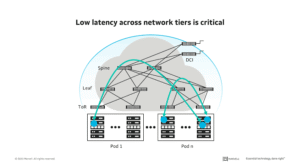
1. 400G and 800G Ethernet
One of the biggest breakthroughs in How Next-Gen Networking Tech Will Power Faster Data Centres is the shift from 100G to 400G and 800G Ethernet.
Cisco reports that global IP traffic will exceed 396 exabytes per month, driven largely by cloud and AI workloads. Higher-capacity Ethernet reduces congestion and improves latency across massive server clusters.
Learn more from Cisco:
https://www.cisco.com
2. Optical Interconnects and Silicon Photonics
Copper cabling can no longer keep up. Silicon photonics enables data to travel at the speed of light with less heat and energy usage.
Intel estimates that optical networking can reduce data centre power consumption by up to 30% while increasing throughput.
This innovation is central to How Next-Gen Networking Tech Will Power Faster Data Centres, especially for hyperscale environments.
3. Software-Defined Networking (SDN)
SDN separates the control plane from the hardware, allowing dynamic traffic management and faster configuration.
McKinsey reports that organisations using SDN improve network efficiency by 25–30% while reducing downtime.
Understanding SDN is a key technical skill tied directly to How Next-Gen Networking Tech Will Power Faster Data Centres.
AI and Automation in Network Management
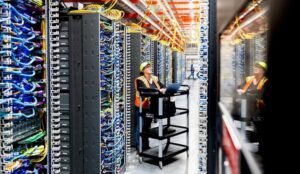
Artificial Intelligence is now embedded in network operations. AI-driven monitoring detects congestion, predicts failures, and reroutes traffic instantly.
According to NVIDIA, AI-optimised networking improves workload performance by up to 40% in data-intensive environments.
This evolution strengthens How Next-Gen Networking Tech Will Power Faster Data Centres by eliminating human delay and error.
Edge Computing and Micro Data Centres
Edge computing reduces the distance data travels. Instead of sending everything to centralised data centres, processing happens closer to users.
Cloudflare notes that edge deployments reduce latency by over 50% for real-time applications.
Edge infrastructure is a practical example of How Next-Gen Networking Tech Will Power Faster Data Centres in everyday digital services.
See also:
The Role of Network Virtualisation

Network Function Virtualisation (NFV) allows firewalls, load balancers, and routers to run as software.
Benefits include:
- Faster deployment
- Lower hardware costs
- Improved scalability
IEEE research shows virtualised networks deploy services 70% faster than traditional infrastructure.
This flexibility reinforces How Next-Gen Networking Tech Will Power Faster Data Centres at scale.
Skills You Need to Stay Relevant in 2026
Understanding How Next-Gen Networking Tech Will Power Faster Data Centres also means upgrading your skills. High-demand areas include:
- Cloud networking (AWS, Azure, GCP)
- SDN and NFV
- Network automation (Python, Ansible)
- Data centre architecture
- AI-driven operations (AIOps)
Professionals who combine networking knowledge with automation earn 20–35% higher salaries, according to industry hiring reports.
Cybersecurity and Network Speed: A Balancing Act
Faster networks increase attack surfaces. Zero Trust Architecture ensures security does not slow performance.
Gartner predicts that 60% of enterprises will adopt Zero Trust networking by 2026.
Cybersecurity expertise is now inseparable from How Next-Gen Networking Tech Will Power Faster Data Centres.
Sustainability and Energy Efficiency
Next-gen networking reduces power usage through:
- Smart routing
- Energy-efficient hardware
- AI-based cooling optimisation
Green networking is becoming a core metric in How Next-Gen Networking Tech Will Power Faster Data Centres, especially as ESG standards tighten.
Business Impact of Faster Data Centres
When organisations understand How Next-Gen Networking Tech Will Power Faster Data Centres, they gain:
- Faster product launches
- Improved customer experience
- Higher system resilience
- Reduced operational costs
Speed directly translates to competitiveness.
Speed Over Stress: The Smart, Skill-First Job Search Strategy That Works in 2026
The future of tech belongs to professionals who understand infrastructure, not just applications. Learning How Next-Gen Networking Tech Will Power Faster Data Centres positions you for roles in cloud engineering, network architecture, DevOps, and cybersecurity.
If you want to stay employable, adaptable, and highly paid in 2026, focus on skills that power the backbone of the internet not just the surface tools.
See also:
FAQs:
How Next-Gen Networking Tech Will Power Faster Data Centres
1. Why are next-gen networks important for data centres?
They enable faster data transfer, lower latency, and better support for AI and cloud workloads.
2. What skills should I learn to work in modern data centres?
Cloud networking, SDN, automation, cybersecurity, and AIOps are essential.
3. Are faster data centres more expensive to run?
Not necessarily. New technologies often reduce power usage and operational costs.
4. Will AI replace network engineers?
No. AI enhances efficiency, but skilled professionals are still required to design and manage systems.