
Governments around the world are accelerating efforts to modernize how public services are delivered in a digital-first economy. The upcoming launch of the Africa Digital Public Infrastructure Accelerator at UN Open Source Week 2026 reflects this global shift toward secure, interoperable, and inclusive digital public infrastructure.
At the center of this transformation is Digital Public Infrastructure (DPI), a set of shared systems that enable digital identity, payments, and data exchange at national and cross-border levels.
Rather than operating fragmented systems for each public service, DPI creates a unified digital foundation that allows governments to scale services efficiently, securely, and inclusively.
Against this global shift, UN Open Source Week 2026 is currently taking place from June 22 to June 26, 2026, at the United Nations Headquarters in New York.
The event brings together governments, UN agencies, developers, and open-source communities to advance global digital cooperation, with a strong focus this year on DPI, AI governance, and open digital ecosystems.
One of the most anticipated developments of the week is the planned unveiling of the Africa Digital Public Infrastructure Accelerator (AA4DPI) by the United Nations Development Programme (UNDP) on June 26, 2026.
Understanding Digital Public Infrastructure (DPI)
Digital Public Infrastructure refers to foundational digital systems that enable governments and societies to function more efficiently in a digital economy.
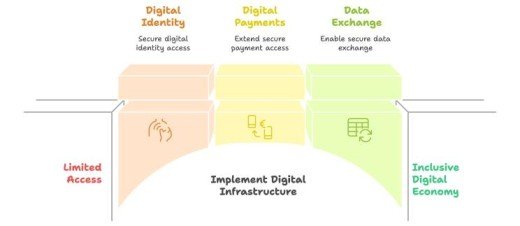
According to global development frameworks promoted by the United Nations and partner institutions, DPI typically includes:
- Digital identity systems
- Digital payment infrastructure
- Data exchange and interoperability layers
- Consent and privacy management frameworks
Unlike traditional digital government systems that are often built in isolation, DPI is designed as shared infrastructure that can be reused across multiple public and private services.
This shift is increasingly recognized as essential for achieving inclusive digital transformation, particularly in regions scaling public service delivery systems.
What is UN Open Source Week 2026?
UN Open Source Week 2026 is a global policy and technology forum taking place from June 22 to June 26, 2026, at the United Nations Headquarters in New York.
It is organized by United Nations digital institutions and partners focused on open-source innovation and digital cooperation. The event brings together:
- UN agencies and development organizations
- National governments and policymakers
- Open-source communities and developers
- Private sector technology leaders
- Civil society and research institutions
Key discussions throughout the week focus on:
- Digital Public Infrastructure (DPI)
- Artificial Intelligence governance
- Cybersecurity and digital trust
- Open-source digital ecosystems
- Global digital cooperation frameworks
Why DPI is Becoming a Global Policy Priority
Digital Public Infrastructure is now widely recognized as a foundational requirement for modern governance systems. Its growing importance is driven by three global shifts:
1. Demand for scalable public services
Governments need systems that can handle large populations efficiently without increasing administrative complexity.
2. Push for interoperability
Public systems must communicate seamlessly across departments, agencies, and borders.
3. Need for digital trust and inclusion
Citizens require secure, accessible, and privacy-respecting digital systems.
DPI addresses these challenges by creating shared infrastructure layers that reduce duplication and improve system coordination.
What is the Africa Digital Public Infrastructure Accelerator (AA4DPI)?
The Africa Digital Public Infrastructure Accelerator (AA4DPI) is one of the most significant announcements scheduled during UN Open Source Week 2026.
The initiative is designed to support governments in strengthening their digital ecosystems through:
- Policy and regulatory guidance for DPI adoption
- Technical collaboration between countries and institutions
- Promotion of open-source infrastructure models
- Capacity building for digital transformation teams
The accelerator builds on broader UNDP efforts to support digital public goods and scalable governance systems that are adaptable to local contexts.
How the Accelerator Supports Digital Government Systems
The Africa Digital Public Infrastructure Accelerator is structured around strengthening the core layers of digital governance systems.
Key areas of focus include:
Digital Identity Systems: Supporting secure and verifiable identity frameworks that enable access to public services.
Digital Payments Infrastructure: Improving how governments distribute funds, collect taxes, and enable financial inclusion.
Data Exchange Systems: Enabling interoperability between ministries, agencies, and external service providers.
Cross-Border Digital Integration: Supporting regional collaboration for trade, mobility, and shared services.
These components are essential for building a fully functional digital state architecture.
Open Source as the Foundation of DPI Systems
Open source plays a critical role in the DPI ecosystem because it ensures transparency, adaptability, and long-term sustainability.
Key advantages include:
- Reduced dependency on proprietary vendors
- Lower infrastructure costs over time
- Improved cybersecurity through transparency
- Faster innovation through global collaboration
- Greater government control over digital systems
During UN Open Source Week 2026, open-source frameworks are being positioned as the default foundation for building next-generation public infrastructure systems.
E-Governance Transformation and Real-World Impact
If implemented effectively, the Africa Digital Public Infrastructure Accelerator could significantly reshape e-governance systems across participating countries.
Expected outcomes include:
- Faster access to government services
- Reduced administrative bottlenecks
- Improved targeting of social programs
- More transparent public financial systems
- Increased digital inclusion for underserved populations
These improvements align with global e-governance goals focused on efficiency, transparency, and citizen-centered service delivery.
Recommended: GWC Launches Hubli By GWC: Nigeria-UK Blockchain E-Commerce Platform
Key Challenges in Scaling DPI Across Regions
Despite strong momentum, several challenges remain:
Infrastructure inequality: Digital infrastructure development is uneven across regions.
Skills gap: There is a shortage of professionals trained in DPI architecture and open-source governance systems.
Policy fragmentation: Different regulatory environments slow down cross-border interoperability.
Data governance concerns: Privacy, security, and data sovereignty remain central policy debates.
Addressing these challenges will be critical for long-term success.
Strategic Outlook for Africa’s Digital Future
The introduction of the Africa Digital Public Infrastructure Accelerator reflects a broader shift toward structured, interoperable, and scalable digital governance systems.
If successful, it could:
- Strengthen national digital sovereignty
- Enable faster public sector modernization
- Support regional digital integration
- Accelerate adoption of open digital ecosystems
More importantly, it signals a shift from isolated digital projects to coordinated infrastructure-driven transformation strategies.

Conclusion
As UN Open Source Week 2026 continues in New York, global attention is increasingly focused on the upcoming June 26 announcement by the United Nations Development Programme (UNDP) regarding the Africa Digital Public Infrastructure Accelerator (AA4DPI).
Recommended: Digital Marketing for Small Businesses in 2026
While the initiative has not yet been formally launched, its expected unveiling represents a major step in the evolution of digital public infrastructure policy.
If implemented as designed, the accelerator could become a foundational framework for strengthening digital governance systems, expanding open-source adoption, and accelerating inclusive digital transformation across regions.
It marks a clear shift in how governments and international institutions are approaching the future of public infrastructure, one built on openness, interoperability, and shared digital foundations.