
Imagine arriving at work with an assistant that can summarize meetings, organize your schedule, analyze data, draft reports, and help solve problems in seconds. Not long ago, that sounded like science fiction. Today, it is becoming a reality as AI in the workplace transforms how businesses operate, collaborate, and compete Artificial intelligence is no longer limited to technology companies or experimental projects.
Organizations across industries are using AI to automate routine tasks, improve decision-making, enhance customer experiences, and help employees work more efficiently.
The biggest misconception about AI is that it exists to replace people. In reality, most businesses are using AI to eliminate repetitive tasks so employees can focus on creativity, strategy, and higher-value work. As digital transformation accelerates, understanding the role of artificial intelligence has become essential for organizations preparing for the future of work.
What Is AI in the Workplace?
AI in the workplace refers to the use of intelligent software and machine learning systems to automate tasks, analyze information, improve decision-making, and enhance productivity across business operations.
Unlike traditional software that follows fixed instructions, AI can learn from data, identify patterns, and adapt to changing circumstances.
According to IBM’s overview of AI in the workplace, organizations are increasingly integrating AI into daily workflows to improve efficiency and support employee performance.
In practical terms, AI can help employees automate repetitive administrative tasks, generate reports, analyze data, improve collaboration, deliver personalized customer experiences, and support strategic decision-making
Rather than replacing human expertise, AI often functions as a powerful digital assistant that helps people work smarter.
Why Businesses Are Rapidly Adopting AI
Organizations today face increasing pressure to do more with fewer resources. Markets move faster, customer expectations continue to rise, and competition grows more intense every year. Artificial intelligence offers a practical solution to these challenges.
According to Microsoft’s Work Trend Index, employees increasingly use AI tools to reduce administrative workloads and focus on more meaningful work.
This shift allows organizations to improve efficiency while helping employees spend more time on strategic activities.

- AI is transforming how people collaborate and work

Businesses are discovering that AI is not simply a technology investment. It is becoming a competitive advantage that enables greater efficiency, innovation, and responsiveness.
Across industries, AI in the workplace is becoming a strategic advantage that helps organizations improve efficiency, reduce costs, and support innovation.
The Rise of Workplace Automation
One of the most visible effects of AI is workplace automation. Many tasks that once required hours of manual effort can now be completed automatically.
Activities such as scheduling meetings, processing invoices, managing workflows, updating records, and organizing documents are increasingly handled by AI-powered systems.
This creates significant efficiency gains across departments.
Instead of spending valuable time on repetitive tasks, employees can focus on innovation, customer relationships, and problem-solving. Workplace automation also reduces human error.
AI systems can execute repetitive processes consistently and accurately, helping organizations improve productivity while reducing operational costs.
The result is a more agile workplace capable of responding quickly to changing business needs. As AI in the workplace continues to evolve, automation is expected to become a standard feature of modern business operations.
AI Productivity Tools Are Reshaping Daily Work
The rapid growth of AI productivity tools is changing how professionals approach their daily responsibilities.
Popular AI Productivity Tools
Applications such as ChatGPT, Microsoft Copilot, Google Gemini, and Notion AI are becoming valuable workplace companions.
These tools can assist with:
- Writing emails and reports
- Summarizing lengthy documents
- Brainstorming ideas
- Conducting research
- Creating presentations
- Organizing projects
Businesses are increasingly integrating these solutions into their daily operations to improve efficiency and streamline workflows.
How AI Productivity Tools Improve Efficiency
For many professionals, AI now serves as a digital co-worker that helps eliminate time-consuming tasks. A marketing manager can generate campaign ideas in minutes, a project manager can automate meeting summaries, and a business analyst can identify trends within massive datasets almost instantly.
The real value lies in freeing employees to focus on work that requires human judgment, creativity, and expertise.
AI-Powered Collaboration Is Changing Team Dynamics
Collaboration has become more complex in the age of remote and hybrid work. Teams are often distributed across multiple locations, time zones, and departments.
How AI Improves Workplace Communication
Modern collaboration platforms can automatically transcribe meetings, generate summaries, identify action items, and distribute information to team members.
Tools such as Microsoft Teams Copilot and Zoom AI Companion are already helping businesses streamline workplace communication and improve productivity. This ensures that important discussions are documented and easily accessible.
Breaking Down Language Barriers
AI-driven translation capabilities are also making global collaboration more seamless. Employees can communicate across language barriers without losing context or accuracy. Knowledge sharing has improved significantly as well.
Instead of searching through endless folders and databases, employees can use AI-powered search systems to locate information within seconds.
This creates a more connected and efficient workplace environment. The continued growth of AI in the workplace is making collaboration faster, smarter, and more effective for distributed teams.
Artificial Intelligence in Business Decision-Making
Data has become one of the most valuable assets in modern business.
However, data alone provides little value unless organizations can turn it into actionable insights.

- Abstract representation of artificial intelligence networks and digital connections shaping the future of work.

The Role Of Predictive Analytics
AI systems can analyze enormous volumes of information far faster than human teams. They identify patterns, detect anomalies, and generate forecasts that support strategic planning.
Predictive analytics helps businesses anticipate customer behavior, market trends, operational risks, sales opportunities, and supply chain disruptions
Supporting Smarter Business Strategies
Research from McKinsey suggests that generative AI could contribute trillions of dollars in annual economic value through productivity improvements and enhanced decision-making.
Rather than relying solely on intuition, leaders can make decisions based on evidence and data-driven insights. This improves accuracy, reduces uncertainty, and strengthens competitive positioning.
In today’s business environment, faster decision-making often translates directly into better outcomes.
How AI Is Transforming Customer Experience
Customer expectations have evolved dramatically. People expect immediate responses, personalized interactions, and seamless experiences across multiple channels.
AI-Powered Customer Support
AI-powered chatbots provide support around the clock. Customers can receive assistance without waiting for business hours or support agents. Businesses benefit from faster response times, and improved customer satisfaction..
Personalization at Scale
Machine learning algorithms analyze behavior, preferences, and purchasing patterns to deliver personalized recommendations. Streaming platforms, e-commerce businesses, and financial institutions already rely heavily on these capabilities.
AI also helps organizations identify customer concerns before they escalate, enabling proactive improvements to products and services.
Will AI Replace Human Jobs?
This remains one of the most frequently asked questions about AI. The reality is more nuanced than many headlines suggest.
AI is likely to automate specific tasks rather than eliminate entire professions. Jobs heavily dependent on repetitive and predictable activities may undergo significant transformation.
At the same time, new opportunities are emerging in areas such as AI management, data analysis, cybersecurity, digital strategy, and technology governance.
According to research from the OECD on the future of work, technological advancement historically changes how work is performed rather than eliminating work altogether.
Employees who learn to use AI effectively are likely to become more productive and valuable in their roles. The future belongs to professionals who can combine human intelligence with machine capabilities.
The Impact of AI on Employee Skills
As AI adoption grows, workplace skills are evolving.
Human Skills Becoming More Valuable
Technical knowledge remains important, but uniquely human abilities are becoming even more valuable. Organizations increasingly seek employees who demonstrate critical thinking, creativity, emotional intelligence, leadership, adaptability, and complex problem-solving.
These are areas where human capabilities continue to outperform machines.
The Importance of Continuous Learning
Many companies are investing in reskilling and upskilling programs to prepare employees for an AI-driven future. The goal is not to compete with AI. It is to learn how to work alongside it effectively and maximize its potential.
Challenges Organizations Face When Implementing AI
Despite its advantages, AI adoption comes with challenges.
Data privacy and security remain major concerns.
Organizations must ensure that sensitive information is handled responsibly and in compliance with regulations.
As AI systems become more integrated into operations, strong data governance becomes increasingly important.
Ethical considerations are equally important.
AI systems can sometimes reflect biases present in training data, leading to unintended consequences.
Businesses must prioritize transparency, accountability, and fairness when deploying AI technologies. Responsible AI practices are becoming a critical component of long-term success.
Managing Operational Change
Employees may feel uncertain about new technologies and their impact on existing workflows. Successful implementation requires clear communication, proper training, and strong leadership support.
Organizations that address these challenges proactively are more likely to achieve sustainable success with AI.
The Future of Work in an AI-Driven World
The future of work will not be defined by machines replacing people.
Instead, it will be shaped by collaboration between human talent and intelligent technology. Organizations that embrace AI in the workplace while investing in employee development will be better prepared for future business challenges.
Human AI Collaboration Will Define Success
- Human and artificial intelligence are working together to shape the future of the workplace
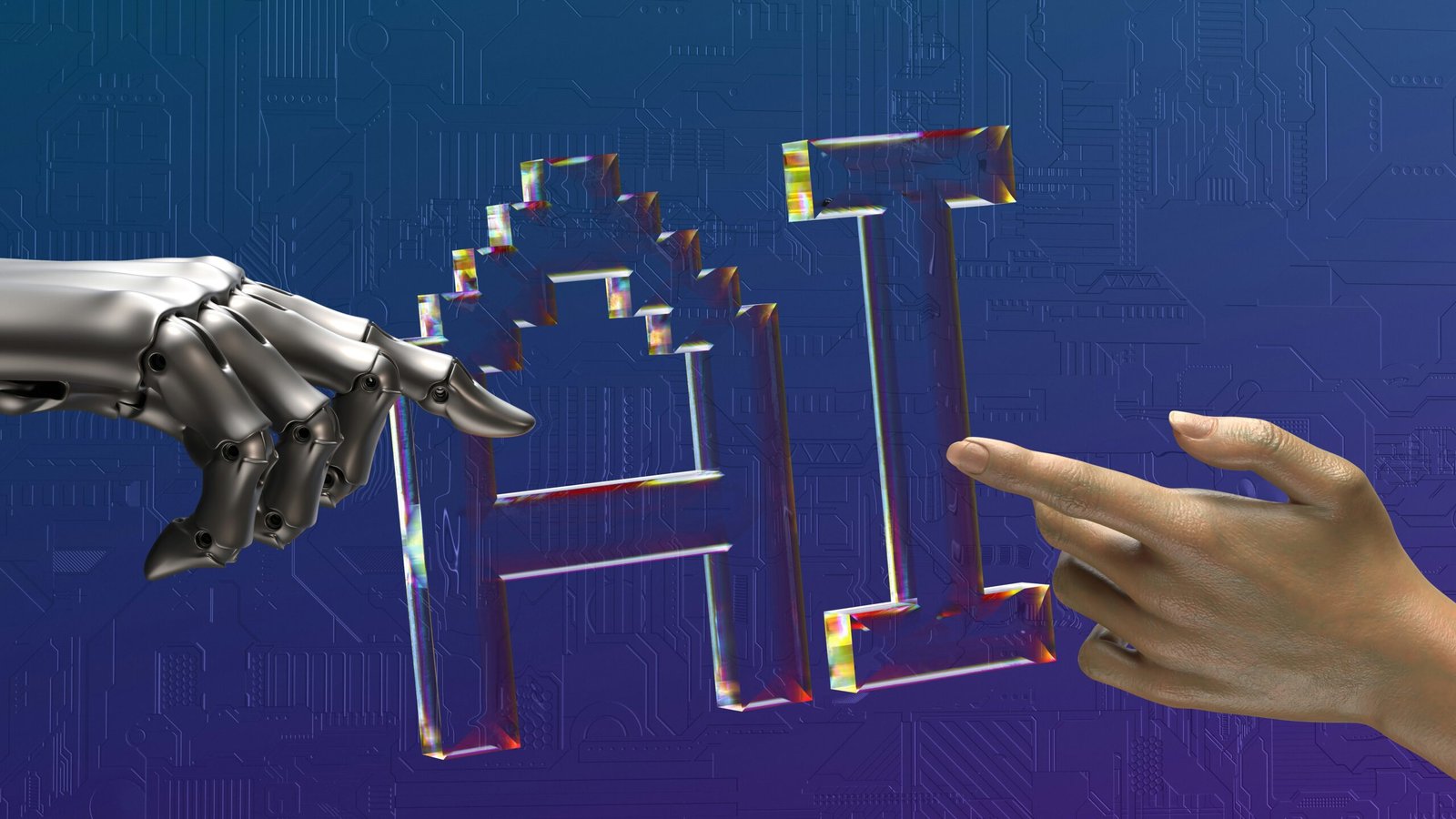
Human-AI collaboration is expected to become one of the defining characteristics of successful organizations over the coming decade. AI will continue to automate routine activities while enhancing human capabilities in research, planning, analysis, and decision-making.
Emerging Workplace Trends
Generative AI, advanced automation, predictive analytics, and intelligent assistants will continue to transform workplace operations.
Organizations that embrace innovation while maintaining a human-centered approach will be best positioned to thrive. Adaptability will become one of the most valuable workplace skills.
The ability to learn, evolve, and leverage emerging technologies will separate successful organizations from those that struggle to keep pace.
Conclusion
AI in the workplace is fundamentally reshaping how organizations operate, collaborate, and grow. From workplace automation and AI productivity tools to AI-powered collaboration and intelligent decision-making, artificial intelligence is creating new opportunities across virtually every industry.
While challenges such as privacy, ethics, and workforce adaptation remain important considerations, the benefits of AI continue to drive widespread adoption.
Read More: Mrs. Kalu Onyinyechi Maryann Officially Launches Onyi Scents And Jewelry
Businesses that invest in the right technologies, empower their employees, and embrace continuous learning will be better equipped for the future of work.
Organizations that view AI as a tool for augmentation rather than replacement will be best positioned to unlock its full potential in the years ahead.
The modern digital workplace is no longer defined solely by connectivity. It is increasingly defined by intelligence, adaptability, and the powerful partnership between humans and AI. As AI in the workplace continues to evolve, organizations that combine technology with human expertise will be best positioned for long-term success.