
Outline
Introduction
Why Are African Businesses Becoming Bigger Targets for Cybercriminals?
How Big Is the Cybersecurity Problem in Africa?
The Biggest Cybersecurity Threats Facing African Businesses
- Phishing and Online Scams
- Identity Theft and Financial Fraud
- Ransomware and Business Disruption
- Data Breaches
- Business Email Compromise
- Supply-Chain Attacks
Which African Industries Face the Biggest Cyber Risks?
- Financial Services
- Telecommunications
- Government
- Energy and Critical Infrastructure
Why Digital Growth Is Increasing the Cybersecurity Challenge
How African Businesses Can Protect Against Cyber Threats
What Rising Cyber Threats Mean for Africa’s Digital Economy
Conclusion
Cybersecurity in Africa is no longer just an IT department concern. As businesses move payments, customer services, communications and entire operations online, the same digital growth creating new opportunities is also creating more opportunities for cybercriminals.
The warning signs are becoming harder to ignore. Microsoft’s Digital Defense Report 2025 highlighted that the total value of cybercrime in Africa rose from $192 million to $484 million, while the number of victims increased from 35,000 to 87,000.
For businesses, that means a cyberattack is no longer simply about losing access to a computer. It can mean stolen money, exposed customer information, disrupted operations and damaged trust.
So, why are African businesses increasingly attractive targets, and what can they do about it?
Why Are African Businesses Becoming Bigger Targets for Cybercriminals?
The answer starts with digital transformation, which is changing the cybersecurity in Africa landscape as more businesses move their operations online. Businesses across Africa are increasingly using cloud platforms, digital payments, mobile applications, online banking, e-commerce systems and connected business tools.
Every new digital service can improve efficiency, but it can also create another potential entry point for attackers. Cybercriminals are also becoming more organised.
Instead of randomly attacking computers, many now look for weaknesses that can lead directly to money, valuable data or access to larger networks.
A small business with weak email security, for example, can become an attractive target if an attacker believes it can be tricked into transferring money or revealing customer information.
There is another factor: trust. Cybersecurity in Africa is also a trust issue because many cyberattacks do not require sophisticated technical exploits. A convincing message, fake login page or impersonated executive can sometimes be enough to compromise an account.
That makes employees, customers and business partners part of the cybersecurity equation.
Cybersecurity in Africa: How Big Is the Problem?
The scale of the problem is becoming clearer through recent assessments. INTERPOL’s 2025 Africa Cyberthreat Assessment Report highlights the growing cyberthreat landscape across the continent, including online scams, ransomware, business email compromise and identity theft.
The organisation also identified online scams, identity theft and financial fraud among the significant threats affecting the continent. The figures matter because cybercrime is increasingly intersecting with everyday business activity.
A company does not have to be a major bank or multinational corporation to be affected. A compromised email account can expose invoices, a fraudulent payment request can drain business funds, a ransomware attack can bring operations to a standstill, and a stolen customer database can create financial, legal and reputational problems long after the initial attack.
EY’s Africa Cybersecurity Threat Outlook 2026 similarly describes cyber risk as a business issue that can affect operations, finances and trust rather than an isolated technology problem.
The Biggest Cybersecurity Threats Facing African Businesses
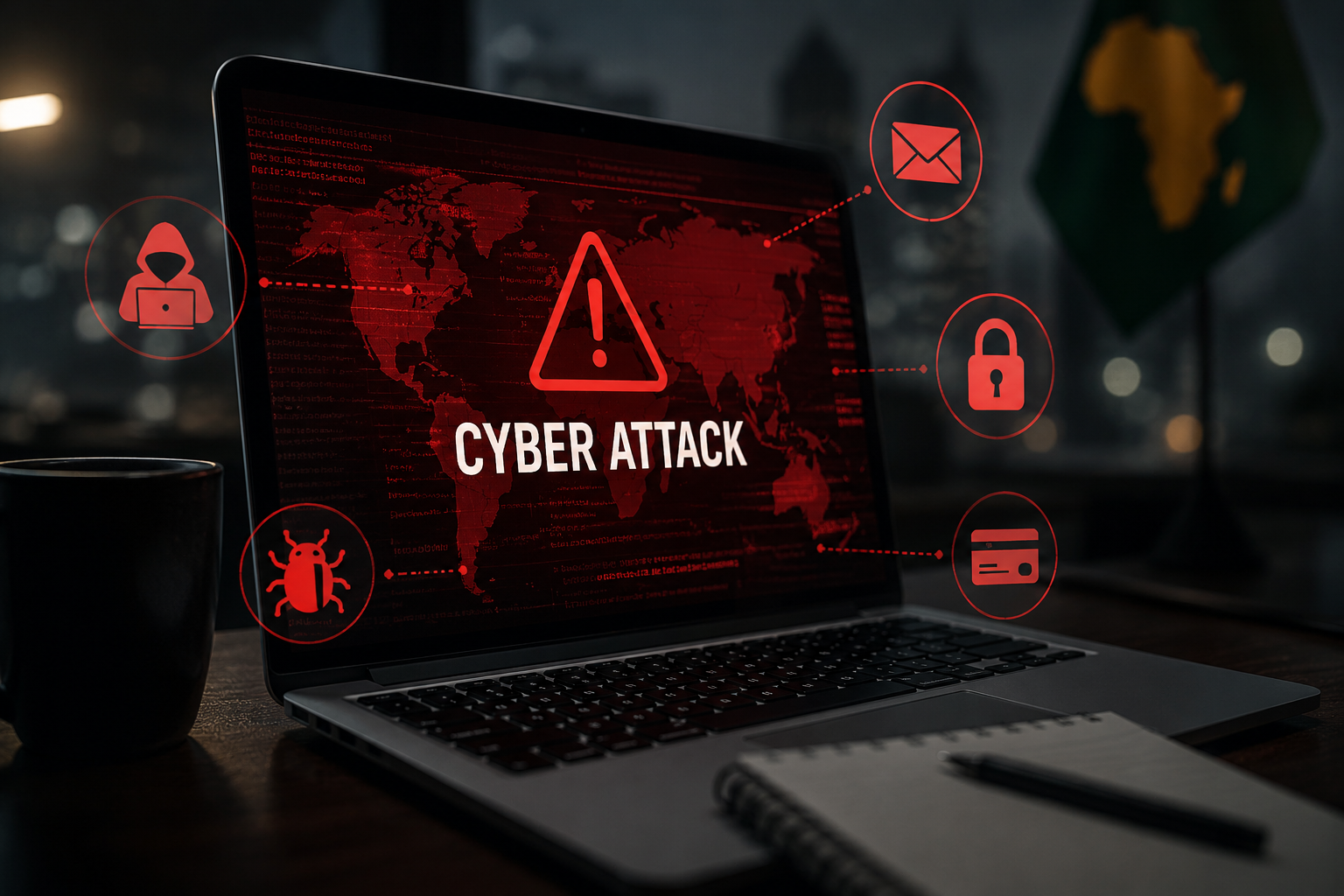
Cybersecurity in Africa is being tested by increasingly varied attack methods, with cybercriminals choosing their approach based on the target and their objective. However, several threats are particularly important for businesses to understand.
Nigeria’s Computer Emergency Response Team, ngCERT, has also warned about rising incidents involving phishing, ransomware, business email compromise and data breaches affecting organisations in the country.
Phishing and Online Scams
Phishing remains one of the simplest ways for attackers to gain access to valuable information. A message may appear to come from a bank, business partner, colleague or familiar service.
The recipient is then encouraged to click a link, open an attachment or provide sensitive information. The danger is that the technology behind the attack may be less important than the psychology behind it.
When a fraudulent message looks legitimate, even an experienced employee can make a costly mistake.
Identity Theft and Financial Fraud
Cybercriminals can use stolen personal or business information to impersonate legitimate individuals. This can lead to unauthorised transactions, fraudulent accounts or attempts to redirect payments.
For businesses handling customer financial information, the consequences can become even more serious.
Protecting identities therefore goes beyond passwords. Companies also need strong authentication, access controls and processes for verifying unusual financial requests.
RECOMMENDED: Airtel Money IPO 2026: The Big London Listing That Could Reshape African Fintech
Ransomware and Business Disruption
Ransomware attacks can lock businesses out of their own systems and demand payment for restoring access, but the financial damage does not necessarily stop there.
Even when a company recovers its systems, downtime can result in missed sales, delayed services and frustrated customers. For businesses operating critical digital services, even a short disruption can have significant consequences.
Data Breaches
Customer information has become one of the most valuable assets businesses hold. Names, contact details, financial information, login credentials and other records can become targets during a breach.
A successful attack can therefore create two problems at once: the immediate cost of responding to the incident and the longer-term damage caused by lost customer confidence.
Business Email Compromise
Business email compromise involves manipulating or taking control of business communications to steal money or sensitive information. An attacker may impersonate a company executive and request an urgent payment.
They may also compromise an employee’s account and use existing conversations to make fraudulent requests appear legitimate. Simple verification procedures can prevent some of these attacks.
For example, businesses can require employees to independently confirm unusual payment instructions instead of relying solely on email.
Supply-Chain Attacks
A business can have strong security and still be exposed through a third party. Software providers, contractors, cloud platforms and other business partners can create connections into corporate systems.
RECOMMENDED: Digital Payments in Africa: The Complete Guide to a Smarter Cashless Future (2026)
If one of those partners is compromised, attackers may use that access to reach other organisations. This is why cybersecurity increasingly requires businesses to understand not only their own systems but also the digital ecosystem around them.
Which African Industries Face the Biggest Cyber Risks?
Cybersecurity in Africa varies across industries, but some sectors are particularly attractive to attackers because they manage large amounts of money, data or critical infrastructure.
Financial Services
Banks, fintech companies, payment providers and other financial businesses are obvious targets. Attackers are interested in payment systems, customer accounts and financial information.
The growth of digital financial services makes strong security increasingly important because more transactions are happening through digital channels.
Telecommunications
Telecommunications companies operate infrastructure that connects millions of people and businesses. A successful attack could potentially affect communications, customer information and other connected services.
As connectivity expands, protecting telecommunications infrastructure becomes an important part of broader digital resilience.
Government
Government institutions hold large amounts of sensitive information and provide essential public services. A successful cyberattack can therefore have consequences that extend beyond the organisation itself.
Government cybersecurity also matters because public-sector systems may interact with private companies and critical infrastructure.
Energy and Critical Infrastructure
Energy, transport and other infrastructure systems are increasingly connected to digital technologies. That connectivity can improve efficiency and monitoring, but it can also create additional cybersecurity considerations.
An attack against critical infrastructure can potentially cause disruption far beyond the original system that was compromised.
Why Digital Growth Is Increasing the Cybersecurity Challenge
Cybersecurity in Africa is becoming increasingly important as the continent’s digital transformation creates enormous opportunities for businesses. Mobile payments are expanding, businesses are adopting cloud services, consumers are increasingly using digital platforms, and companies are building online customer experiences instead of relying entirely on physical locations.
But every new connection expands the digital attack surface. Think of a business as a building.
Years ago, it may have had a few doors that needed to be secured. Today, it may have dozens of entrances created by employees, applications, cloud platforms, suppliers and connected devices.
Digital growth is not the problem. The challenge is making sure security grows alongside it.
How African Businesses Can Protect Against Cyber Threats
Improving cybersecurity in Africa does not always require an enormous technology budget. Businesses can begin with basic measures that significantly reduce avoidable risks.
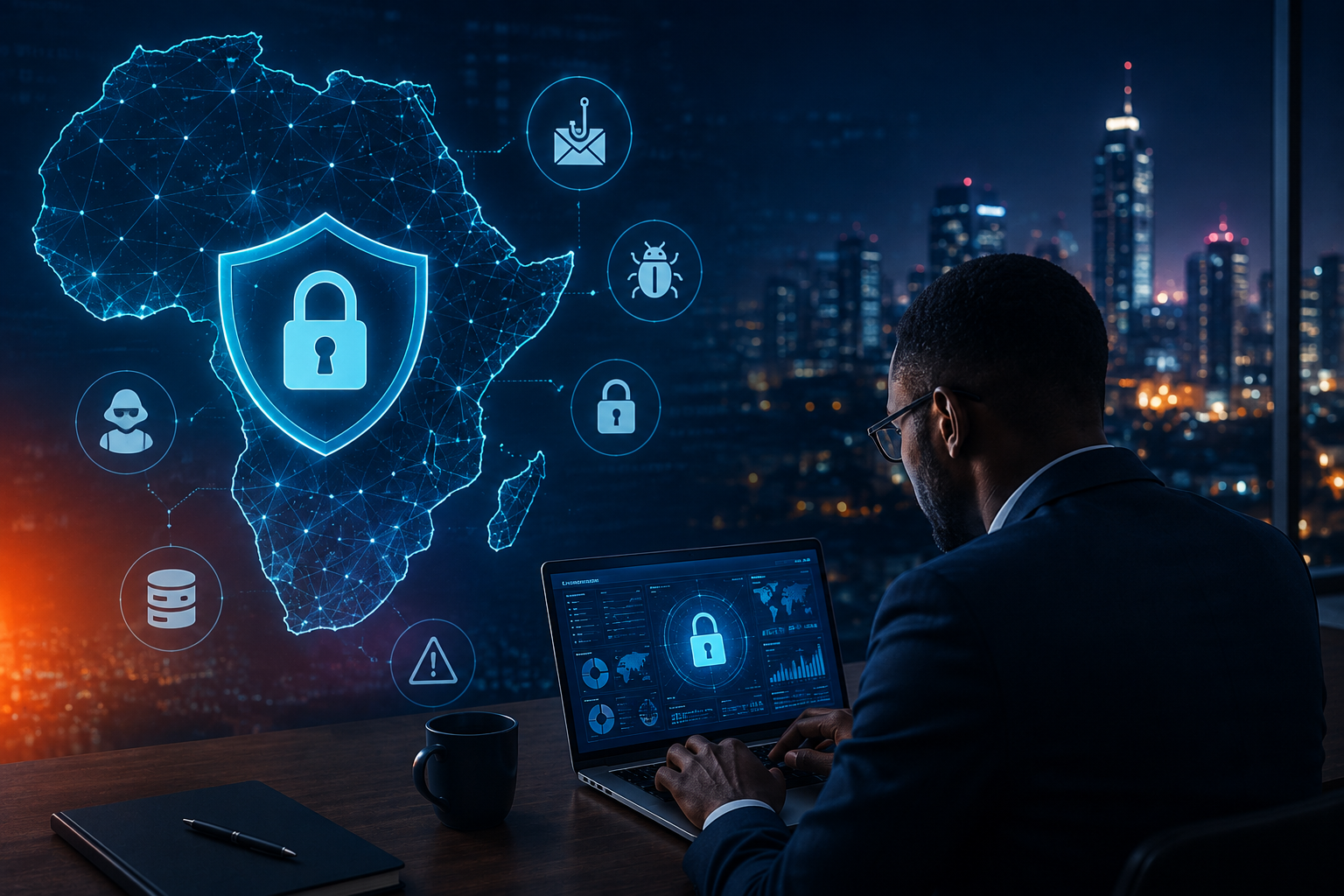
Use multi-factor authentication, passwords alone are not enough for important accounts. Train employees regularly, staff should know how to recognise phishing, suspicious attachments and unusual payment requests.
Keep software updated, security patches can close vulnerabilities that attackers may otherwise exploit. Back up important data, reliable backups can reduce the impact of ransomware and other disruptive attacks.
Limit access, employees should only have access to the systems and information necessary for their roles. Monitor unusual activity. Unexpected login attempts, transactions or changes to accounts should receive attention.
Secure third-party relationships, businesses should understand the cybersecurity practices of important vendors and service providers. Prepare an incident-response plan. Waiting until an attack happens to decide what to do can make a bad situation worse.
RECOMMENDED: Bills By GWC Pay: The Ultimate VTU & Digital Payment Platform
For smaller businesses, the goal should not be to build an impenetrable digital fortress overnight. It is to progressively close the easiest doors for attackers while building the ability to detect and recover from incidents.
What Rising Cyber Threats Mean for Africa’s Digital Economy
The cybersecurity conversation is ultimately bigger than individual companies. Africa’s digital economy depends on trust. Customers need to believe that their money is safe, businesses need confidence that digital platforms will remain available.
Investors need to know that companies can protect valuable information and maintain operations. If cyber incidents continue to increase without stronger resilience, the consequences could extend beyond individual financial losses.
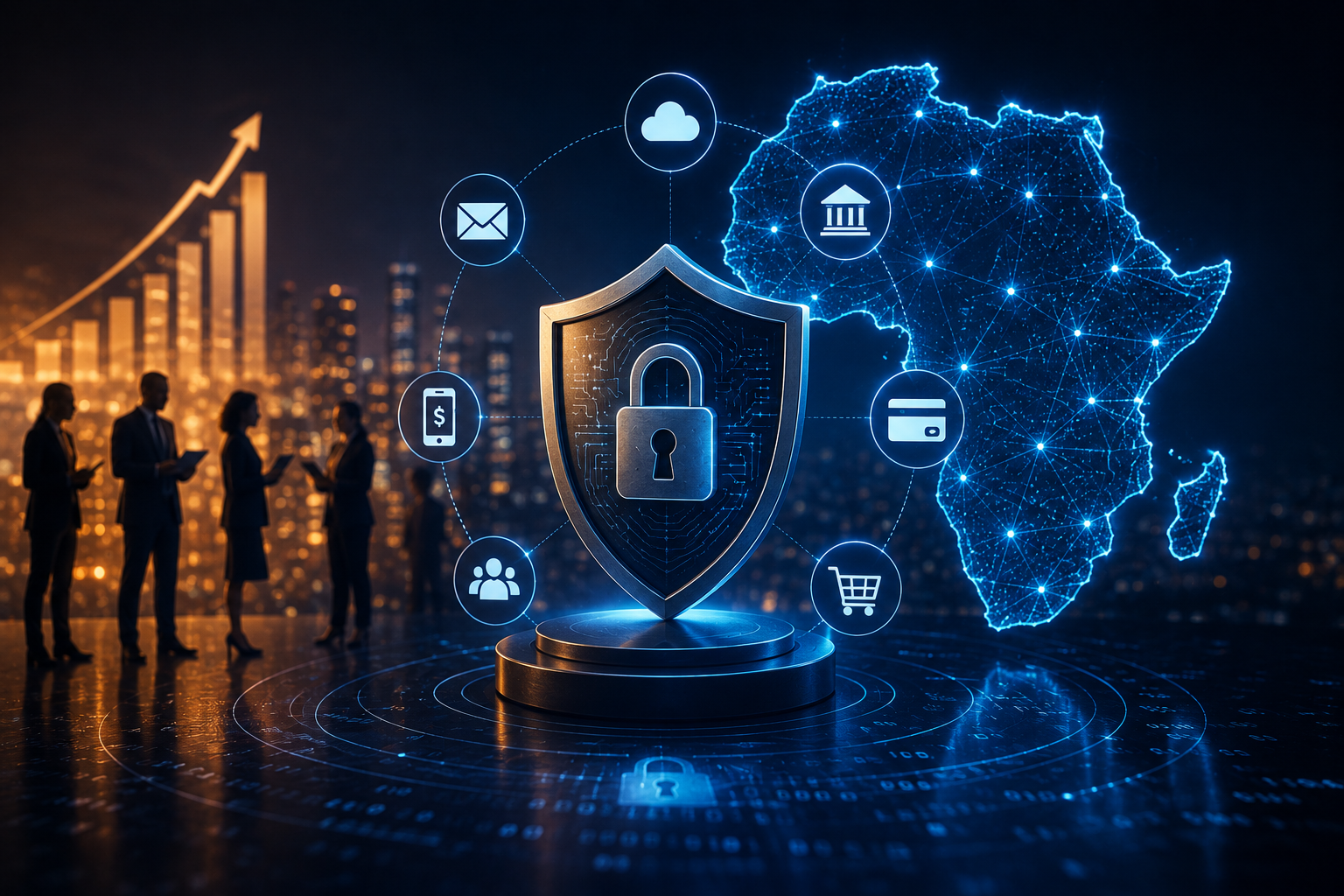
Repeated breaches can weaken consumer confidence, which makes cybersecurity in Africa increasingly important as businesses and consumers adopt more digital services. On the other hand, stronger cybersecurity can become an advantage.
Companies that protect customer information, secure their systems and respond quickly to incidents can build something that is increasingly valuable in a digital economy: trust.
Conclusion
Cybersecurity in Africa is entering a more important phase as businesses become increasingly dependent on digital systems. The rise in reported cybercrime losses shows that the threat is not theoretical. Businesses are already facing phishing, fraud, ransomware, data breaches and other attacks.
The answer is not to slow digital transformation, but to make cybersecurity in Africa part of that transformation from the beginning.For African businesses, stronger authentication, employee awareness, secure systems, reliable backups and clear response plans can make a meaningful difference.
As Africa’s digital economy continues to grow, cybersecurity will increasingly determine not only how safely businesses operate, but also how much customers and partners are willing to trust them.