
Africa is often described as one of the world’s most promising emerging markets, with a growing population, expanding digital economy and stronger push toward regional trade. Yet for many Africans, moving from one country on the continent to another can still feel surprisingly complicated.
A traveller in Lagos who wants to visit Nairobi, Accra, Kigali or Dakar is not crossing continents. But the journey can involve visa applications, expensive airfares, indirect routes and airport connections that make a relatively short trip far more complicated than it should be.
That contradiction points to a bigger problem: Africa is trying to become more economically integrated while the systems that allow people to move across its borders remain fragmented.
The problem is not simply tourism. It affects business travel, trade, education, conferences, employment, investment and the ability of Africans to interact with one another.
So, why is travelling within Africa still so difficult?
Africa’s borders are still a major barrier

One of the most obvious obstacles is the visa system. Africa has made progress toward easier movement, but visa requirements remain uneven across the continent. An African traveller’s ability to enter another African country can depend heavily on their nationality, destination and the policies between the two countries.
The latest Africa Visa Openness Index, released in 2025 by the African Development Bank and African Union Commission, found that 28.2% of intra-African travel was visa-free. That means most travel scenarios still involved either a visa on arrival or a visa requirement before departure.
The improvement is worth acknowledging. Visa-free travel increased from 20% in 2016 to 28% in 2025, while the number of African countries offering e-visas increased from nine to 31 over the same period. But progress does not necessarily mean the experience is simple.
A traveller may still have to find out whether a visa is required, determine which documents are needed, pay a fee, complete an online application and wait for approval before booking or taking a trip. For many travellers, this is one of the first barriers to travelling within Africa.
That friction matters because travelling is not only about crossing a border. It is also about how much effort, money and uncertainty a person has to absorb before getting there.
Sometimes the problem isn’t distance. It’s connectivity.
Even when a traveller does not need a visa, getting to the destination can be another problem. Africa has a large number of cities, but its air network does not always connect them efficiently. The continent’s aviation market remains fragmented, with relatively limited direct connections between many African destinations.
IATA reported in late 2025 that only 19% of intra-African routes had direct flights, highlighting how limited connectivity remains. It also identified fragmented markets and high operating costs as structural challenges for African airlines.
This helps explain why travelling between two African countries can sometimes involve an unexpected connection through another major hub rather than a straightforward flight between the two cities. These connectivity problems help explain why travelling within Africa can take longer and cost more than travellers expect.
The issue is bigger than inconvenience. Fewer direct routes can mean longer journeys, fewer choices and less competition between airlines. And when airlines have to operate through fragmented markets with relatively low traffic volumes, the economics of those routes become more difficult.
The World Economic Forum has also identified low intraregional connectivity and limited liberalisation of air-service agreements as barriers to the growth of Africa’s aviation and tourism sectors.
In other words, the challenge is not necessarily that African countries are too far apart. The continent is not always well connected to itself.
Why are flights within Africa so expensive?
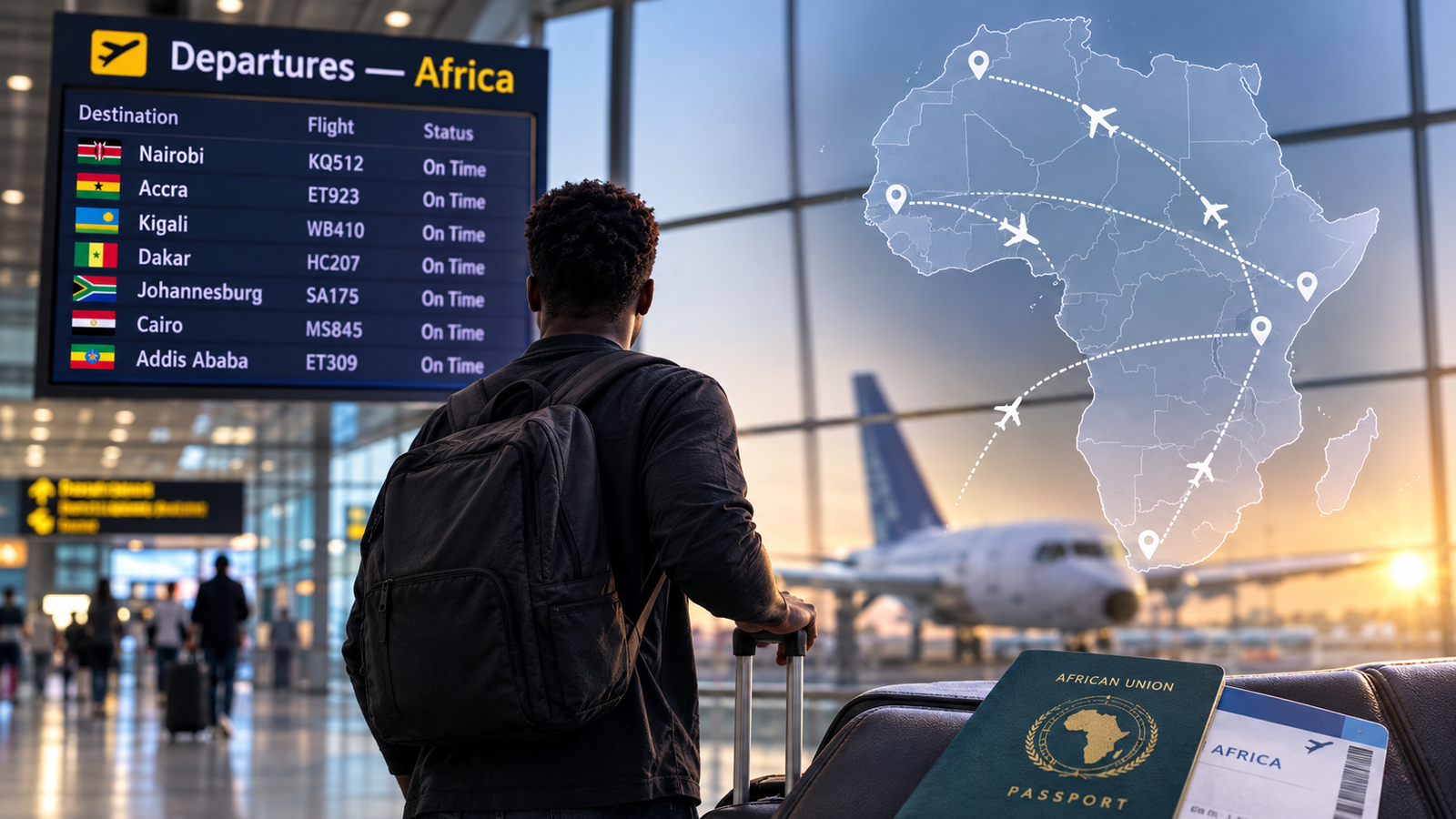
The price of an African flight is shaped by more than the distance between two airports. Airlines have to deal with fuel, aircraft maintenance, insurance, airport charges, navigation fees, taxes, staffing and other operating costs. Those costs eventually affect ticket prices.
According to IATA, taxes and charges on air travel in Africa are about 15% higher than the global average. The organisation has repeatedly called for governments to reduce unnecessary charges and improve the cost competitiveness of aviation on the continent.
African airlines also face other structural problems. IATA says fuel costs, maintenance, insurance and capital costs are higher than global averages, while fragmented markets make it harder for airlines to spread fixed costs across larger networks.
This creates a difficult cycle. High operating costs can contribute to higher fares. Higher fares can reduce demand. Lower demand makes it harder to sustain more routes and frequent services. Fewer routes then leave travellers with fewer alternatives.
That does not mean every flight within Africa is expensive or that taxes are the only reason for high fares. Prices vary by route, airline, season, booking period and demand.
But the broader cost structure helps explain why improving African air connectivity is not as simple as telling airlines to add more flights.
Africa already has plans to make movement easier
It would be inaccurate to suggest that African governments and institutions have ignored the problem. There are already several major initiatives designed to make the continent more connected.
The African Continental Free Trade Area (AfCFTA) is intended to deepen economic integration and increase trade between African countries. The Free Movement of Persons Protocol is designed to make it easier for Africans to travel, work and reside across the continent.
Then there is the Single African Air Transport Market (SAATM), an African Union flagship initiative intended to create a more unified air transport market and improve connections between African capitals and other destinations.
The idea behind SAATM is important because air connectivity is closely tied to economic integration. If businesses can move people and goods more easily, markets become easier to access. The problem is that creating a policy is not the same as implementing it everywhere.
The World Economic Forum noted in its Travel & Tourism Development Index that African states had made progress through initiatives including AfCFTA, the Free Movement of Persons Protocol and SAATM, but that implementation of greater openness and air-service liberalisation remained uneven.
That gap between ambition and implementation is one of the biggest reasons travelling within Africa remains complicated.
The problem is bigger than tourism
It is tempting to think of easier African travel as mainly a tourism issue. It is not.
A business owner who cannot easily travel to meet a potential partner faces a mobility problem. A startup founder travelling to another African market faces one too. So does a student attending a programme in another country, a professional travelling to a conference, a researcher collaborating with colleagues or a family visiting relatives across a border.
The African Development Bank describes visa openness as important not only for tourism but also for business, entrepreneurship, investment, education, labour mobility and regional integration.
This is why mobility has become increasingly connected to the wider conversation about Africa’s economic integration. A continent cannot fully benefit from a larger regional market if people struggle to move around that market.
The African Union’s latest integration work makes the same connection. Its August 2026 publication, Integrating Africa: From Threads to Hubs, says that reducing behind-the-border frictions and investing in regional infrastructure are important to making deeper continental integration work. The report also notes that more than 60% of intra-African trade consists of manufactured goods, showing the potential economic value of stronger regional connections.
That means the question is no longer simply, “Can Africans travel more easily?” It is also, “Can African economies integrate if Africans cannot move easily between them?”
Technology can make parts of the journey easier
Technology cannot remove every border or build an airport overnight, but it can reduce some of the friction around travel. This is part of a broader shift in how digital infrastructure is shaping connectivity across Africa.
Digital visa applications can make immigration processes easier to navigate. Online booking platforms can bring flights, accommodation and tours together. Digital visa applications can make immigration processes easier to navigate. Online booking platforms can bring flights, accommodation and tours together.
Digital payments can reduce some of the difficulties associated with paying across borders, while digital identity systems could eventually make parts of border processing more efficient. Travel companies are already moving in this direction.
In Nigeria, GIG Mobility launched PASS, a travel and tour platform offering services including international flight bookings, hotel reservations, tourism experiences, holiday packages and group travel management. Techpoint Africa reported the launch in April 2026 as part of GIGM’s broader expansion from transportation into a wider mobility and travel ecosystem.
Platforms like this can make the travel experience more convenient, but they cannot solve structural problems such as a lack of direct routes or restrictive visa policies.
Technology can make a complicated system easier to navigate. It cannot, by itself, fix the system.
What needs to change?
Making travelling within Africa easier will require more than one solution.
1. More direct flight routes
African cities need stronger connections to one another. More direct routes would reduce unnecessary connections, shorten travel times and potentially create more competition.
2. Better implementation of SAATM
The Single African Air Transport Market already provides a framework for improving aviation connectivity. The bigger challenge is translating that framework into more open and commercially viable routes.
3. More visa openness
The progress made by countries that have simplified or removed visa requirements shows what is possible. More consistent policies would make regional travel easier for Africans.
4. Lower aviation costs
Reducing excessive taxes, fees and other charges could make it easier for airlines to operate competitively and for passengers to afford flights.
5. Better ground transportation
Air travel is only one part of the mobility system. Roads, rail networks, buses, ports and border infrastructure also matter, particularly for neighbouring countries.
6. More digital border services
E-visas and other digital immigration services can reduce paperwork and make requirements easier to understand. But they need to be reliable, accessible and supported by clear information.
7. Easier cross-border payments
Travelling to another country should not mean navigating unnecessary difficulties when paying for hotels, transport, food or other services. Better regional payment systems can support both travellers and businesses.
These changes are interconnected. Cheaper flights are less useful if a traveller still faces a difficult visa process. A visa-free policy is less transformative if there are no practical or affordable ways to reach the destination.
So, can travelling within Africa become easier?
Yes, but it will require African countries to treat mobility as part of economic infrastructure rather than as a separate tourism issue. There are already signs of movement in that direction.
The African Development Bank and African Union renewed their push for visa-free travel in 2026, arguing that freer movement is important to Africa’s economic transformation under AfCFTA. At the same time, discussions around SAATM continue to focus on improving aviation connectivity.
There have also been concrete policy developments. In May 2026, the Republic of the Congo announced that it would waive visa requirements for all African nationals from January 1, 2027, another step toward greater continental visa openness. But individual reforms will only go so far if they remain isolated.
The larger opportunity is to create a continent where easier movement becomes normal rather than exceptional. That would benefit tourists, but the impact would extend much further—to businesses, workers, students, entrepreneurs and entire regional economies.
What easier intra-African travel could mean for Africa
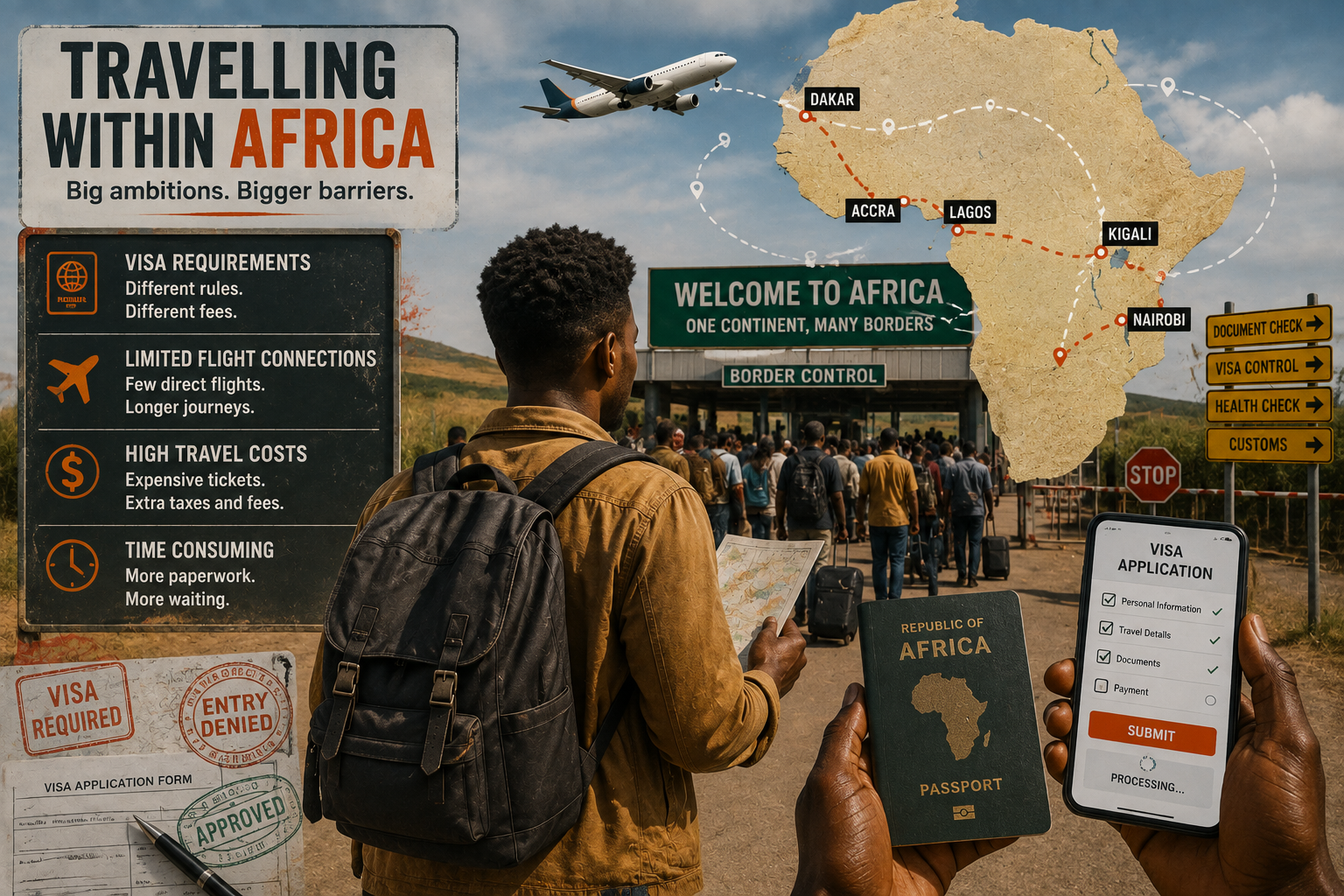
Africa does not have a shortage of destinations. It has a connectivity problem.
The continent has cities with growing technology ecosystems, cultural centres attracting international visitors, emerging business hubs and countries with enormous tourism potential. But those opportunities become harder to access when borders are restrictive, flights are limited and travel costs remain high.
The World Economic Forum’s 2024 Travel & Tourism Development Index found that Sub-Saharan Africa had improved more than any other region in its overall TTDI score since 2019, while also pointing to continuing gaps in infrastructure, air connectivity and policy implementation.
That combination, progress alongside persistent structural barriers is perhaps the best way to understand Africa’s travel problem. The continent is not standing still, but it is not moving as freely as its economic ambitions require.
If Africa wants AfCFTA to create a genuinely integrated market, if it wants tourism to grow, and if it wants businesses and people to connect more easily, then making travelling within Africa easier cannot remain an afterthought.
The future of African integration will depend not only on how easily goods, money and data cross borders, but also on how easily people can.
Want more travel insights? Explore NaysBlog for practical travel tips, stories and updates from across Africa and beyond.