
Mpox May Be Going Undetected in Nigeria, New Study Suggests
A new study of Nigerian adults has raised an important question about how much mpox transmission routine surveillance may be missing.
Researchers found evidence of previous mpox exposure in some healthy Nigerian adults who did not report symptoms consistent with the disease. The finding does not mean Nigeria is experiencing a hidden nationwide outbreak, but it suggests that some infections or exposures may go unrecognised.
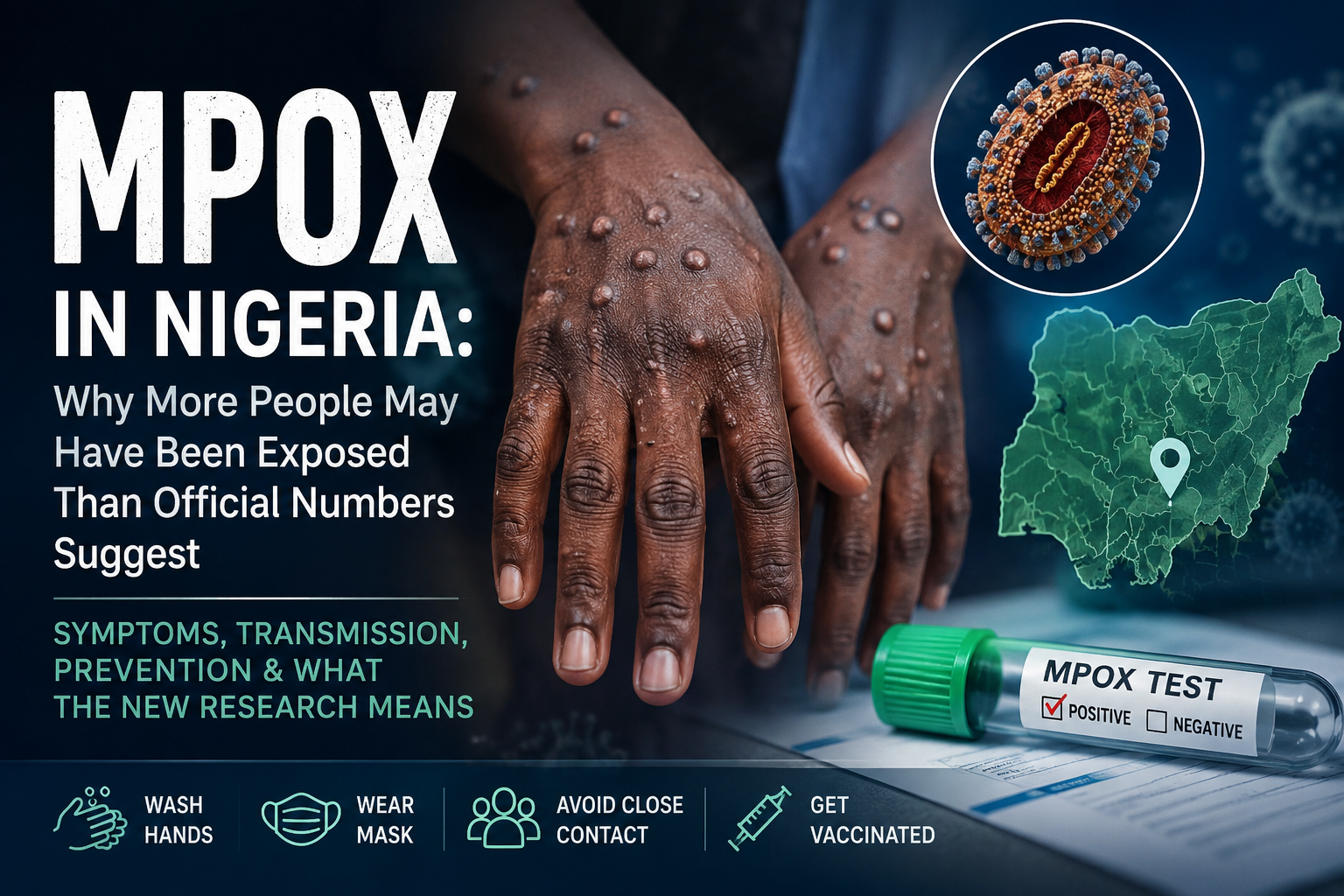
That matters because mpox remains a public-health concern in Nigeria, where surveillance has continued since the disease re-emerged in the country.
The latest evidence also gives Nigerians another reason to understand mpox symptoms, how the virus spreads and what to do if an infection is suspected.
What New Research Found About Mpox in Nigeria
The study, published in Nature Communications in January 2026, used blood samples and epidemiological information from Nigerian adults to investigate whether mpox exposure could occur without recognised illness.
The researchers found antibody evidence consistent with previous Orthopoxvirus exposure among some participants. More importantly, follow-up testing identified people whose antibody responses suggested recent mpox exposure even though they had not reported symptoms compatible with mpox.
The researchers describe the findings as evidence of occult or unrecognised exposure. Their analysis also suggests that mpox transmission in Nigeria has generally been characterised by slow epidemic growth and frequent infections that do not lead to onward transmission.
That is a more complicated picture than simply saying the virus is spreading silently through the population.
What the Findings Do,and Don’t Show
The study does not establish that a particular percentage of Nigerians currently have undetected mpox. The participants came from specific research cohorts rather than a nationally representative sample of Nigeria’s population. Antibody evidence can indicate exposure, but it cannot by itself establish exactly when or how an individual became infected.
The researchers’ conclusion is therefore more measured: unrecognised exposure occurs and may not always be captured through systems that depend on symptomatic illness being noticed and reported.
That distinction is important when interpreting the study. Mild or unusual mpox symptoms can also make some infections harder to recognise, particularly when they resemble other common illnesses or skin conditions.
Why Could Mpox Be Going Undetected?
Mpox does not necessarily produce the same symptoms in everyone.
Some people develop a characteristic rash, while others may experience fever, headache, swollen lymph nodes, muscle aches, back pain, sore throat or exhaustion. The rash can also appear in different parts of the body and may be limited to a small number of lesions.
Another challenge is that mpox can resemble other diseases and skin conditions. Without appropriate testing, it may not always be possible to distinguish mpox from other causes of a rash or similar symptoms.
People may also have mild illness and never seek medical attention. When that happens, an infection can go unnoticed by formal surveillance systems.
The Nigerian research is valuable partly because it shows why looking only for obvious clinical cases may not provide the complete picture of transmission.
What Are the Mpox Symptoms?
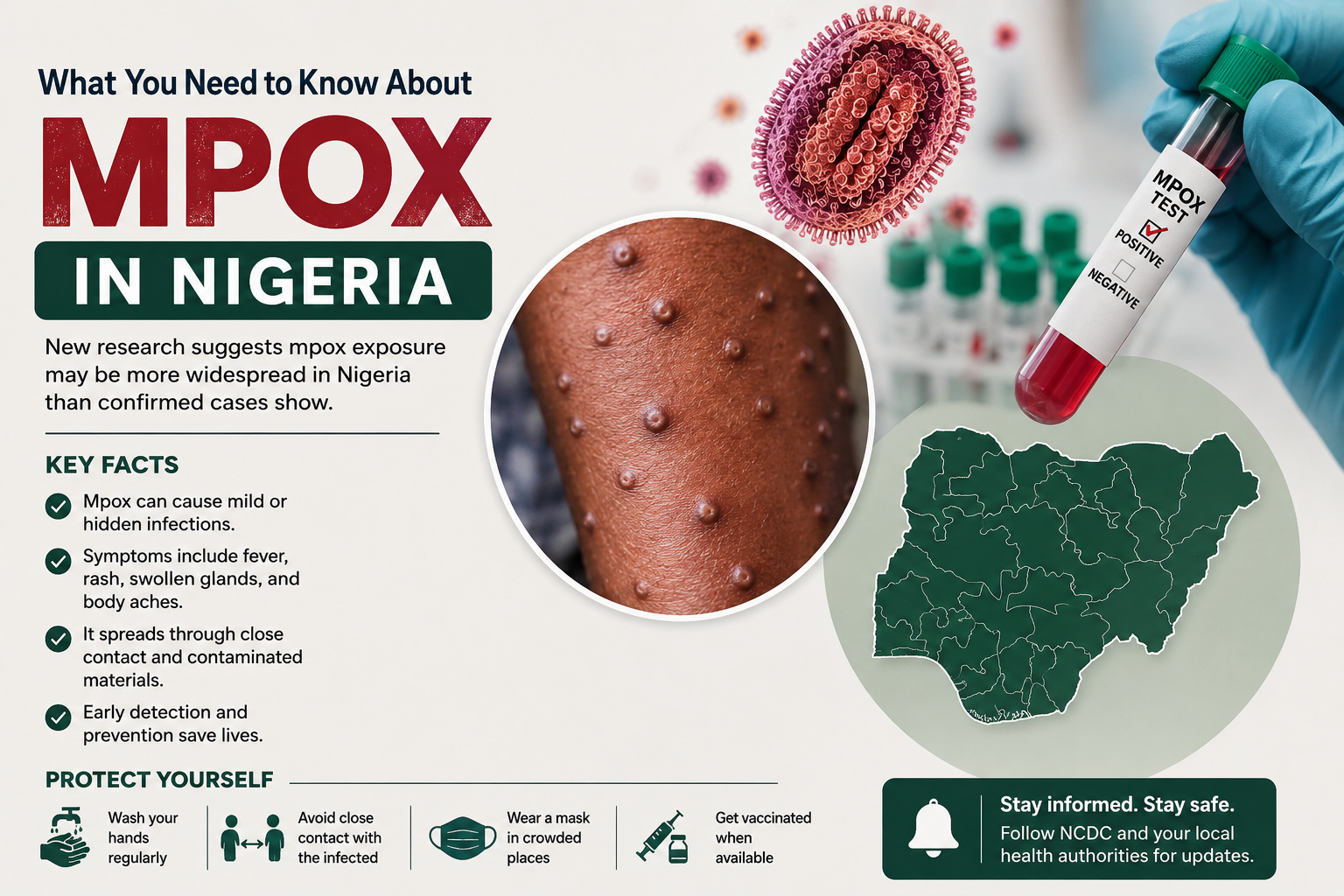
The most recognisable mpox symptoms include a rash, fever and swollen lymph nodes. Other symptoms can include headache, muscle aches, back pain, sore throat, low energy and chills.
Other symptoms can include:
- Headache
- Muscle aches
- Back pain
- Sore throat
- Low energy
- Chills
- Painful or swollen lymph nodes
Recognising common mpox symptoms can help people know when to seek medical attention. Symptoms can appear between one and 21 days after exposure.
For many people, the illness lasts around two to four weeks. Not everyone experiences the same combination of symptoms, and the rash does not necessarily appear in the same way or at the same time for every person.
What Does an Mpox Rash Look Like?
The rash is one of the most recognisable mpox symptoms, but its appearance can vary from person to person. An mpox rash can develop through several stages.
Lesions may begin as flat or raised spots before becoming fluid-filled lesions and eventually crusting over as they heal. They can occur on the face, hands, feet, mouth, genital or anal areas and other parts of the body.
Some people have many lesions, while others may have only a few. A closer look at the rash is important because it is one of the most recognisable mpox symptoms.
Because other infections can cause similar skin changes, a rash alone cannot confirm mpox. Anyone concerned about a suspicious rash or other symptoms should seek medical advice rather than relying on online images for self-diagnosis.
How Does Mpox Spread?
Mpox mainly spreads through close contact with someone who has the infection. Transmission can occur through contact with lesions, bodily fluids and respiratory particles during close interaction. It can also occur through contaminated objects such as clothing or bedding. Sexual contact is one possible route, but it is not the only one.
The virus can also spread between animals and humans in situations involving infected animals.
Want more health updates and insights? Subscribe to Naysblog for the latest health stories, research and public-health developments.
Can Mpox Spread Without Sexual Contact?
Yes. Mpox is not exclusively a sexually transmitted infection.
Close skin-to-skin contact with an infected person can transmit the virus even when sexual activity is not involved. Contact with lesions, bodily fluids or contaminated materials can also result in transmission.
This matters because reducing mpox to a sexually transmitted infection can create unnecessary stigma while causing people to overlook other forms of close contact.
Who Is Most at Risk of Severe Mpox?
Most people with mpox recover, but severe illness is more likely in certain groups. People with weakened immune systems are among those at greater risk of complications. Young children and pregnant people can also face a higher risk of severe disease.
Complications can include serious skin infections, pneumonia, eye complications and neurological problems.
This does not mean that everyone in a higher-risk group will develop severe illness. It means suspected infection deserves prompt medical attention, particularly when symptoms are worsening or the person has an underlying condition that affects immunity.
How Long Does Mpox Last?
For many people, mpox lasts about two to four weeks. The lesions gradually progress through different stages before crusting and healing. A person can remain infectious until all lesions have healed and a fresh layer of skin has formed.
The illness can last longer or become more serious in people with severely weakened immune systems.
Anyone experiencing symptoms that could be mpox should contact a healthcare professional for assessment and follow the advice provided.
Is There Treatment for Mpox?
There is no single treatment that should be described as a universal cure for mpox. For most people, treatment focuses on supportive care, including managing pain and fever, maintaining hydration and nutrition, caring for skin lesions and treating complications when they occur.
Some patients, particularly those at higher risk of severe disease, may require hospital care or additional treatment. The European Centre for Disease Prevention and Control notes that people at increased risk of severe mpox may require hospitalisation and, in some circumstances, antiviral treatment.
Testing also matters because several other illnesses can produce similar symptoms.
Is There a Mpox Vaccine?
Yes. Mpox Vaccines can help protect against mpox and are an important part of outbreak control.
Vaccination strategies are generally focused on people at higher risk of exposure or those who have been exposed to an infected person. The exact recommendations can vary according to the outbreak situation and public-health guidance in a particular location.
Vaccination is only one part of the response. Surveillance, testing, contact tracing, clinical care and public-health communication also play important roles in limiting transmission.
What Is Nigeria Doing About Mpox?
Nigeria continues to maintain mpox surveillance through the Nigeria Centre for Disease Control and Prevention. NCDC publishes regular disease situation reports tracking suspected and confirmed mpox cases and other indicators. Its reporting system continues to provide state-level and national surveillance information as part of the country’s infectious-disease response.
The country’s response has also included work on clinical guidance, surveillance and community awareness.
WHO reported in October 2025 that Nigeria was reviewing its mpox clinical-management guidelines while strengthening referral and data systems and expanding community awareness efforts.
At the continental level, WHO’s 2026 situation reports continue to track mpox activity across Africa, showing that the disease remains an active public-health issue rather than a problem that ended with the initial global outbreak.
How Can You Reduce Your Risk of Mpox?
Reducing exposure is the main practical step. If you know someone has mpox, avoid close physical contact with their lesions and avoid sharing personal items that may have been contaminated, such as clothing, towels and bedding.
Good hand hygiene is also important, particularly after potential contact with an infected person’s lesions or belongings.
People who develop an unexplained rash or other symptoms associated with mpox should seek medical advice and follow local public-health guidance.
Condoms may reduce some sexual transmission risk but cannot provide complete protection because mpox can spread through skin-to-skin contact outside areas covered by a condom.
What the Research Means for Nigerians
The most important message from the new study is not that Nigeria has discovered a hidden nationwide mpox outbreak. It is that some mpox exposure can occur without the illness being recognised.
The research suggests that relying only on people developing obvious symptoms and presenting for testing may miss part of the picture. At the same time, the study’s design does not allow its findings to be used as a national estimate of how many Nigerians have had unrecognised mpox exposure.
That makes surveillance particularly important.
Nigeria has continued to monitor mpox, while researchers are also trying to understand how the virus behaves in the country’s population. The new evidence adds another layer to that work by showing that exposure may sometimes occur without the clinical signs that normally trigger investigation.
For the public, however, the practical message remains straightforward: know the symptoms, understand the different ways mpox can spread and seek medical advice when an unusual rash or other concerning symptoms appear.
Conclusion
Mpox may be harder to detect than confirmed case numbers alone suggest, but the latest Nigerian research does not show that the country is experiencing a hidden nationwide outbreak.
Instead, it provides evidence that some exposure can occur without recognised illness and reinforces the need for strong surveillance and early detection.
For Nigerians, understanding mpox symptoms, transmission and prevention is more useful than relying on fear or speculation. The disease remains a public-health concern, but accurate information, and knowing when to seek medical care matters more than alarm.
Stay informed with the latest news, insights and updates from Naysblog.