
A 2026 study published in Scientific Reports, for example, examined rice, bread, milk, yogurt, meat, edible oil and tap water and detected microplastics across the foods and water tested. The study is one of several recent efforts to measure how much exposure people may receive through their diets.
But there is an important distinction between finding microplastics in what people eat and drink and proving that those particles are making people sick.
That distinction matters because research into microplastics and human health is moving quickly, but scientists still do not have all the answers.
Microplastics Are Becoming Harder to Ignore
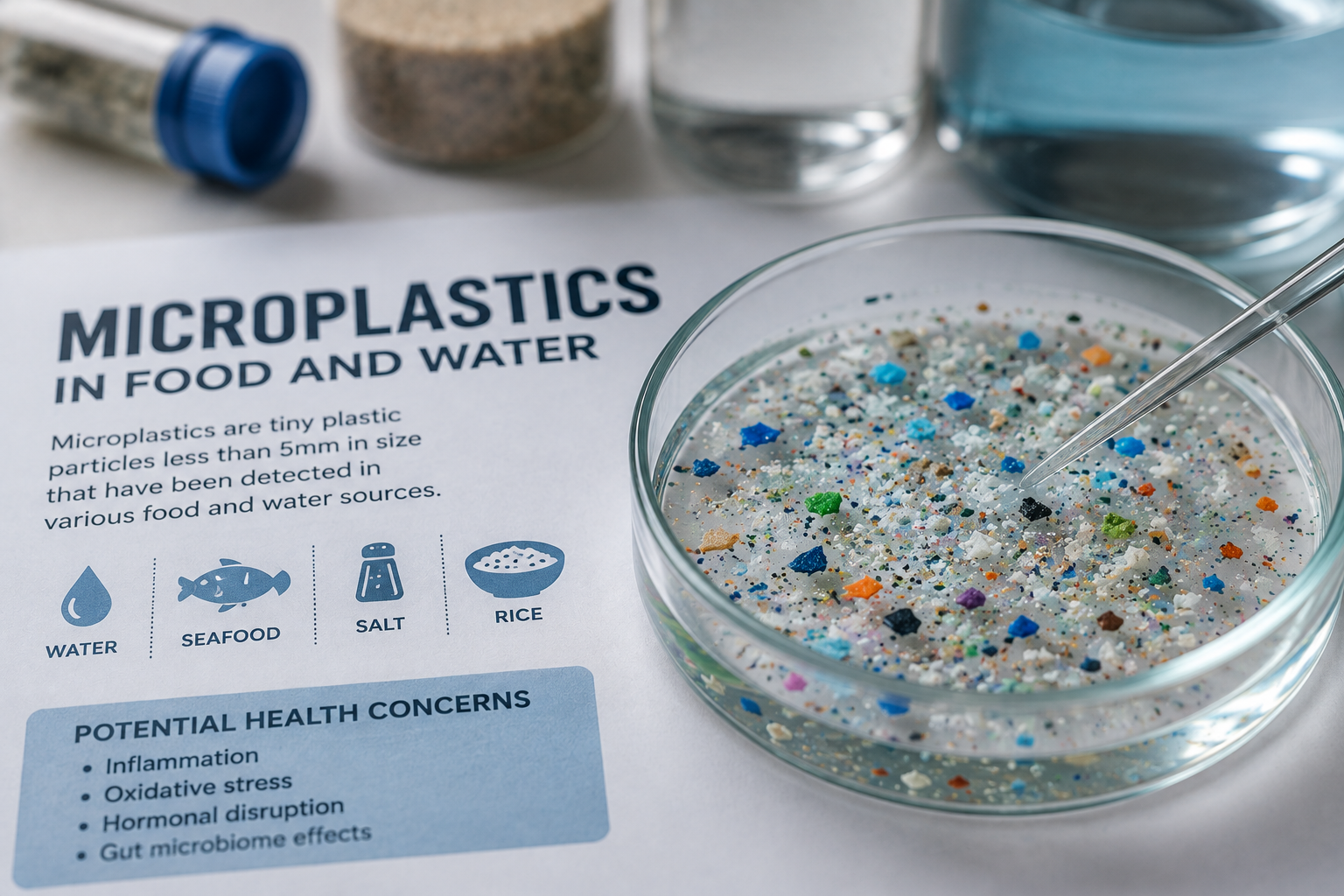
Microplastics are tiny plastic particles generally measured at less than 5 millimetres. Nanoplastics are smaller still, typically in the nanometre range, and their size makes them particularly difficult to detect and study, according to the European Food Safety Authority’s information on microplastics and nanoplastics in food.
They can form when larger plastic products break down through weathering and environmental processes. They can also come from sources such as synthetic textiles, vehicle tyres and some industrial processes.
Once released, the particles can move through water, soil and air. That creates several potential routes into the food chain.
The result is that microplastics have been detected in a range of foods, including seafood, meat, vegetables, honey, beer and table salt, as well as drinking water. (European Food Safety Authority)
The question is no longer simply whether exposure occurs. It is what that exposure means for the body.
How Do Microplastics in Food and Water Reach Consumers?
There is no single route. Microplastics can reach food through environmental contamination, agricultural systems, water used during production and processing, transportation and contact with materials used around food.
Packaging can also be part of the picture, although it is important not to assume that every microplastic found in food necessarily came from its packaging.
The U.S. Food and Drug Administration says the available evidence indicates microplastics can enter food primarily through environmental contamination, while evidence about migration from plastic food packaging remains insufficient.
Drinking water can also contain microplastics. They may enter water sources through environmental pollution and move through water-treatment and distribution systems.
Understanding how these particles reach consumers is important because exposure can occur through several different pathways.
Both bottled and tap water have been studied. WHO has previously reviewed evidence of microplastics in drinking water and identified major gaps in understanding their potential health effects and how effectively different treatment processes remove them.
What Recent Research Is Finding
The 2026 Scientific Reports study from western Iran provides a useful example of how researchers are investigating dietary exposure. Researchers tested staple foods including rice, bread, milk, yogurt, meat and edible oil, alongside tap water.
They reported microplastics in the samples, with average concentrations varying considerably between food types. Rice and edible oil, for example, each averaged 100 particles per kilogram in the study, while yogurt averaged 63.33 particles per kilogram. (Nature)
That does not mean the same concentrations occur in food everywhere.
Microplastic measurements can vary substantially depending on the location, food, sampling method, particle size being measured and laboratory technique. Researchers have also pointed out that differences in analytical methods make results from separate studies difficult to compare directly.
The more important finding is that microplastics in food and water are a documented exposure pathway, although the amount people encounter can vary considerably between locations and studies.
Can Microplastics Actually Harm Human Health?
This is where the evidence becomes more complicated. The concern around microplastics in food and water is not simply whether people are exposed, but whether repeated exposure can have measurable effects on human health.
Scientists have detected microplastics in human biological samples, including blood and gastrointestinal material. Research has also investigated possible biological effects involving inflammation, oxidative stress, endocrine activity and changes to the gut microbiome.
But evidence that a particle is present in the body is not the same as evidence that it causes a particular disease.
A recent systematic review of human-focused research found associations between microplastic exposure and some biological markers related to inflammation, oxidative stress and endocrine function.
However, the review concluded that causal relationships between microplastic exposure and specific clinical diseases remain unestablished, that uncertainty is important.
Laboratory studies can help researchers understand possible mechanisms, but effects observed in cells or animals do not automatically demonstrate that the same thing happens in humans at normal environmental exposure levels.
So claims that microplastics have been proven to cause cancer, infertility or other specific diseases go beyond what the current evidence can reliably establish.
What Happens When We Consume Microplastics?
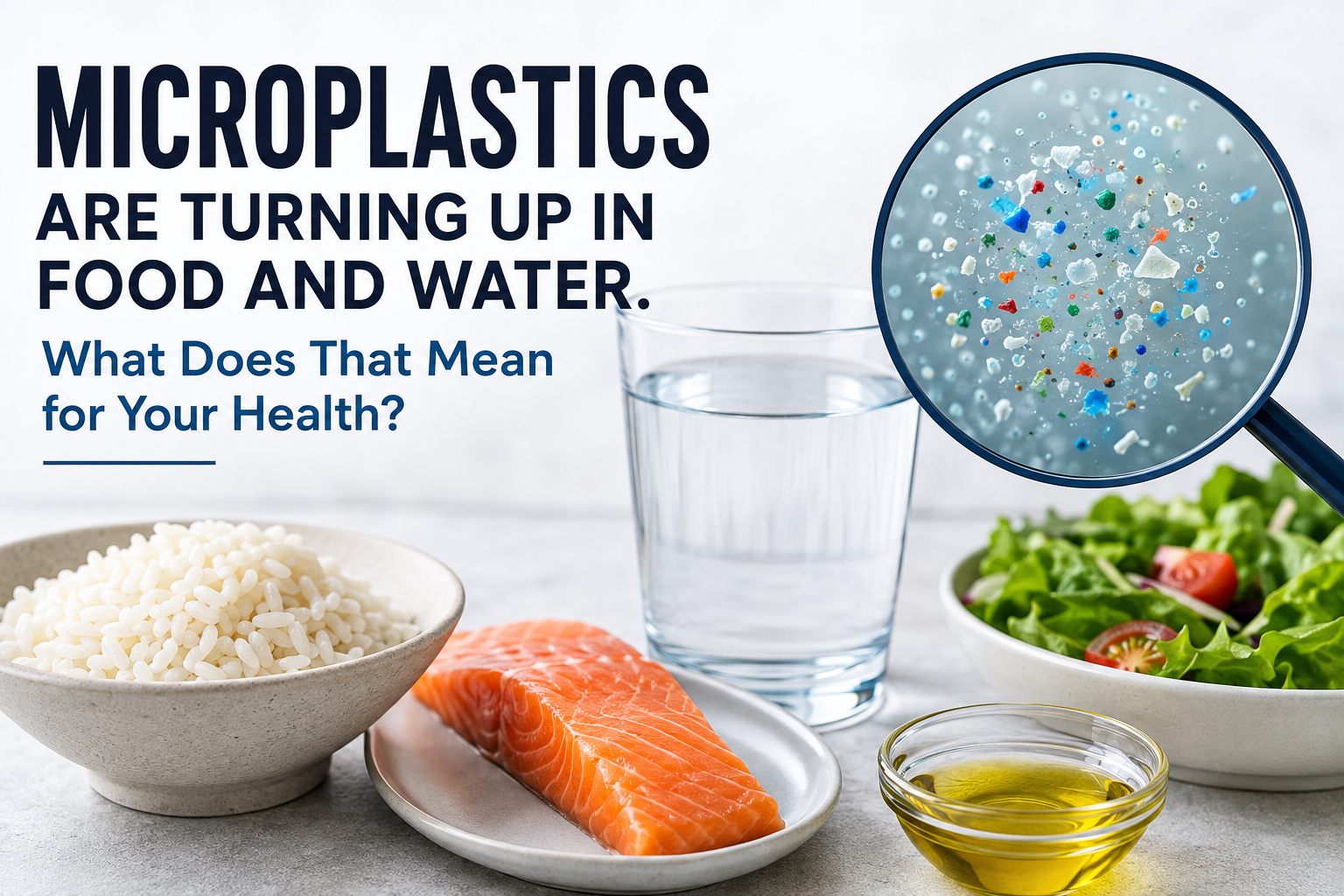
When microplastics are swallowed, their first major point of contact is the digestive system. Some particles can pass through the gastrointestinal tract and leave the body. The fate of smaller particles, particularly nanoplastics, is more complicated and remains an active area of research.
WHO’s assessment of microplastics in drinking water found that larger particles are generally expected to pass through the gut, while the potential uptake and distribution of much smaller particles requires further investigation.
Researchers are therefore examining several possibilities: whether particles interact with intestinal tissues, whether very small particles can cross biological barriers, whether they carry chemicals or other contaminants, and whether repeated exposure could have biological consequences.
EFSA says some studies suggest plastic particles may enter cells or carry contaminants, but it also emphasizes that knowledge about dietary exposure and potential effects on human health remains limited.
Are Bottled Water and Tap Water Sources of Microplastics?
Yes, studies have detected microplastics in both.
That does not mean every bottle or every tap contains the same amount. This is why the question of microplastics in food and water cannot be answered simply by comparing bottled and tap water.
WHO reviewed research involving treated tap water, bottled water and other parts of the water cycle and concluded that the available evidence was not sufficient to establish a significant health risk from microplastics in drinking water. It also called for better research and monitoring.
More recent research continues to examine how microplastics enter drinking-water systems, how different treatment technologies remove them and how particle size affects potential exposure.
This is another reason to be careful with viral claims suggesting that bottled water is automatically safer—or automatically more dangerous, because of microplastics.
The answer depends on the specific water source, treatment system, packaging and the quality of the evidence being used.
What About Microplastics in Nigeria’s Water?
Nigeria has its own emerging evidence base. A peer-reviewed review published in June 2026 synthesized 36 Nigeria-focused studies and found evidence of microplastic contamination across several environmental and human-exposure pathways.
These included rivers and other freshwater systems, bottled water, drinking-water systems, table salt, fish and seafood.
The review found that the evidence is uneven across the country. Most of the zone-specific studies it identified came from the South-West, with fewer studies from other regions and no zone-specific studies from the North-East.
Some of the reported concentrations are striking. The review cites microplastic levels reaching up to 22,079 particles per litre in Osun River water, although it warns that results from different studies should not be directly compared because sampling and laboratory methods vary.
The Nigerian evidence also includes direct exposure pathways. Studies have reported microplastics in bottled water, drinking-water systems, table salt and seafood. But the same review makes an important point: Nigeria has much stronger evidence of exposure than it does of direct human health effects.
The researchers found that direct epidemiological evidence showing that microplastics are causing adverse health outcomes among Nigerians is still lacking.
That is a critical distinction for anyone reading alarming headlines about plastic pollution in Nigeria.
Should You Be Worried About Microplastics?
There is a legitimate reason for scientists to keep studying them, but the current evidence does not justify panic. Microplastics are widespread, exposure is possible through food and water, and researchers have identified biological mechanisms that warrant further investigation.
While the long-term health effects of microplastics remain under investigation, maintaining healthy lifestyle habits is still important. Read more about aging gracefully and maintaining vitality.
At the same time, major scientific bodies continue to emphasize uncertainty around exposure levels, particle characteristics and long-term human health effects.
The U.S. FDA currently says available scientific evidence does not demonstrate that the levels of microplastics or nanoplastics detected in foods pose a risk to human health. EFSA, meanwhile, says it has not yet completed a full risk assessment for microplastics and nanoplastics in food and is working toward a scientific opinion expected in 2027.
So the scientifically responsible answer is neither “microplastics are harmless” nor “microplastics are definitely making everyone sick.” The evidence is still developing.
What Can You Do to Reduce Exposure?
There is no need for extreme measures or products claiming to remove every particle of plastic from your body.
While researchers continue to study microplastics exposure, maintaining a balanced diet remains an important part of everyday health. Read more about how to eat healthy on a budget in Nigeria.
Instead, sensible exposure-reduction habits can include:
- Avoid unnecessarily heating food in plastic containers, particularly when the container is not designed for that use.
- Reduce unnecessary contact between food and plastic where practical.
- Follow established food-safety and drinking-water guidance.
- Use safe, properly maintained drinking-water sources.
- Avoid treating unverified social-media claims about “detoxing” microplastics as medical advice.
The broader solution, however, is not something an individual can solve alone. Reducing plastic waste, improving waste collection, strengthening wastewater treatment and monitoring drinking-water systems can address exposure closer to its environmental sources.
What Scientists Still Don’t Know
Some of the biggest unanswered questions involve dose, particle size and long-term exposure. Researchers still need better estimates of how much microplastic and nanoplastic people actually consume, how much is absorbed, how long particles remain in different tissues and whether repeated exposure at everyday environmental levels produces clinically meaningful effects.
Measurement is another challenge. Different studies can use different particle-size thresholds, sampling procedures and analytical techniques, making their results difficult to compare.
Nanoplastics are an even bigger research challenge because they are much smaller and harder to detect. Although researchers are still studying the long-term effects of environmental exposures, healthy lifestyle choices remain an important part of overall wellbeing. You can also read more about longevity and ways to support a healthier life.
EFSA’s current work specifically includes improving methods for measuring micro- and nanoplastics in food and updating dietary exposure estimates. Its experts are also examining potential toxicological effects and whether these particles can carry contaminants or pathogens.
Until those questions are answered more clearly, more research is also needed to understand how long-term exposure to microplastics in food and water may affect different groups of people.
Conclusion
Microplastics in food and water are being detected in studies around the world, including research examining Nigerian environmental and drinking-water systems. That makes exposure a real environmental and food-safety question. But exposure alone does not prove that the particles are causing disease.
The strongest conclusion from the current evidence is that scientists have enough reason to keep investigating microplastics and human health, particularly the smallest particles and the effects of long-term exposure.
For readers, that means staying informed without falling for either extreme: there is a real scientific question here, but there is not yet enough evidence to turn that question into a reason for panic.