
Many people search for the signs you’re burnt out because they want to understand whether their constant exhaustion is a temporary struggle or a deeper issue.
Modern life often rewards people for doing more, working harder, and staying constantly connected. They push through tiredness, ignore stress signals, and convince themselves that they only need a short break before everything feels better.
But what happens when the tiredness does not go away? When answering emails feels overwhelming, activities you once enjoyed no longer excite you, and even simple responsibilities feel exhausting, your body and mind may be telling you something important.
You may be experiencing burnout.
Burnout is more than being tired after a long day. It is a state of prolonged physical, emotional, and mental exhaustion that develops when ongoing stress is not properly managed. It can affect professionals, entrepreneurs, students, remote workers, caregivers, and anyone dealing with constant pressure.
The challenge is that burnout often develops slowly. Many people do not recognise the warning signs until their productivity, relationships, health, and happiness are already affected.
Understanding the signs you’re burnt out early can help you recognise when stress has become unhealthy and take action before exhaustion becomes your everyday reality.
In this guide, you will discover what burnout means, what causes it, the common burnout symptoms to watch for, how burnout differs from normal stress, and practical strategies for recovery and prevention.
What Is Burnout?
Burnout is a condition caused by prolonged or excessive stress that leaves a person feeling physically, mentally, and emotionally drained. Many people ignore the early signs you’re burnt out because they mistake prolonged stress and exhaustion for a normal part of their daily routine.
According to the World Health Organization (WHO), burnout is recognised as an occupational phenomenon resulting from chronic workplace stress that has not been successfully managed.
Although burnout is often associated with work, it is not limited to careers. Students facing academic pressure, parents managing multiple responsibilities, business owners carrying constant uncertainty, and caregivers supporting others can also experience burnout.
Burnout typically involves three major areas:
- Extreme exhaustion: Feeling completely drained and lacking energy.
- Mental distance or negativity: Feeling detached, frustrated, or disconnected from responsibilities.
- Reduced effectiveness: Struggling to perform tasks that once felt manageable.
Unlike normal tiredness, burnout does not usually disappear after one night of sleep or a relaxing weekend. It requires recognising the underlying causes and making intentional changes. Paying attention to the signs you’re burnt out can help you understand when your body and mind need a healthier balance between responsibilities and recovery.
Burnout vs Stress: What Is the Difference?
Stress and burnout are closely connected, but they are not the same. Stress usually happens when you feel overwhelmed by temporary challenges. Once the pressure reduces, your energy and motivation often return.
Burnout happens when stress continues for too long without enough recovery.
A simple way to understand the difference is: Stress feels like having too much on your plate. Burnout feels like having no energy left to carry the plate.
Common Signs of Stress
- Feeling pressured
- Worrying about deadlines
- Increased alertness
- Temporary frustration
- Feeling overwhelmed
Common Signs of Burnout
- Emotional exhaustion
- Feeling disconnected
- Loss of motivation
- Constant fatigue
- Feeling helpless or trapped
If stress is ignored for a long period, it can gradually develop into burnout. Understanding the difference between stress and the signs you’re burnt out can help you identify when normal pressure has become a serious problem that requires attention.
What Causes Burnout?
Burnout rarely comes from one single problem. It usually develops through a combination of ongoing pressures that slowly drain your mental and physical resources.
Recognising the possible causes behind the signs you’re burnt out can make it easier to identify unhealthy patterns and make changes before burnout becomes overwhelming.
Workplace Pressure
Work burnout is one of the most common forms of burnout. Heavy workloads, unrealistic expectations, long hours, poor management, and lack of control over your responsibilities can contribute to chronic stress.
People who constantly feel they must prove themselves or meet impossible standards may be at higher risk.
Poor Work-Life Balance
When work takes up most of your time and energy, there is little room for rest, relationships, hobbies, or personal care. Constant availability through phones and digital devices has made it harder for many people to truly disconnect.
Emotional Responsibilities
Supporting others emotionally can become exhausting when you ignore your own needs. Parents, caregivers, healthcare workers, and people managing family challenges may experience emotional burnout from constantly giving without recovering.
Academic Pressure
Students can experience burnout from exams, assignments, competition, financial concerns, and pressure to succeed. Academic burnout may lead to poor concentration, reduced motivation, and declining performance.
Financial and Personal Challenges
Money problems, relationship difficulties, major life changes, and uncertainty about the future can create long-term stress that contributes to burnout.
READ MORE: Productivity Tips For Students
10 Signs You’re Burnt Out
Recognising the signs you’re burnt out early can make recovery easier and prevent long-term physical and emotional exhaustion.
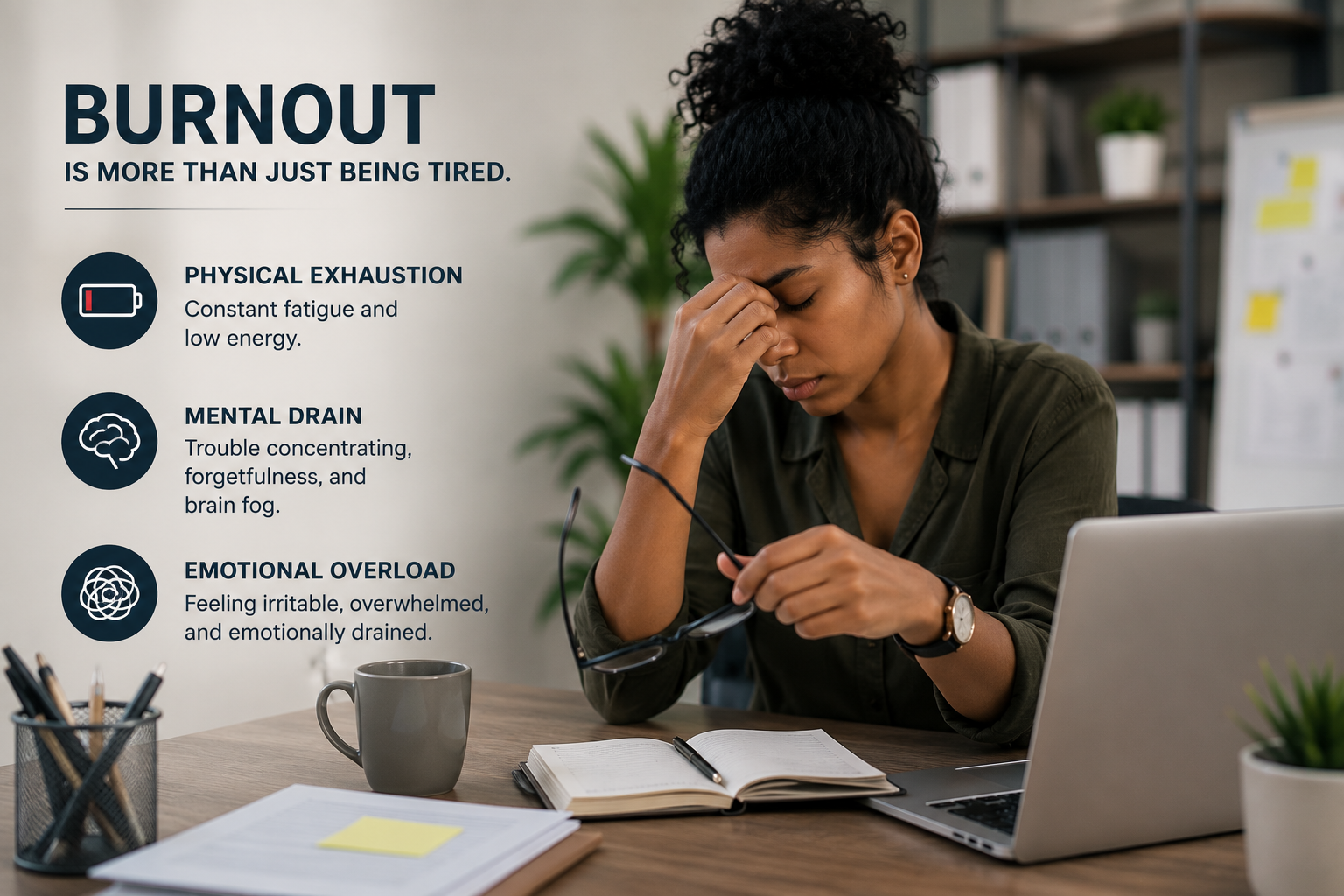
Here are the most common warning signs to look out for.
1. Constant Physical and Mental Exhaustion
One of the strongest signs you’re burnt out is feeling tired almost all the time. You may wake up exhausted even after sleeping or feel like normal tasks require extreme effort.
This exhaustion is not only physical. Your mind may also feel overwhelmed, slow, or unable to handle additional responsibilities.
2. Loss of Motivation
Things that once excited you may suddenly feel meaningless. You might struggle to start projects, avoid responsibilities, or feel disconnected from goals that previously mattered to you.
A lack of motivation is one of the common emotional burnout symptoms.
3. Difficulty Concentrating
Burnout can affect your ability to focus.
You may experience:
- Forgetfulness
- Brain fog
- Difficulty making decisions
- More mistakes than usual
Tasks that previously felt simple may suddenly require much more mental effort.
4. Increased Irritability
When your emotional energy is depleted, small problems can feel much bigger. You may become frustrated easily, lose patience quickly, or react more strongly than usual.
This does not mean you have become a different person. It may be a sign that your mind is overwhelmed.
5. Feeling Emotionally Numb
Some people experiencing burnout do not feel constantly stressed. Instead, they feel nothing.
You may lose interest in activities, stop feeling excited about achievements, or feel disconnected from people around you.
This emotional numbness is often a sign that your mind is trying to protect itself from excessive stress.
6. Poor Sleep Quality
Burnout and sleep problems often happen together. You may struggle to fall asleep because your mind is constantly active, or you may sleep but still wake up feeling tired.
Poor sleep can also make burnout symptoms worse, creating a difficult cycle.
7. Frequent Headaches or Physical Symptoms
Long-term stress affects the body.
Some physical symptoms of burnout may include:
- Headaches
- Muscle tension
- Digestive problems
- Low energy
- Frequent illness
Your body often sends warning signals when your mental health is under pressure.
8. Reduced Productivity and Performance
Burnout can affect your ability to perform at work, school, or daily responsibilities.
You may notice:
- Missed deadlines
- Lower creativity
- Reduced efficiency
- Difficulty completing tasks
Working harder does not always solve burnout. Sometimes recovery requires stepping back.
9. Social Withdrawal
When you are emotionally exhausted, interacting with others can feel difficult. You may avoid friends, family members, or social activities because you simply do not have the energy.
Although alone time can be helpful, complete isolation can increase feelings of stress and loneliness.
10. Feeling Hopeless or Trapped
A serious warning sign of burnout is feeling like your situation cannot improve.
You may think:
- “Nothing will change.”
- “I cannot keep doing this.”
- “I am stuck.”
These feelings should not be ignored, especially if they continue for a long time.
How to Recover From Burnout
Recovering from burnout is not about simply taking one day off and returning to the same stressful routine. True recovery requires identifying what drained your energy, creating space for rest, and rebuilding healthier habits that support your physical and emotional well-being.
Everyone’s recovery journey is different. Some people begin feeling better after making small lifestyle changes, while others may need professional support to fully recover.
Here are practical burnout recovery strategies that can help.
Acknowledge That You Are Burnt Out
Paying attention to the signs you’re burnt out allows you to identify what needs to change before burnout begins affecting every area of your life. Many people ignore burnout because they believe they should simply work harder, become more disciplined, or push through the exhaustion.
However, ignoring the warning signs can make the problem worse.
Ask yourself:
- Am I constantly exhausted?
- Do I feel disconnected from things I once enjoyed?
- Has my stress level remained high for weeks or months?
- Am I struggling to function normally?
Acknowledging burnout is not a sign of weakness. It is an important step toward protecting your health.
Prioritise Rest and Recovery
Rest is one of the most important parts of recovering from burnout. However, rest is not only about sleeping.
Real recovery involves giving your mind and body time to recharge.
This may include:
- Getting enough quality sleep
- Taking breaks during work
- Spending time away from stressful environments
- Enjoying relaxing activities
- Reducing unnecessary commitments
A tired mind cannot perform at its best. Rest allows your body to restore energy and improve focus.
Set Healthy Boundaries
One major cause of burnout is constantly giving more than you can handle. Learning to set boundaries can protect your time and energy.
Examples of healthy boundaries include:
- Saying no to unrealistic demands
- Avoiding unnecessary overtime
- Limiting work communication outside working hours
- Creating time for yourself without guilt
Boundaries are not selfish. They help you maintain balance and prevent long-term exhaustion.
Improve Your Sleep Habits
Sleep plays a major role in mental health and burnout recovery. When you are sleep-deprived, stress becomes harder to manage, emotions become more difficult to regulate, and concentration decreases.
To improve your sleep:
- Maintain a consistent sleep schedule
- Reduce screen time before bed
- Create a relaxing nighttime routine
- Avoid caffeine late in the day
- Keep your sleeping environment comfortable
Better sleep will not solve burnout alone, but it creates a stronger foundation for recovery.
Eat Well and Support Your Body
Mental exhaustion is closely connected to physical health. During periods of burnout, many people neglect basic needs such as eating properly, staying hydrated, and maintaining healthy routines.
Focus on:
- Balanced meals
- Enough water intake
- Regular movement
- Limiting excessive alcohol or unhealthy coping habits
Taking care of your body gives your mind the resources it needs to recover.
Exercise and Spend Time Outdoors
Physical activity is a powerful tool for managing stress. You do not need intense workouts to experience benefits.
Simple activities like walking, stretching, cycling, or spending time outdoors can improve mood and reduce tension.
Exercise helps your body release chemicals that support emotional well-being and can improve sleep quality.
Reconnect With Supportive People
Burnout can make people isolate themselves, but connection is an important part of recovery. Talking with trusted friends, family members, mentors, or colleagues can help reduce emotional pressure.
Sometimes, simply expressing what you are experiencing can make the situation feel more manageable. You do not have to handle everything alone.
Reevaluate Your Priorities
Burnout can be a sign that your current routine is not sustainable.
Take time to consider:
- What responsibilities are truly important?
- What activities are draining my energy?
- What changes would make my daily life healthier?
Recovery often requires adjusting expectations instead of constantly trying to do more.
How Long Does Burnout Recovery Take?
There is no fixed timeline for burnout recovery. Some people begin feeling better within weeks after making meaningful changes, while others may need several months, especially if burnout has been severe or ongoing for a long time.
Recovery depends on factors such as:
- How long you have experienced burnout
- The level of stress involved
- Your support system
- Your ability to make lifestyle changes
- Whether professional support is needed
The goal is not to rush back into the same routine that caused burnout. The goal is to create a healthier way of living. The earlier you notice the signs you’re burnt out, the easier it may be to begin recovery and prevent long-term exhaustion.
READ MORE: The Truth About Acne
What Happens If Burnout Is Ignored?
Ignoring burnout may allow symptoms to become more severe. Long-term burnout can affect different areas of life, including: Chronic stress can affect both physical and emotional health, causing symptoms that may impact sleep, mood, and daily functioning.
Physical Health
Chronic stress may contribute to:
- Sleep problems
- Frequent fatigue
- Muscle tension
- Headaches
- Reduced overall well-being
Mental and Emotional Health
Burnout can increase feelings of frustration, anxiety, emotional exhaustion, and helplessness. In some cases, burnout symptoms may overlap with conditions such as anxiety or depression.
Relationships
When someone is emotionally drained, they may withdraw from others or struggle to communicate effectively. This can create distance between friends, family members, and colleagues.
Work and Productivity
Ironically, constantly pushing yourself without recovery can reduce performance instead of improving it. Burnout often leads to lower creativity, reduced motivation, and difficulty completing tasks.

How to Prevent Burnout Before It Happens
Learning to notice the signs you’re burnt out is one of the most effective ways to prevent severe burnout before it impacts your health and productivity.
Prevention is often easier than recovery. Building healthy habits early can reduce your risk of experiencing severe burnout.
Create a Realistic Daily Routine
Avoid creating schedules that leave no room for rest.
A productive routine should include:
- Work time
- Breaks
- Sleep
- Personal activities
- Social connection
Balance is what makes productivity sustainable.
Take Regular Breaks
Many people believe working continuously leads to better results. However, the brain needs recovery periods to maintain focus and creativity.
Short breaks throughout the day can improve concentration and reduce mental fatigue.
READ MORE: Bills By GWC Pay: The Ultimate VTU & Digital Payment Platform
Learn to Manage Stress Effectively
Stress management does not mean eliminating all stress. It means developing healthier ways to respond to pressure.
Helpful strategies include:
- Meditation or mindfulness
- Journaling
- Deep breathing exercises
- Physical activity
- Relaxation techniques
Avoid Perfectionism
Perfectionism can quietly contribute to burnout. When you constantly feel that your work is never good enough, you may spend excessive time and energy trying to meet impossible standards.
Aim for progress instead of perfection.
Maintain Healthy Relationships
Strong relationships provide emotional support during difficult periods. Make time for people who encourage, understand, and support you.
Healthy connections can act as protection against chronic stress.
When Should You Seek Professional Help?
While lifestyle changes can help many people recover from burnout, professional support may be necessary in some situations. Recognising the signs you’re burnt out before they become overwhelming allows you to seek support earlier and take meaningful steps toward recovery.
Consider speaking with a healthcare professional or mental health specialist if:
- Burnout symptoms continue despite making changes
- You struggle to complete daily responsibilities
- You experience intense anxiety or persistent sadness
- Your sleep problems become severe
- You feel unable to cope with normal activities
- You have thoughts of harming yourself
A qualified professional can help you understand what you are experiencing and provide appropriate guidance. Seeking help is a proactive step toward recovery, not a failure.
Paying attention to the signs you’re burnt out is an important part of maintaining your mental health, productivity, and overall well-being.
Conclusion
Burnout is your body and mind’s way of signalling that something needs attention. It is not simply being tired after a busy day. It is a deeper form of exhaustion caused by prolonged stress without enough recovery.

Recognising the signs you’re burnt out early can help you take action before burnout affects your health, relationships, productivity, and overall quality of life.
Recovery starts with small but meaningful steps: getting enough rest, setting boundaries, improving daily habits, reconnecting with supportive people, and seeking professional help when necessary.
You do not have to wait until you completely break down before making a change. Taking care of your energy today can help you build a healthier, more balanced life tomorrow.