
MAFAB 5G is at the center of a proposed spectrum transfer to MTN Nigeria, with MAFAB Communications seeking regulatory approval to move its 5G spectrum holdings to the larger operator. The proposed deal could change the structure of Nigeria’s 5G market, but the transfer has not been completed and remains subject to regulatory approval.
The transaction reportedly covers MAFAB’s 100 MHz holding in the 3.5 GHz band and 2×20 MHz in the 2.1 GHz band. However, the transfer has not been completed and remains subject to regulatory approval. The financial terms have also not been publicly disclosed.
The development comes nearly five years after MAFAB and MTN emerged as the winners of Nigeria’s landmark 3.5 GHz spectrum auction. Both companies paid $273.6 million for 100MHz blocks, making them the country’s first major 5G spectrum licensees. If approved, the proposed transfer would give MTN access to additional spectrum while potentially ending MAFAB’s position as an independent 5G operator.
Why Is MAFAB 5G Spectrum Being Transferred?
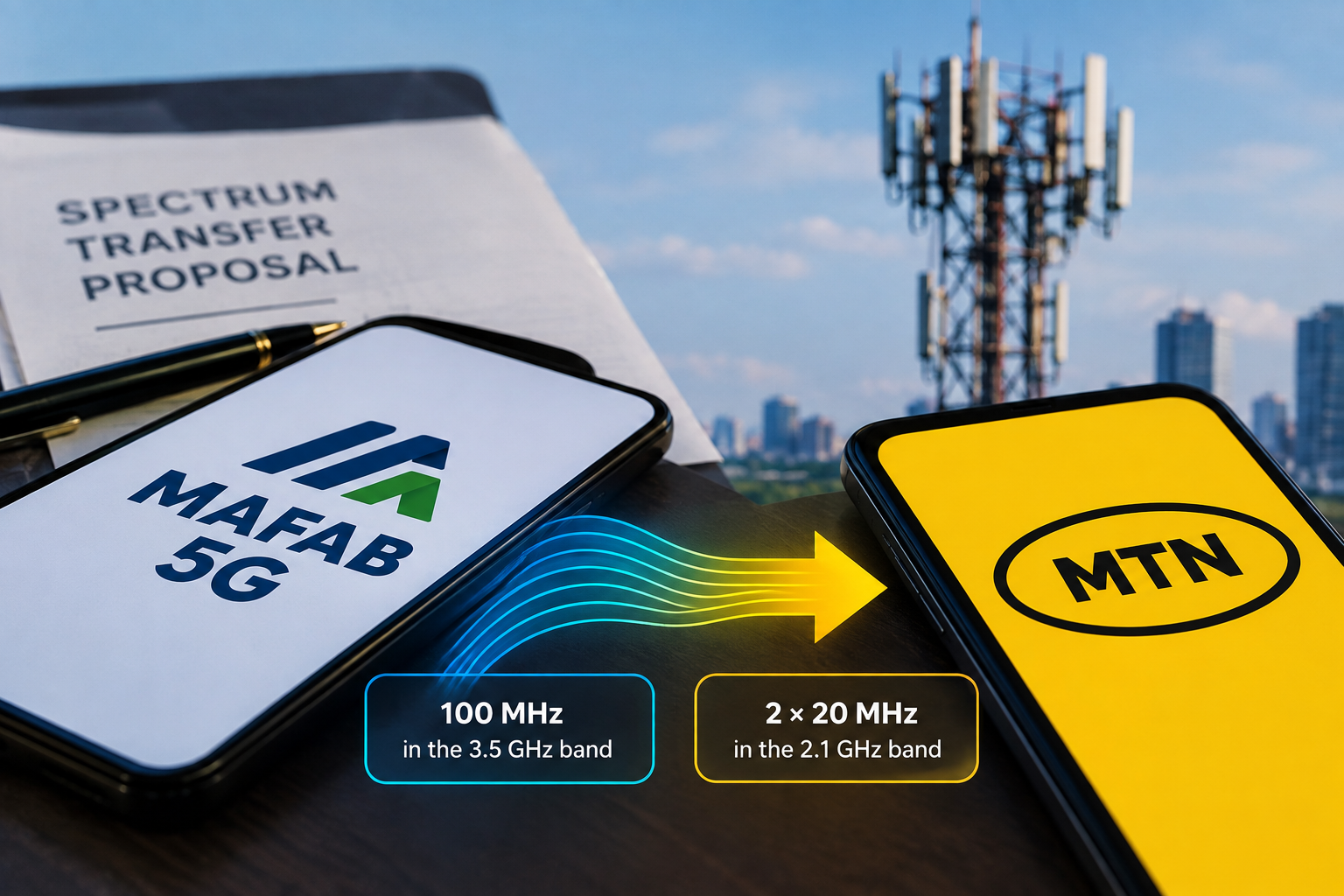
The exact reason for the proposed transfer has not been publicly established. Recent reports have linked the transaction to efforts to move underutilized spectrum to operators that can use it more effectively. Cable reported that people familiar with the discussions described the deal as part of a broader push to maximize spectrum use, a scarce resource needed for network expansion and capacity.
THISDAY also reported that MAFAB’s spectrum had remained largely unused since the company won the 2021 auction, while discussions with MTN were awaiting regulatory approval. Neither MTN nor the NCC had publicly confirmed the transaction in the report.
That distinction matters. It would be premature to say MAFAB is transferring its spectrum because of financial difficulties, weak customer numbers, or another specific business problem unless the company or a reliable source confirms it.
What is clear is that the proposed transaction would move valuable spectrum from MAFAB to MTN if regulators approve it.
What 5G Spectrum Is MAFAB Giving to MTN?
The proposed MAFAB 5G spectrum transfer covers two major spectrum holdings:
- 100 MHz in the 3.5 GHz band
- 2×20 MHz in the 2.1 GHz band
Spectrum refers to radio-frequency ranges used by wireless networks to transmit data between devices and network infrastructure. For telecom operators, access to suitable spectrum is important because it provides the capacity needed to connect users and support mobile services.
The NCC describes radio-frequency spectrum as a scarce national resource and says efficient spectrum use is important for telecommunications and other parts of the economy. Its spectrum-management policy also includes promoting competition and discouraging waste or speculative acquisition of spectrum.
This is why the proposed MAFAB-MTN transaction matters beyond the ownership of a licence. If approved, MTN would gain additional spectrum resources that could be used alongside its existing network infrastructure.
How MAFAB Became One of Nigeria’s First 5G Operators
The story behind MAFAB 5G goes back to Nigeria’s 2021 3.5 GHz spectrum auction. The NCC held the auction in December 2021, with MTN Nigeria and MAFAB emerging as the successful bidders for two 100MHz lots. Each company paid $273.6 million for its spectrum. MTN later paid an additional $15.9 million at the assignment stage to secure the 3500–3600MHz block, while MAFAB was assigned the 3700–3800MHz block.
The NCC subsequently issued final 5G spectrum license awards to both companies and expected them to begin deployment under the terms of their licenses.
MAFAB eventually launched its commercial 5G service in January 2023 after receiving an extension to its deployment deadline, while MTN had launched commercial 5G services in September 2022.
That makes the proposed transfer a notable development. MAFAB entered the market as one of the companies expected to introduce more competition into Nigeria’s emerging 5G sector. Almost five years after the original spectrum auction, its holdings could instead move to an established operator.
What Would the Spectrum Transfer Mean for MTN?
If the NCC approves the MAFAB 5G spectrum transfer, MTN would gain access to MAFAB’s spectrum holdings. That could provide the operator with additional resources for network capacity and 5G deployment, particularly as mobile data consumption continues to grow.
However, additional spectrum does not automatically translate into faster speeds for every customer. The eventual impact would depend on how MTN deploys the spectrum, the network infrastructure supporting it, device compatibility, coverage, and other technical factors.
So while the deal could strengthen MTN’s network capacity, it is too early to promise customers faster internet or cheaper data as a direct result of the transaction.
What Would It Mean for Nigeria’s 5G Market?
This is where the proposed transaction becomes bigger than MAFAB and MTN. MAFAB was one of the original winners of Nigeria’s 5G spectrum auction. If its spectrum moves to MTN, the distribution of spectrum among operators would change.
That could affect the competitive dynamics of Nigeria’s 5G market.
The PUNCH reported that the proposed deal has raised questions about competition and the balance between giving established operators additional capacity and maintaining a competitive telecoms market. For the NCC, the issue is therefore not simply whether spectrum can be transferred.
It also has to consider how the transaction fits within its responsibility to manage a scarce national resource and promote efficient and competitive spectrum use. The commission’s published spectrum-management objectives include encouraging efficient use and promoting competition in spectrum assignment.
The final regulatory decision will determine how the transaction affects that balance.
Nigeria’s 5G Market Is Growing, But 4G Still Leads
The MAFAB 5G deal is happening while 5G remains a relatively small part of Nigeria’s overall mobile market. NCC figures reported by Nigerian industry publications show that 5G accounted for 4.74% of mobile connections in July 2026, compared with 54.31% for 4G. The 5G share was up from 3.17% a year earlier.
That puts the proposed spectrum transfer into perspective. Nigeria is still in the process of expanding 5G adoption. More spectrum and network investment could support that expansion, but spectrum alone will not determine how quickly Nigerians move from 4G to 5G.
Coverage, compatible devices, data affordability, and network quality will also influence adoption. This is part of the broader connectivity challenge across Africa, where access to the internet is increasingly moving beyond traditional mobile data.
Could MTN’s Additional Spectrum Improve Network Capacity?
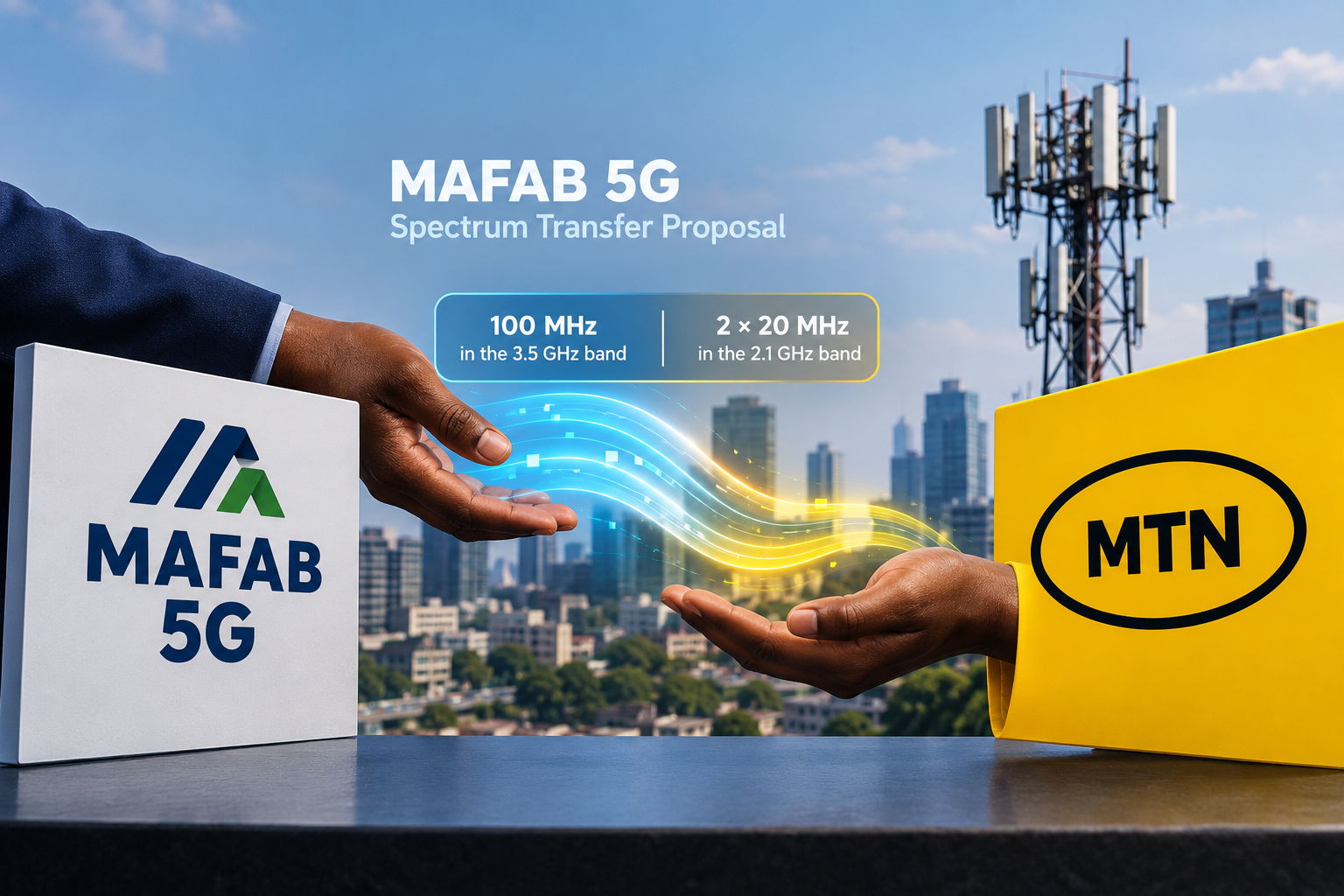
Spectrum gives an operator additional radio-frequency resources, but those resources still have to be integrated into the network and supported by the necessary infrastructure. If MTN receives MAFAB’s spectrum and deploys it effectively, the additional capacity could help the operator handle more traffic and expand 5G services.
That could become increasingly relevant as more Nigerians use mobile networks for video, digital payments, social media, cloud services, online businesses, and other data-intensive activities.
But the proposed transfer itself does not guarantee a specific improvement in customer experience. The better question will be what MTN actually does with the spectrum after any regulatory approval.
What Happens to MAFAB If the Deal Is Approved?
MAFAB’s position would change significantly if it transfers the spectrum that underpins its 5G operation. Recent reports have described the transaction as potentially ending MAFAB’s role as an independent 5G operator, but that outcome depends on the final terms and regulatory approval.
The company originally entered the market as a new challenger alongside MTN. Its potential exit from the 5G spectrum market would therefore mark a very different outcome from the one envisioned when the 2021 auction created two new 5G spectrum holders.
It would also raise a broader question about the difficulty of building a telecom network in Nigeria when the cost of spectrum, infrastructure, and network expansion is so high.
What Happens Next?
The immediate next step is regulatory review. The proposed transfer still requires approval before MAFAB’s spectrum can move to MTN. As of the latest reports, the financial terms of the transaction have not been disclosed publicly, and the NCC and MTN have not publicly confirmed the deal in some of the reports.
The key things to watch are
- whether the NCC approves the spectrum transfer;
- the final terms of the transaction;
- how much MTN pays if a payment is required;
- What happens to MAFAB’s remaining operations
- how MTN deploys the additional spectrum; and
- whether the transaction changes competition in Nigeria’s 5G market.
The NCC already has a formal framework for spectrum management and publishes information on spectrum assignments and utilization. Its guidelines also include a Spectrum Trading Form, showing that spectrum transfers are part of the regulatory framework the commission manages.
For now, however, MAFAB has not completed a transfer of its 5G spectrum to MTN. The story is still at the proposed-deal stage.
The Bigger Question for Nigeria’s 5G Market
The proposed MAFAB 5G spectrum transfer is about more than one company selling a telecom asset to another. It raises a bigger question about how Nigeria manages one of its most valuable and limited telecommunications resources.
MAFAB and MTN entered the 5G market together through the same 2021 auction. Almost five years later, MTN could potentially acquire the spectrum that MAFAB once bought to compete with it.
If approved, the transaction would give MTN more spectrum capacity and reshape the distribution of 5G spectrum in Nigeria, but the effect on consumers, competition, and 5G adoption will depend on what happens after the approval and how effectively the additional spectrum is put to use.
For Nigerian mobile users, that is the part worth watching.