
Nigeria mobile subscribers are rising again, with active mobile subscriptions reaching 195.11 million in July 2026, according to the latest figures from the Nigerian Communications Commission (NCC).
That is a significant recovery from the sharp decline that followed the enforcement of the National Identification Number-SIM linkage requirements. Still, the bigger story is not simply that Nigeria is getting closer to 200 million active mobile lines.
It is that Nigerians are using mobile networks more heavily for internet access, digital payments, streaming, online businesses, and other services, putting more pressure on telecom operators to expand network capacity.
At the same time, MTN Nigeria has crossed 100 million active subscribers for the first time, highlighting just how quickly the market is recovering.
So, what is driving Nigeria’s mobile growth, and what does it mean for the country’s digital economy?
Nigeria Mobile Subscribers Are Growing Again
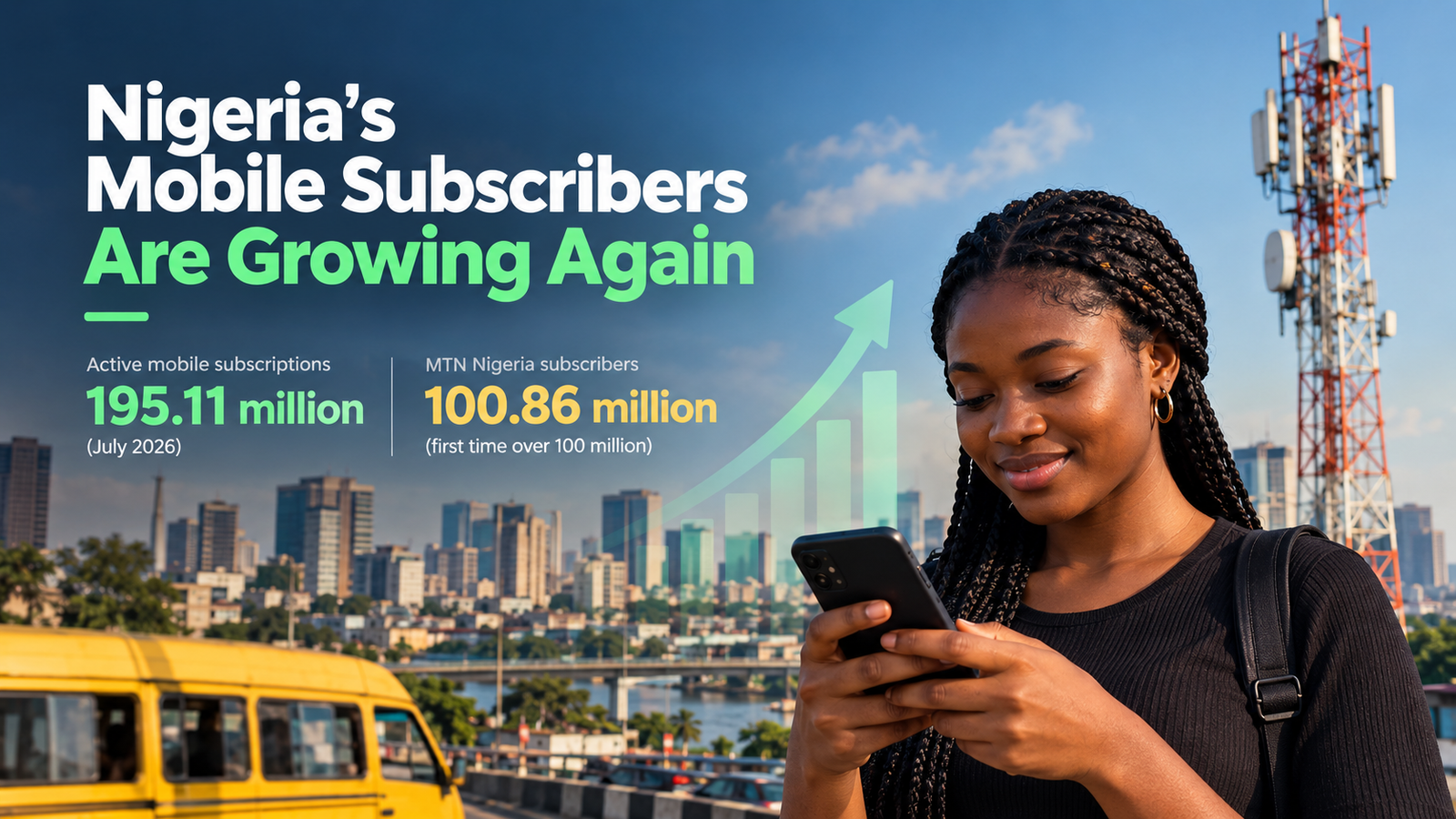
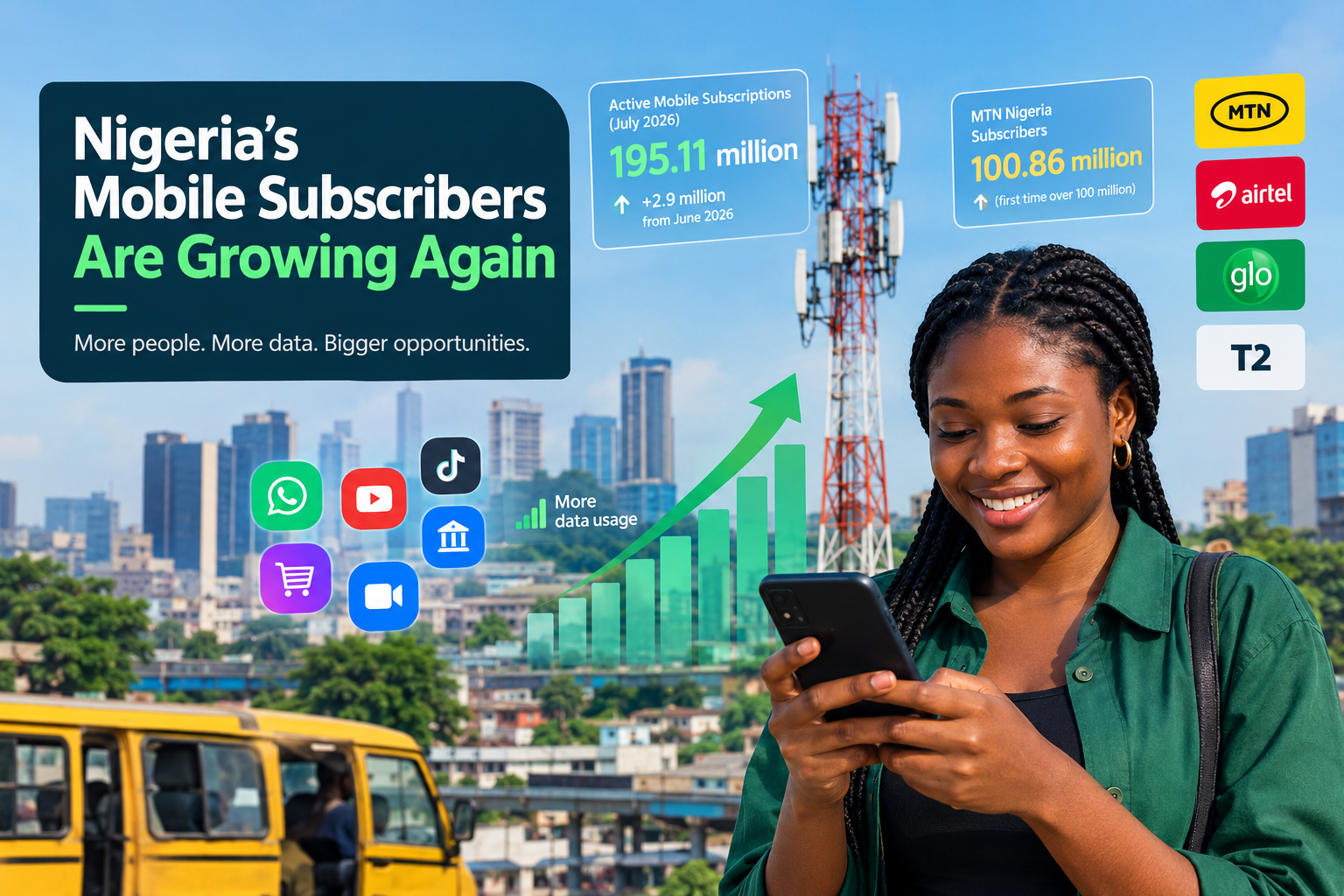
NCC data shows that Nigeria had 195,108,814 active mobile subscriptions in July 2026, up from 192,232,120 in June. That means the industry added almost 2.9 million active lines in a single month.
The July figure also represents a substantial increase from the 182.23 million active subscriptions recorded in January 2026. Across the major operators, MTN recorded 100.86 million subscribers, Airtel had 66.76 million, Globacom had 23.63 million, and T2 had about 3.61 million.
The figures put Nigeria’s active mobile market only about 4.9 million lines away from the 200 million mark, but describing the development simply as a race toward 200 million misses an important part of the story.
Nigeria is still recovering from one of the biggest disruptions to its mobile subscriber base in recent years.
What Changed After the NIN-SIM Disruptions?
Nigeria’s mobile market did not reach this point through uninterrupted growth. The enforcement of the NIN-SIM linkage requirements caused millions of unverified or non-compliant lines to be disconnected or removed from active subscriber figures.
According to an analysis of NCC data, active subscriptions fell from about 220.7 million in July 2023 to 166.66 million in July 2024. That represented a loss of more than 54 million active subscriptions in one year.
The market has gradually recovered since then. By July 2026, active subscriptions had climbed back to 195.11 million. The recovery shows that Nigeria mobile subscribers are gradually returning to the market after the disruption caused by the NIN-SIM registration exercise
The distinction matters because it changes how we should interpret the telecom market. The industry is rebuilding its active customer base while Nigerians are simultaneously becoming heavier users of mobile internet.
Nigerians Are Using Mobile Networks for More Than Calls
The number of active mobile subscriptions tells only part of the story. A more revealing measure of how Nigeria’s digital habits are changing is data consumption.
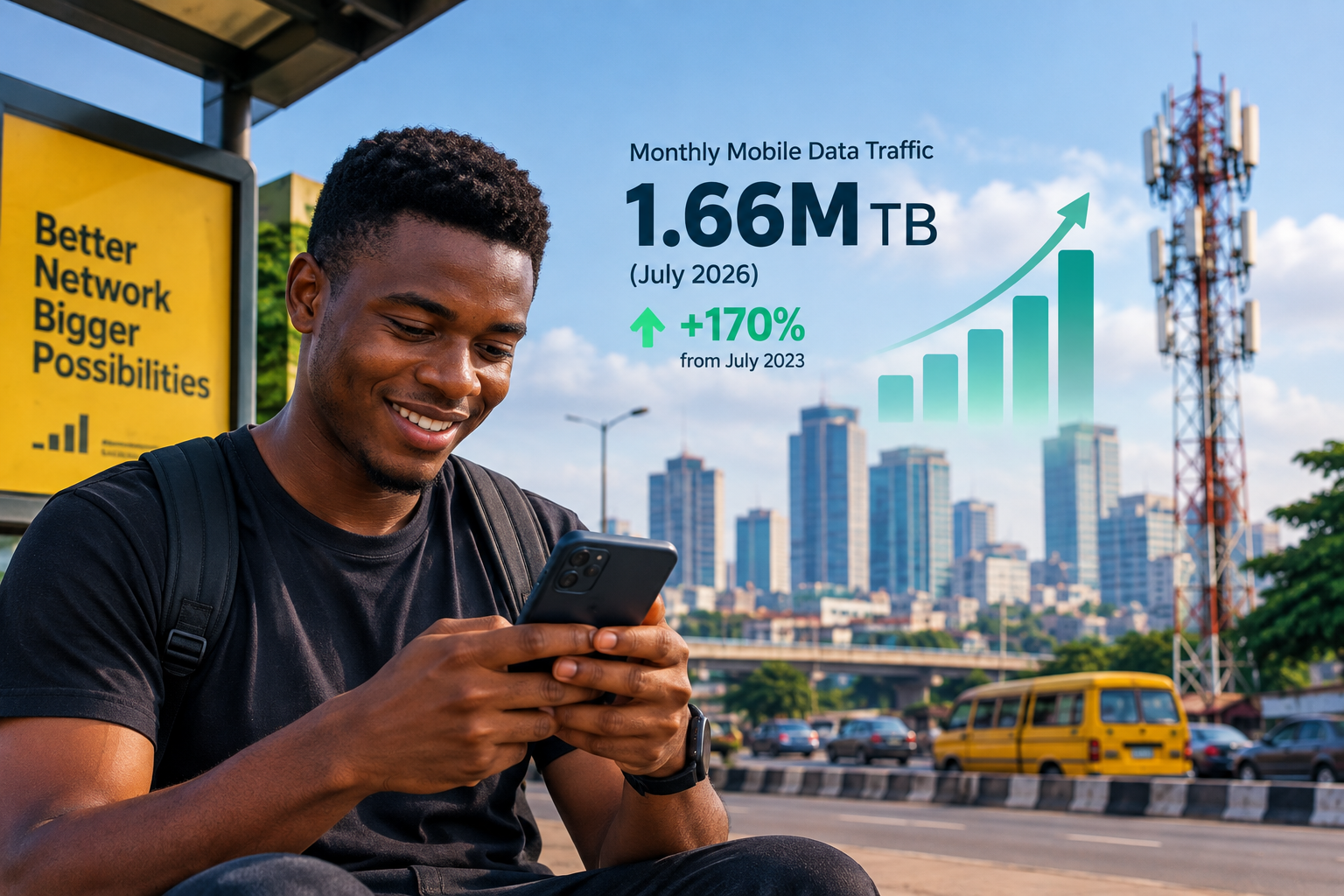
An analysis of NCC industry statistics found that monthly data traffic increased from about 615,207 terabytes in July 2023 to 1.66 million terabytes in July 2026, an increase of roughly 170 percent. That growth happened even though the number of active mobile subscriptions in July 2026 was still below the 2023 level.
In other words, the telecom market is not only recovering in terms of subscriber numbers. Existing connections are also carrying significantly more data. That reflects how much the mobile phone has changed in Nigeria.
For many consumers, a mobile connection is now a gateway to:
- Mobile banking and digital payments
- Social media
- Video and music streaming
- E-commerce
- Online education
- Remote work
- Digital businesses
- Messaging and collaboration
- Cloud-based services
This is why the growth in Nigeria mobile subscribers matters beyond the telecommunications industry. More active connections and heavier data use create opportunities for businesses that depend on Nigerians being connected.
MTN’s 100 Million Subscribers Tell a Bigger Story
One of the clearest signs of the market’s recovery is MTN’s latest milestone. MTN ended July 2026 with 100.86 million active subscribers, up from 98.64 million in June.
MTN’s milestone also shows how quickly Nigeria mobile subscribers have recovered across the country’s major networks. The operator added about 2.22 million active subscribers in one month, taking its market share to 51.76 percent based on the July NCC figures. That makes MTN the first telecommunications operator in Africa to cross the 100 million subscriber mark, according to reports based on the NCC data.
Airtel followed with 66.76 million subscribers, while Globacom recorded 23.63 million and T2 had 3.61 million. The numbers also show how concentrated Nigeria’s mobile market has become.
MTN and Airtel together accounted for more than 85 percent of active mobile subscriptions in July. For consumers, that concentration means the performance of these major networks can have a substantial effect on the wider mobile experience, from network availability and data capacity to pricing and digital services.
For businesses, it means access to a large mobile audience is increasingly tied to the country’s biggest telecom platforms.
The Bigger Challenge Is Keeping Up With Demand
More subscribers are good news for telecom operators, but growth also creates a difficult question: Can Nigeria’s network infrastructure keep up with how much Nigerians are using it?
The challenge is no longer simply getting people connected. It is keeping those connections fast, reliable, and affordable as data consumption continues to increase.
Telecom operators need continued investment in spectrum, fibre infrastructure, network sites, backhaul capacity, and other parts of the communications infrastructure. MTN, for example, reported ₦620.5 billion in capital expenditure in the first half of 2026, reflecting the scale of investment required as its subscriber base and data usage grow.
The pressure will not disappear simply because subscriber numbers approach 200 million. If more Nigerians use smartphones for video, payments, business, education, and other data-heavy services, network capacity will need to expand alongside demand.
That makes infrastructure investment one of the most important parts of Nigeria’s next telecom growth phase.
What Nigeria’s Mobile Growth Means for Businesses
The growth of the mobile market also creates opportunities outside telecoms. A larger and more active mobile audience gives fintech companies, banks, e-commerce businesses, streaming platforms, advertisers, and app developers a bigger addressable market.
For example, a small business can increasingly use a smartphone to market products, receive payments, communicate with customers, and manage operations without relying on a traditional office.
The same connectivity supports digital financial services and online commerce. Nigeria’s mobile growth therefore feeds into the wider digital economy, from fintech and e-commerce to businesses that increasingly depend on Nigerians being connected.
Businesses that depend on Nigerians being online are likely to care less about whether the country has exactly 195 million or 200 million active lines and more about how frequently those connections are being used and how much data consumers are willing to consume.
That is where the next phase of the market becomes particularly interesting.
Nigeria’s Mobile Growth Is Becoming a Data Story
The recovery in active subscriptions is important, but the increase in Nigeria mobile subscribers is happening alongside a much larger rise in mobile data consumption.
The country had 195.11 million active mobile subscriptions in July 2026, but monthly data traffic had already reached about 1.66 million terabytes. This suggests that the value of a mobile connection is increasingly tied to what consumers can do with it, rather than simply having a telephone number.
That shift could influence how operators compete. Instead of competing only for voice subscribers, telecom companies have stronger incentives to attract and retain customers who consume large amounts of data and use additional digital services.
For Nigerians, that could mean greater emphasis on network quality, broadband availability, pricing, and the services built around mobile connectivity.
What Comes Next for Nigeria’s Telecom Market?
Nigeria mobile subscribers have recovered significantly from the losses that followed the NIN-SIM enforcement period. The latest figures show a clear recovery, but they also reveal a market that is changing.
The country is approaching 200 million active mobile subscriptions while data consumption is growing much faster than the subscriber base.
That means the next phase of Nigeria’s telecom story may not be defined simply by how many people have active mobile lines. It could increasingly be defined by how much Nigerians do with those connections.
For telecom operators, that means investing in capacity and network quality. For businesses, it means a larger connected audience, and for consumers, it means the quality, affordability, and reliability of mobile internet will matter just as much as having a working phone line.
For Nigeria mobile subscribers, the next phase of growth will depend on whether network operators can keep up with rising demand for data and digital services.
Want to understand how Nigeria’s digital economy is expanding? Read more of our technology and digital economy coverage on NaysBlog.