
YoLa Fresh shutdown marks the end of a Moroccan agritech startup that raised $9 million in publicly reported funding but could not secure the additional financing needed to continue operating, less than three years after launching with ambitions to transform the country’s fresh-produce supply chain.
The company’s co-founders, Larbi Alaoui Belrhiti and Youssef Mamou, confirmed the closure on October 8, 2026, saying they could not raise enough money to continue developing the business. The shutdown comes after two publicly reported funding rounds worth a combined $9 million.
YoLa Fresh had built a network of more than 1,000 retailers and reported monthly gross merchandise volume of about $1 million. Yet those figures did not guarantee the company could secure the next round of financing it needed.
The closure raises a difficult question for Africa’s startup ecosystem: what happens when a business attracts investors and gains customers but cannot secure enough capital to continue growing?
Why Did YoLa Fresh Shut Down?
The YoLa Fresh shutdown followed the company’s failure to secure sufficient financing to continue its development, according to its founders. Although the Moroccan agritech startup had raised $9 million in publicly reported funding, it could not obtain the additional capital needed to keep operating.
In comments reported by Moroccan business publication Médias24, the founders said the company and its shareholders were working with advisers to determine what would happen next. They did not provide further details about the company’s financial position or explain why its efforts to secure additional funding had failed.
That leaves an important gap in the public account. The financing shortfall is confirmed, but the available information does not establish whether profitability, operating costs, working-capital requirements, or investor appetite played a role.
The founders also disputed reports that YoLa Fresh had received $20 million in investment. They said the figure was inaccurate and that the publicly announced funding rounds remained the reference.
Based on those disclosures, the company raised $9 million across two reported funding operations.
How YoLa Fresh Raised $9 Million
YoLa Fresh secured $2 million in an early funding round in March 2023, followed by a $7 million pre-Series A round announced in May 2024.
The later round was led by Al Mada Ventures, with participation from Algebra Ventures, E3 Capital, Janngo Capital and FMO, the Dutch entrepreneurial development bank.
The funding was intended to support the company’s technology, logistics network and efforts to connect more farmers with retailers. It was a significant commitment to a business trying to improve how fresh produce moves through Morocco’s traditional food distribution system.
However, the $9 million figure represents publicly disclosed funding, not the amount of cash the company had available when it closed. The public record does not establish how much remained, how much was spent or whether additional capital was committed privately.
What Was YoLa Fresh Trying to Change?
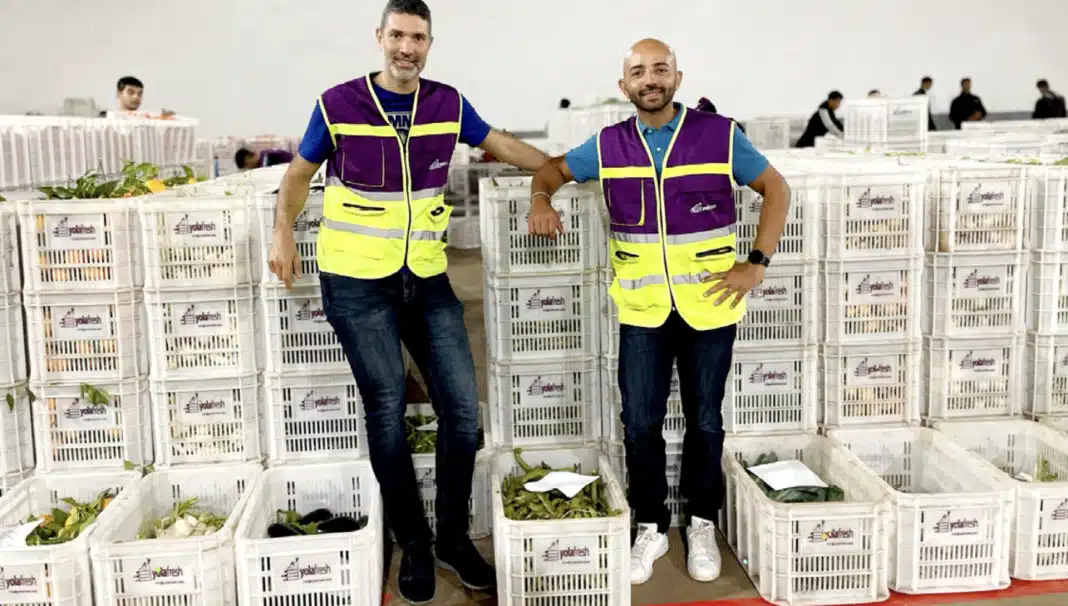
Founded in 2023, YoLa Fresh set out to connect smallholder farmers directly with traditional fruit and vegetable retailers and food-service businesses.
The problem was not simply that farmers needed an online marketplace. Fresh produce moves through a supply chain involving harvesting, sourcing, transport, pricing, and delivery. Multiple intermediaries can make coordination more difficult and add costs for both farmers and buyers.
YoLa Fresh combined distribution operations with technology and data analytics to improve that process. Retailers could place orders for early-morning delivery, while the company used information gathered across the supply chain to forecast demand, understand prices and coordinate supply.
The intended benefits were straightforward: farmers could reach buyers more directly, retailers could simplify sourcing, and better coordination could help reduce waste.
There was a substantial problem to address. Morocco’s Competition Council has estimated post-harvest losses for fruit and vegetables at between 20% and 40%, highlighting the wider inefficiencies in the sector. That figure describes the broader market challenge, however, not losses caused by YoLa Fresh.
The Startup Had Reported Early Traction
When Techpoint Africa covered YoLa Fresh’s $7 million funding round in May 2024, the company reported working with more than 1,000 retailers, recording approximately $1 million in monthly gross merchandise volume and retaining 85% of its customers.
Those were encouraging indicators of activity at the time. However, they do not explain why the YoLa Fresh shutdown became necessary or reveal the company’s financial health immediately before it closed.
Gross merchandise volume, or GMV, measures the value of transactions facilitated through a business. It is not the same as revenue, profit, or cash available to pay expenses.
A company can handle substantial transaction volumes and still face difficult economics if the income it earns from each transaction does not adequately cover the costs of sourcing, handling, and delivering goods. That is a relevant question for businesses operating physical supply chains. It is not, however, proof that YoLa Fresh had weak margins or an unprofitable business model. The public reporting does not provide enough current financial information to establish that.
What YoLa Fresh’s Shutdown Means for African Agritech
The YoLa Fresh shutdown highlights a distinction that often gets lost in startup funding announcements: raising capital is not the same as building a business that can finance its next stage of growth. For agritech companies, that next stage can require more than software development. Businesses involved in physical distribution must coordinate suppliers, customers, transport, and inventory while ensuring they have enough working capital to keep operations running.
The financing requirements can therefore differ considerably from those of a software company that does not manage physical goods.
YoLa Fresh’s experience does not establish that its business model was fundamentally flawed or that agritech startups cannot succeed. It shows that a company can attract investors and report commercial activity without securing the additional financing its founders believe is necessary to continue.
The issue is relevant to Nigeria as well. As discussed in Nigeria’s agritech funding landscape, agricultural technology businesses cover different activities, from connecting farmers with buyers to providing financing and managing distribution.
For founders and investors, the lesson is to look beyond the amount raised. Customer activity, revenue, margins, working-capital needs, and access to follow-on funding all matter when assessing whether a startup can sustain its operations.
Conclusion
As of October 8, the founders and shareholders were working with advisers to determine the next steps. The available reporting does not confirm whether the outcome will involve an asset sale, a restructuring, or a complete wind-down. The eventual outcome for the company’s technology, employees, customers, and other stakeholders remains unclear.
What is established is that the company behind the YoLa Fresh shutdown raised $9 million in publicly reported funding but ultimately could not secure the additional financing its founders said was needed to continue. For Morocco’s agritech sector, the question now is whether the company’s experience, technology, and relationships can find a future elsewhere.
For the wider African startup ecosystem, the YoLa Fresh shutdown is a reminder that identifying a real market problem and attracting investors are only the beginning. A business must also finance its operations and sustain its growth.
Read more on technology and digital trends on NaysBlog.