
NCC phone registration is becoming a bigger part of how smartphones enter and are sold in Nigeria. Buying a smartphone in Nigeria may soon require more than comparing camera quality, storage, and price.
The Nigerian Communications Commission (NCC) is tightening how mobile devices are registered and tracked through its Device Management System (DMS), a move that could change how phones enter Nigeria and what buyers need to check before purchasing one.
The system creates a central record of device IMEI numbers and is designed to strengthen compliance with Nigeria’s type approval requirements.
The NCC says it will also help identify stolen, cloned, counterfeit, and other non-compliant devices and prevent them from operating on Nigerian networks.
For consumers, the biggest questions are less about the technology behind the system and more about what happens at the point of purchase.
Could phones become more expensive? Will used phones be affected? Do ordinary Nigerians have to register their phones? And what does the October 6 deadline actually mean?
Here is what the new rules change and what they don’t.
What Nigeria’s new phone rules actually change
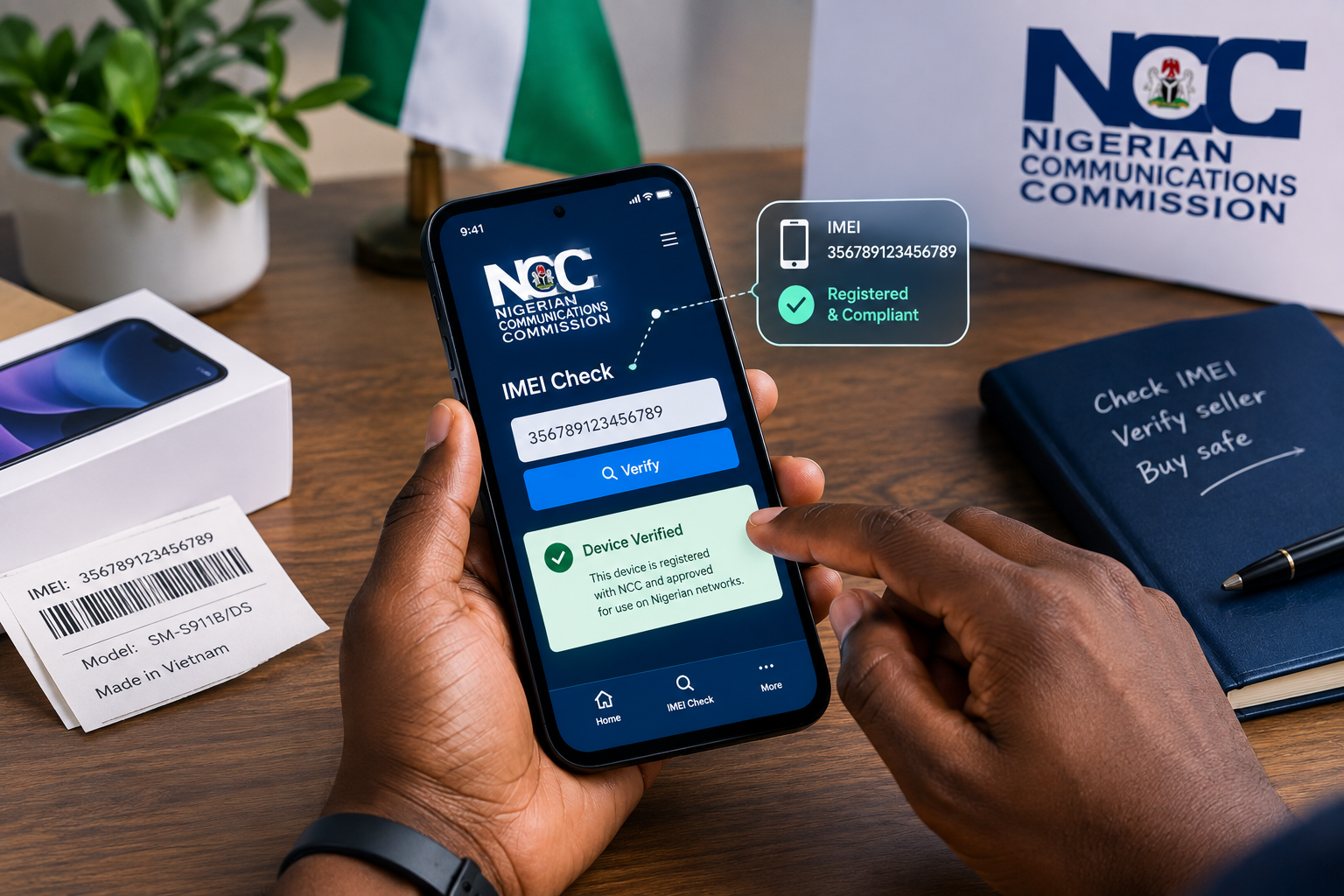
NCC phone registration is part of the broader Device Management System the regulator is using to strengthen enforcement of rules that already require communications equipment entering Nigeria to meet Type Approval requirements.
At the center of the system is the International Mobile Equipment Identity (IMEI), the unique identification number associated with a mobile device.
The DMS will maintain a central registry of IMEIs for SIM-enabled communications devices. According to the NCC, devices brought into Nigeria must be registered before being sold, while devices that are not duly registered will not be allowed to operate on Nigerian networks.
The system is connected to the Central Equipment Identity Register (CEIR) established under the NCC’s 2024 Type Approval Business Rules.
In practical terms, the regulator is creating a stronger link between a device, its IMEI, its entry into the Nigerian market, and its ability to connect to local networks.
What this means for buyers
For someone buying a phone, the change could make three things increasingly important:
- the phone’s IMEI
- where the device came from
- whether the device has met Nigeria’s regulatory requirements
For consumers, NCC phone registration could make it more important to understand a phone’s IMEI, where the device came from, and whether it has met Nigeria’s regulatory requirements. That does not mean every person buying a phone will suddenly have to complete a complicated registration process themselves.
Much of the new compliance burden is aimed at manufacturers, importers, dealers, and other businesses bringing devices into the Nigerian market. This is happening as Nigeria’s mobile subscriber base continues to grow.
Why is the NCC introducing the DMS?
The NCC says NCC phone registration is intended to improve device identification and compliance while addressing problems involving stolen, cloned, counterfeit, and improperly imported devices.
The regulator is working with the Nigeria Customs Service, original equipment manufacturers, importers, and industry associations as the system is rolled out.
The logic is relatively straightforward. If a device entering Nigeria has a traceable identity and is properly registered, it becomes easier to determine whether it is legitimate.
If an IMEI is associated with a stolen device or a device that should not be operating on Nigerian networks, the system can help identify and block it.
This gives the regulator more visibility over the devices connecting to Nigerian telecommunications networks.
Will the new rules make smartphones more expensive?
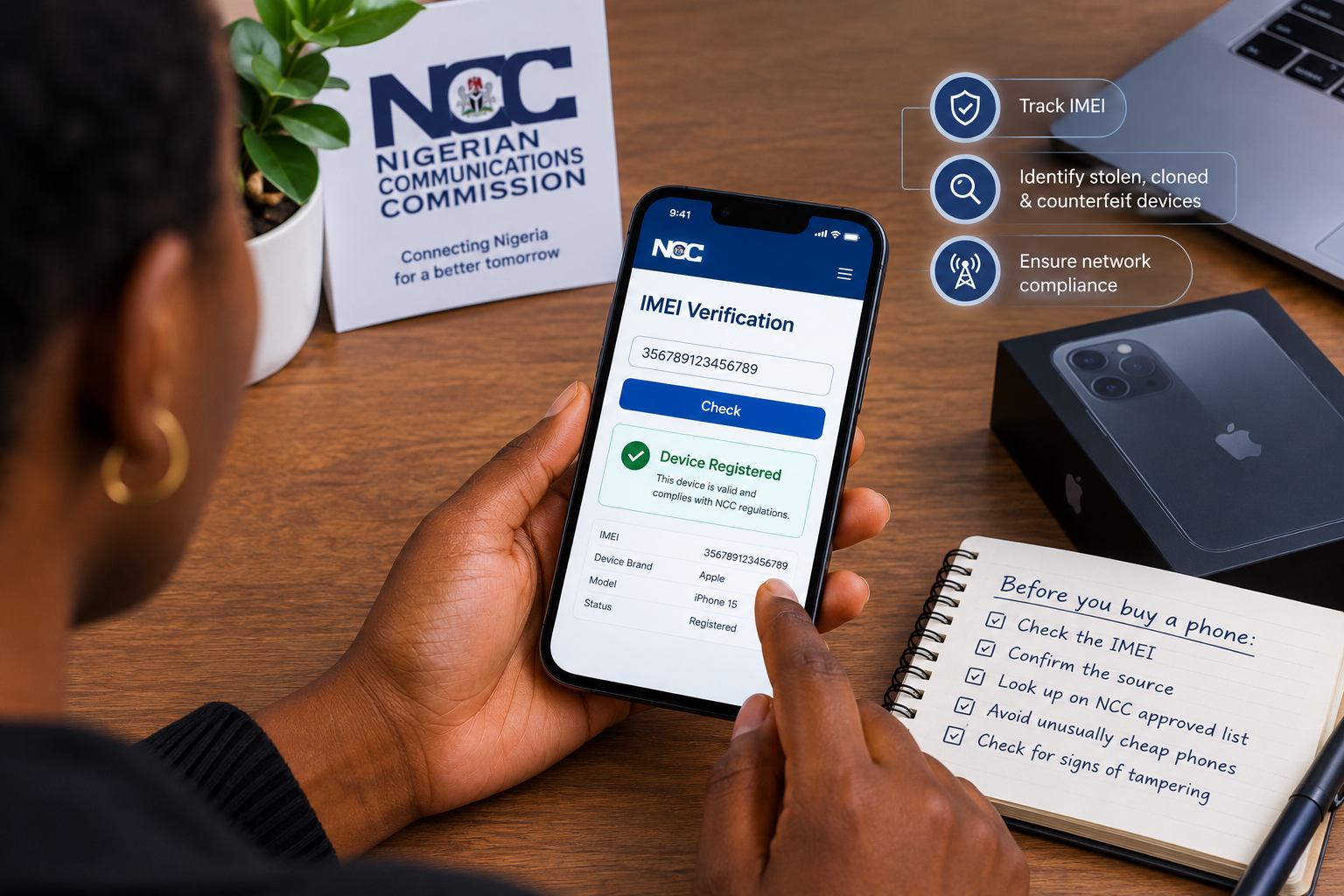
This is one of the biggest questions surrounding the rollout. Industry reports say the new system includes validation charges of about ₦670 per IMEI for lower-cost devices and more than ₦3,700 for higher-end devices.
Those figures have been reported in connection with the concerns raised by phone traders about the financial impact of the system.
Phone traders have argued that additional compliance costs could eventually be passed through the supply chain to consumers, but that does not mean every phone in Nigeria will automatically become ₦3,700 more expensive.
The eventual effect on retail prices depends on how manufacturers, importers, distributors and retailers absorb or pass on the additional cost.
There are also other factors affecting smartphone prices in Nigeria, including exchange rates, import costs, logistics, taxes, and distribution expenses.
So the more accurate way to look at the DMS is that it introduces another cost and compliance layer into an already expensive phone market.
That could put some upward pressure on prices, but the exact consumer impact will become clearer as the system is implemented.
What should you check before buying a phone?
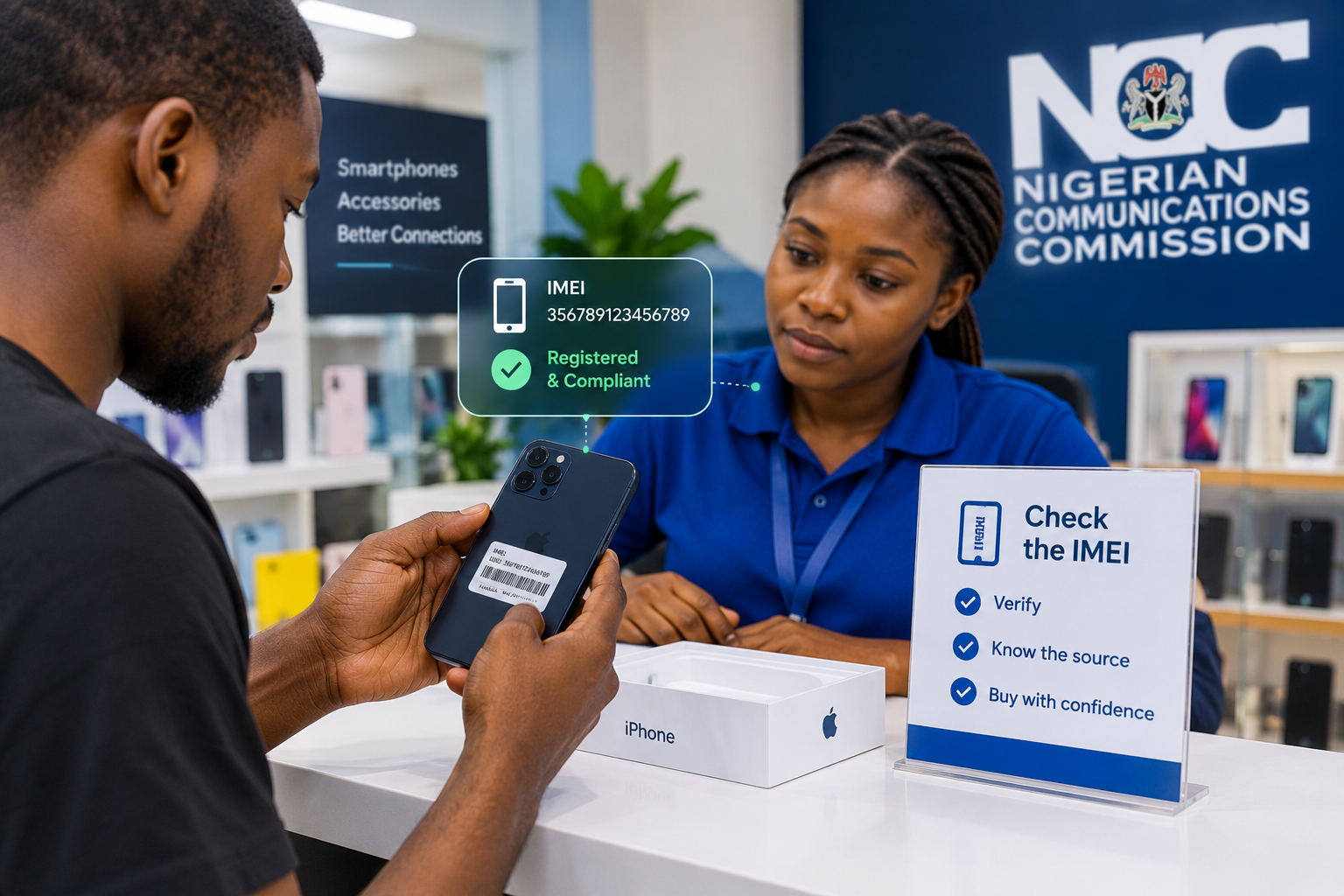
The new system could make basic device checks more important, particularly when buying imported, used, or unusually cheap phones. As NCC phone registration becomes part of the device compliance process, buyers have more reason to check a phone’s identity and source before paying for it.
Check the phone’s IMEI
You can usually find a phone’s IMEI by entering *#06# or checking the device settings. Before buying, compare the IMEI displayed by the phone with the number on its packaging and documentation where available.
A mismatch should be a warning sign and a reason to ask the seller for an explanation before completing the purchase.
However, an IMEI check by itself does not prove that a phone has met every NCC requirement. Buyers can also check the NCC’s approved handset list when researching a device.
The point is to establish that the device has a consistent identity and that the seller can provide credible information about where it came from.
Be careful with unusually cheap phones.
A phone that is significantly cheaper than comparable models can be tempting, particularly when smartphone prices are already high, but the DMS rollout gives buyers another reason to ask why a particular device is so cheap.
The NCC’s system is specifically designed to improve the identification of devices that are stolen, cloned, counterfeit, or otherwise non-compliant.
A phone can look genuine, switch on normally, and connect to a network while still having problems with its history or device identity.
Pay attention to used and refurbished phones.
Nigeria has a large market for used and refurbished smartphones, making this an important part of the rollout.
Industry stakeholders have raised concerns about how legitimate devices with damaged or altered IMEIs will be handled and how disputes will be resolved.
That matters for buyers who purchase second-hand phones without knowing the device’s complete history.
A genuine phone that has been repaired or had components replaced could raise questions that a new device bought through an authorized supply chain may not.
For used phones, buyers should therefore pay particular attention to the IMEI, documentation, and seller.
Does every Nigerian have to register their phone by October 6?
This is one of the most important details to get right. The October 6, 2026 deadline concerns the onboarding of existing device stock held by industry participants, including manufacturers, importers, dealers, and vendors.
The deadline was extended from September 7 after industry stakeholders raised concerns about the implementation timeline.
That is different from saying every Nigerian who already owns a smartphone must complete NCC phone registration before October 6.
The NCC’s current rollout information focuses on device registration, Type Approval compliance, and the onboarding of devices entering or already held within the commercial supply chain.
So if you see a message claiming that every Nigerian must personally register their phone before October 6 or lose access to their network, it should not be treated as an established fact without checking for an official NCC announcement.
What happens to phones that do not comply?
The NCC says devices that are not duly registered will not be permitted to operate on Nigerian networks.
This is significant because the system is not simply a database for record-keeping.
Its purpose is also to give the regulator a mechanism for identifying devices that should not be connected to local networks.
That could include devices associated with theft, cloning, counterfeit equipment, or other forms of non-compliance.
For consumers, this creates a stronger incentive to verify a device before purchasing it rather than discovering a problem after the transaction.
What about privacy?
The introduction of a central device registry naturally raises questions about what information the system can access.
The NCC has said the DMS is focused on device identification and Type Approval compliance.
According to the Commission, the system does not give it access to the contents of users’ phones or allow it to monitor private communications.
In other words, the system is intended to identify the device, not inspect the contents of the device. That distinction is important as the rollout expands.
What is still unclear?
The DMS is being introduced alongside several practical questions that will become clearer as implementation continues.
One concern is how legitimate phones with damaged or altered IMEIs will be treated. Another is how quickly businesses and consumers will be able to resolve cases where a device is incorrectly flagged.
Industry stakeholders have also questioned the financial impact of the system and how the additional compliance costs will affect businesses operating in Nigeria’s phone market.
There is also the bigger consumer question: will the new system make smartphones materially more expensive? It is too early to give a definitive answer.
The registration charges are only one part of the phone supply chain, and businesses can respond to them in different ways.
What becomes clear over the coming months will depend on how the DMS operates in practice and how manufacturers, importers, and retailers adjust.
Conclusion
The immediate milestone is October 6, 2026, the extended deadline for industry players to onboard existing device stock.
After that, attention will shift towards how effectively the system works across Nigeria’s smartphone market.
That includes whether legitimate devices move through the process without unnecessary delays, how non-compliant devices are identified, how disputes are handled and whether the additional compliance costs affect retail prices.
For consumers, the practical lesson is simple. When buying a smartphone in Nigeria, the question may increasingly be more than “How much is this phone?”
It may also be: “Where did this phone come from, and can I verify its device identity?” This matters even more as internet access in Africa continues to move beyond traditional mobile data.
Nigeria’s new phone rules are therefore about more than another registration database. They could change the relationship between phone manufacturers, importers, retailers, regulators, and consumers.
And as the NCC’s Device Management System becomes more widely enforced, checking a phone’s legitimacy could become just as important as checking its camera, storage, or battery life.
Read more on technology and digital trends on NaysBlog.