
The internet has changed the way we live, work, learn, shop, and communicate. Every search you make, every video you stream, and every online purchase depends on a digital ecosystem that has evolved dramatically over the past three decades.
Yet despite its incredible growth, today’s internet still has one major limitation: users rarely own the data and digital assets they create. That is exactly the problem Web3 aims to solve.
If you’ve come across terms like blockchain, cryptocurrency, NFTs, smart contracts, or decentralized applications (dApps), you’ve already encountered pieces of the Web3 ecosystem.
Together, these technologies are reshaping how people interact online by reducing reliance on centralized companies and giving users greater ownership and control.
So, what is Web3 and how does it work? Is it simply another technology trend, or could it become the next major evolution of the internet?
Before exploring blockchain, cryptocurrencies, and decentralized applications, it’s important to understand what is Web3 and why it is becoming one of the most discussed technologies shaping the future of the internet.
This beginner-friendly guide explains What Is Web3, how it works, how it compares with Web2, its advantages and limitations, real-world applications, and why many technology companies believe decentralized technologies will play an increasingly important role in the years ahead.
What Is Web3?
What Is Web3? In simple terms, Web3 is the next generation of the internet built on blockchain technology. The Ethereum Foundation provides one of the most comprehensive introductions to Web3, blockchain technology, and decentralized applications.
Instead of allowing a few companies to control websites, services, and user data, Web3 distributes ownership across decentralized networks.
Think of today’s internet like renting an apartment. You can live in it, decorate it, and enjoy it, but the landlord still owns the property.
Web3 is closer to owning your own home. You have greater control over your digital identity, assets, and online interactions without depending entirely on a single organization.
This shift is why Web3 is often described as the decentralized internet.
Rather than placing trust in one company, Web3 relies on blockchain networks, cryptography, and consensus mechanisms that allow participants to verify transactions collectively.
As a result, users gain more ownership while platforms become more transparent and resistant to censorship.
Web3 Explained in Simple Terms
Understanding what is Web3 helps beginners see that it is not just about cryptocurrency. It is about creating a more open internet where users have greater ownership and control.
Imagine using a social media platform where you own your profile and followers instead of the company, buying a game item that remains yours even if the game shuts down, or sending money across continents in minutes without relying on a bank.
These are some of the possibilities Web3 technology introduces.
Instead of placing platforms at the center of the internet, Web3 places users at the center.
Why Was Web3 Created?
When people ask what is Web3, the answer often begins with solving the limitations of today’s internet, particularly around privacy, ownership, and centralized control.
Today’s internet has connected billions of people, but it has also concentrated power among a relatively small number of technology companies.
Most online services collect user data, control digital identities, determine platform rules, and often earn revenue from information users generate.
This model has raised concerns about:
- Data privacy
- Platform monopolies
- Content moderation
- Ownership of digital assets
- Creator compensation
- User control
Web3 was designed to address many of these challenges by creating a more open internet where users have greater control over their information, identities, and digital property.
The Evolution from Web1 to Web2 to Web3
Understanding What Is Web3 becomes much easier when you see how the internet has evolved.
Web1: The Read-Only Internet
The first generation of the internet, often called Web1, focused primarily on consuming information.
Websites were static, and users could read content but had very limited interaction. Think of it as reading an online newspaper.
Web2: The Social Internet
Web2 transformed the internet into an interactive experience.
Social media, online shopping, streaming services, and cloud computing allowed anyone to create content, connect globally, and build online communities.
Companies like Facebook, YouTube, Instagram, X, TikTok, and Google became central hubs of digital life.
While Web2 encouraged participation, these platforms largely controlled user data and monetization.
Web3: The Ownership Internet
Web3 represents the next stage of internet evolution.
Instead of users simply creating content for centralized platforms, they can own digital assets, participate in governance, and interact directly with decentralized networks.
Ownership becomes a defining feature rather than an afterthought. For many supporters, this makes Web3 one of the most significant shifts in internet architecture since the emergence of social media.
How Does Web3 Work?
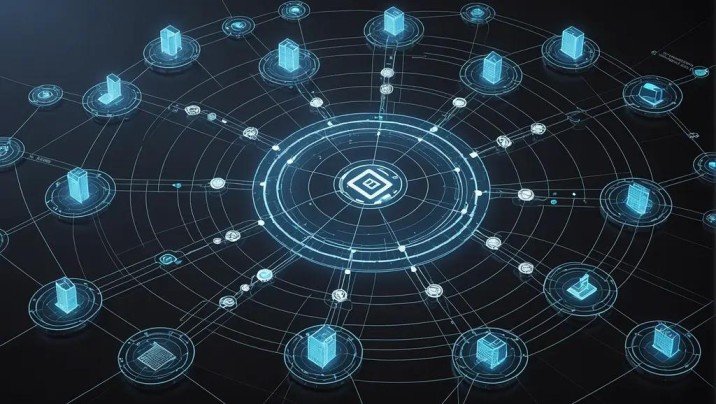
Understanding what is Web3 and how does it work starts with the technologies that power it.
Instead of relying on centralized servers, Web3 combines blockchain technology, smart contracts, decentralized applications, digital wallets, and cryptocurrencies to create an internet where trust is established through code rather than intermediaries.
Each component plays a unique role in building the decentralized web.
Blockchain Technology
Without blockchain, what is Web3 would simply remain an idea. Blockchain provides the infrastructure that makes decentralized ownership possible. Blockchain technology is the foundation of Web3.
For a deeper understanding of how blockchain works in business and enterprise environments, see IBM Blockchain
A blockchain is a distributed digital ledger that permanently records transactions across thousands of computers around the world.
Every new transaction must be verified by the network before it becomes part of the blockchain, because every participant holds a copy of the ledger, altering previous records becomes extremely difficult.
This improves transparency, security, and trust.
Major blockchain networks supporting Web3 include Ethereum, Solana, Polygon, Avalanche, BNB Chain, and several others. These networks continue to evolve with faster speeds, lower costs, and improved scalability.
Smart Contracts
Smart contracts are computer programs stored on a blockchain that automatically execute agreements when predefined conditions are met.
Think of them as digital vending machines. Insert the correct payment, and the machine automatically delivers the product without needing a cashier.
Similarly, smart contracts automatically process transactions without requiring banks, brokers, or other intermediaries.
They power many Web3 applications, including decentralized finance, NFT marketplaces, blockchain gaming, and digital identity systems.
Decentralized Applications (dApps)
Traditional applications rely on centralized servers owned by a single company.
Decentralized applications (dApps), on the other hand, run on blockchain networks. Instead of one organization controlling the platform, thousands of computers help keep the application running.
This makes dApps more transparent and, in many cases, more resistant to censorship or downtime.
Today, thousands of Web3 applications are available across different industries, including:
- Decentralized finance (DeFi)
- Blockchain gaming
- NFT marketplaces
- Social networking
- Digital identity
- Supply chain management
- Healthcare
- Education
As the Web3 ecosystem continues to expand, developers are creating new dApps that solve real-world problems rather than simply showcasing blockchain technology.
RECOMMENDED: World’s Largest Data Center: The Technology Powering AI, Cloud Computing, and the Internet
Cryptocurrency and Tokens
Cryptocurrencies are the financial backbone of Web3.
Unlike traditional payment systems that rely on banks or payment processors, blockchain networks use digital currencies to transfer value directly between users.
Popular cryptocurrencies include Bitcoin (BTC), Ether (ETH), Solana (SOL), and many others.
Beyond payments, tokens can also represent:
- Ownership in a project
- Voting rights
- Membership access
- Rewards
- Digital collectibles
- In-game assets
- Governance participation
This token-based economy allows communities to actively participate in building and improving decentralized platforms.
Web3 Wallets
A Web3 wallet is one of the first tools you’ll need to interact with decentralized applications.
Unlike a traditional wallet that stores cash or cards, a Web3 wallet stores the private keys that prove ownership of your digital assets.
Learning how wallets work is an essential part of understanding what is Web3, since wallets act as your identity and gateway to decentralized services.
You can use a Web3 wallet to:
- Store cryptocurrencies
- Buy and sell NFTs
- Connect to decentralized applications
- Verify your identity
- Vote in decentralized organizations
- Transfer digital assets securely
Popular wallets include MetaMask, Phantom, Rabby, Trust Wallet, Coinbase Wallet, and Ledger hardware wallets.
One important rule is never to share your recovery phrase. Losing it—or giving it to someone else—could result in losing access to your assets.
Web2 vs Web3: What’s the Difference?
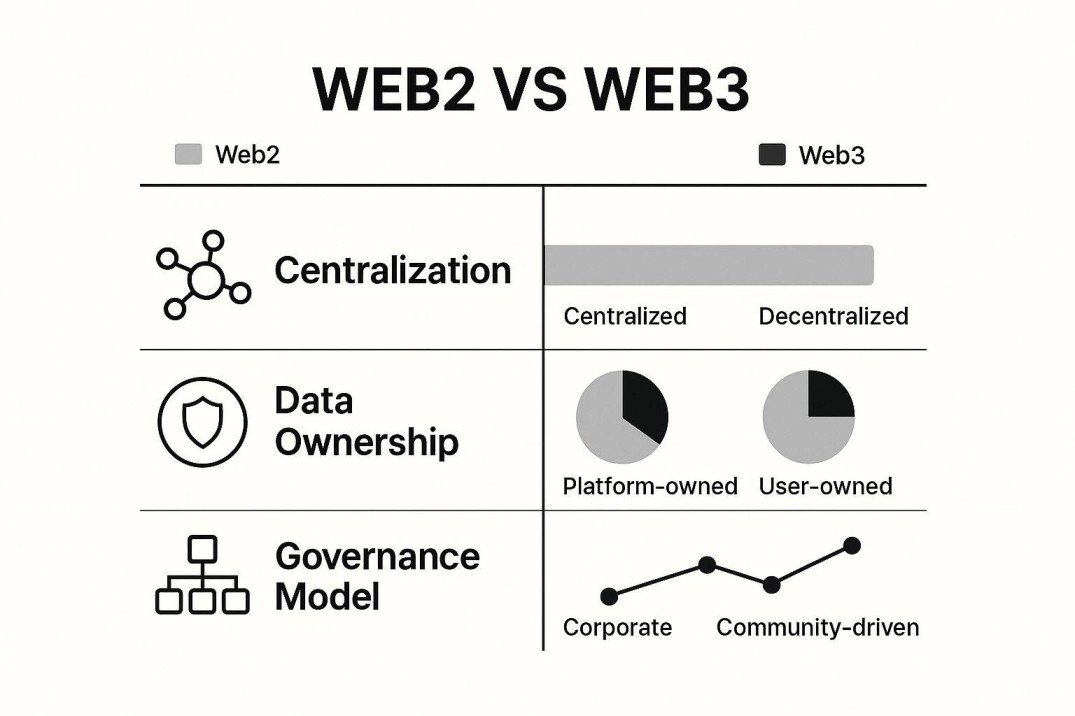
Comparing Web2 with Web3 is one of the easiest ways to understand what is Web3 and why many experts believe it represents the next evolution of the internet.
One of the most common questions beginners ask is, “What is the difference between Web2 and Web3?” The biggest difference lies in ownership and control.
Web2 made the internet interactive, but large companies generally own the platforms, collect user data, and control how digital services operate.
Web3 shifts more of that ownership to users through blockchain technology.
| Feature | Web2 | Web3 |
|---|---|---|
| Ownership | Companies own platforms and user data | Users own digital assets and identities |
| Data Storage | Centralized servers | Distributed blockchain networks |
| Payments | Banks and payment processors | Cryptocurrency and blockchain |
| Privacy | Companies manage user data | Users have greater control over their information |
| Transparency | Limited visibility | Public and verifiable blockchain records |
| Monetization | Platforms keep most revenue | Users and creators can share rewards |
| Access | Account-based | Wallet-based and often permissionless |
Web2 and Web3 are not enemies.
In reality, many companies are exploring ways to combine the convenience of Web2 with the ownership and transparency offered by Web3.
Key Features of Web3
Understanding the defining characteristics of Web3 helps explain why many developers believe it represents a significant step forward for the internet.
Decentralization
Instead of storing information on one company’s servers, Web3 distributes data across many computers worldwide. This reduces the risk of outages and prevents a single organization from controlling the entire platform.
Web standards continue to evolve alongside decentralized technologies. The World Wide Web Consortium (W3C) develops many of the standards that help keep the web open, interoperable, and accessible.
User Ownership
One of the biggest Web3 benefits is digital ownership.
Users can own:
- Cryptocurrencies
- NFTs
- Domain names
- Gaming assets
- Digital identities
- Membership tokens
Rather than licensing these assets from a company, ownership is recorded on a blockchain.
Transparency
Most blockchain transactions can be publicly verified. This transparency increases trust because anyone can confirm transactions without relying on a central authority.
Permissionless Access
Many Web3 services are open to anyone with internet access.
Instead of asking permission from a company, users connect through their wallets and begin interacting with decentralized applications.
Interoperability
Many Web3 projects are designed to work together.
For example, one wallet can often access multiple decentralized applications without creating separate accounts. This creates a more connected digital ecosystem.
Community Governance
Some Web3 projects allow token holders to vote on important decisions.
Instead of executives making every decision, communities help determine future updates, funding priorities, and platform improvements.
This governance model encourages greater user participation.
Benefits of Web3
For businesses, creators, and everyday users, what is Web3 is no longer just a theoretical question. It is becoming increasingly relevant as decentralized technologies continue to mature.
The growing interest in What Is Web3 isn’t driven by hype alone. The technology offers practical benefits for individuals, businesses, creators, and developers.
Better Privacy
Many traditional websites collect significant amounts of personal information. Web3 gives users more control over how their data is stored, shared, and accessed.
Although privacy depends on the platform, decentralization reduces reliance on centralized databases.
Improved Security
Blockchain networks use advanced cryptography and distributed verification, because records are shared across many computers, altering past transactions becomes extremely difficult.
While no technology is completely immune to attacks, blockchain significantly reduces many traditional security risks.
The Mozilla Foundation regularly publishes resources on internet privacy, security, and building a healthier web, which align with many of Web3’s goals.
Greater Creator Ownership
Artists, musicians, writers, filmmakers, and developers can connect directly with their audiences.
Instead of paying high platform fees, creators can earn income through NFTs, tokenized communities, subscriptions, or decentralized marketplaces.
This creates new opportunities for independent creators.
Financial Inclusion
Millions of people around the world remain underserved by traditional banking systems. Web3 enables anyone with an internet connection to send, receive, or store digital assets without needing a conventional bank account.
This has the potential to expand financial access globally.
Faster International Payments
Traditional international money transfers can take several days.
Blockchain transactions often settle much faster, depending on the network, while reducing the need for multiple intermediaries.
Innovation Across Industries
The future of Web3 extends far beyond cryptocurrency.
Organizations are exploring blockchain solutions in:
- Healthcare
- Education
- Real estate
- Logistics
- Entertainment
- Government services
- Digital identity
- Supply chain management
As adoption grows, Web3 is expected to support entirely new business models and digital experiences.
Challenges Facing Web3
While the future looks promising, What Is Web3 isn’t without challenges. Like every emerging technology, it must overcome several obstacles before reaching mainstream adoption.
Understanding these limitations helps paint a more balanced picture of where Web3 stands today.
Scalability
One of the biggest technical challenges is scalability.
Popular blockchain networks can slow down when millions of users perform transactions simultaneously. This often leads to higher transaction fees and longer processing times.
To solve this, developers are building Layer 2 networks, sharding technologies, and more efficient blockchain protocols that can process thousands of transactions per second.
User Experience
For many beginners, Web3 still feels complicated.
Setting up a wallet, safeguarding a recovery phrase, paying gas fees, and understanding blockchain addresses can be intimidating for first-time users.
The industry is investing heavily in simpler interfaces that make decentralized applications as easy to use as traditional websites.
Regulatory Uncertainty
Governments worldwide are still determining how cryptocurrencies, digital assets, and decentralized platforms should be regulated. Clear regulations could encourage wider adoption, while inconsistent policies across countries may slow innovation.
Many organizations are working with regulators to develop frameworks that protect users without limiting technological progress.
Security Risks
Blockchain technology itself is highly secure, but users remain a target for scams.
Some common threats include:
- Phishing websites
- Fake cryptocurrency giveaways
- Fraudulent investment projects
- Malicious smart contracts
- Fake wallet applications
Learning basic cybersecurity practices is essential before interacting with any Web3 platform.
Environmental Concerns
Earlier blockchain networks that relied on Proof of Work consumed significant amounts of electricity.
However, many modern networks now use Proof of Stake, which dramatically reduces energy consumption.
Ethereum’s transition to Proof of Stake marked one of the largest energy-efficiency improvements in blockchain history, encouraging more sustainable Web3 development.
Mainstream Adoption
Although awareness of Web3 has grown rapidly, widespread adoption is still in its early stages. Many businesses continue to evaluate how decentralized technologies fit into their operations, while consumers are gradually becoming more familiar with blockchain-based services.
As infrastructure improves and education increases, adoption is expected to accelerate.
Real-World Examples of Web3
Many people assume Web3 is only about cryptocurrency.
In reality, Web3 applications are already solving problems across multiple industries.
Decentralized Finance (DeFi)
DeFi allows users to borrow, lend, trade, save, and earn interest without relying on traditional financial institutions.
Instead of banks processing transactions, smart contracts handle financial agreements automatically.
This creates financial services that are accessible around the clock from almost anywhere in the world.
NFTs
Although NFTs first became popular through digital art, their use cases have expanded significantly.
Today, NFTs can represent:
- Event tickets
- Music rights
- Academic certificates
- Property records
- Membership cards
- Gaming assets
- Luxury product authentication
Their ability to prove ownership digitally makes them useful far beyond collectibles.
Blockchain Gaming
Gaming is one of the fastest-growing sectors within the Web3 ecosystem. Players can own characters, skins, weapons, virtual land, and other digital items.
Unlike traditional games, these assets may be traded, sold, or transferred between compatible platforms.
Decentralized Autonomous Organizations (DAOs)
A DAO is an internet-native organization governed by its community.
Instead of executives making every decision, members vote on proposals using governance tokens.
DAOs are now being used for investment clubs, charitable organizations, open-source software development, and online communities.
Supply Chain Management
Businesses use blockchain to improve transparency across global supply chains. Every stage from manufacturing to shipping and delivery, can be recorded on an immutable ledger.
This helps reduce fraud, improve traceability, and verify product authenticity.
Healthcare
Healthcare providers are exploring blockchain for secure medical record management.
Patients could eventually control access to their medical history while allowing authorized healthcare professionals to retrieve information securely.
Digital Identity
Managing multiple usernames and passwords is becoming increasingly difficult. Web3 aims to replace fragmented digital identities with secure blockchain-based identities that users control themselves.
This could simplify authentication while reducing identity theft.
How to Get Started with Web3
If you’re reading this Web3 beginner guide 2026, you’re already taking the first step.
Getting started doesn’t require extensive technical knowledge, but it does require patience and a willingness to learn.
1. Learn the Basics
Before investing money, understand the fundamentals. Learn how blockchain works, what smart contracts do, how wallets function, and how decentralized applications operate.
Knowledge will help you avoid costly mistakes.
2. Create a Trusted Web3 Wallet
Choose a reputable wallet such as MetaMask, Trust Wallet, Phantom, Rabby, or Coinbase Wallet. Write your recovery phrase on paper and store it in a secure offline location.
Never save it in cloud storage or share it with anyone.
3. Buy a Small Amount of Cryptocurrency
If you want to explore Web3 hands-on, purchase a small amount of cryptocurrency from a trusted exchange.
Start small while learning how transactions work. Remember that cryptocurrencies can be highly volatile.
4. Explore Decentralized Applications
Try beginner-friendly dApps to experience Web3 firsthand.
You can explore decentralized finance platforms, NFT marketplaces, blockchain games, or decentralized social media without making large financial commitments.
5. Prioritize Security
Protecting your digital assets should always come first.
Follow these best practices:
- Never share your recovery phrase.
- Verify website URLs before connecting your wallet.
- Enable two-factor authentication whenever possible.
- Avoid offers that promise guaranteed profits.
- Research every project before investing.
A cautious approach is often the smartest approach in Web3.
The Future of Web3
Is Web3 the future of the internet? No one can predict the future with certainty, but Web3 is already influencing how digital services are designed.
Large technology companies, startups, financial institutions, and governments are actively exploring blockchain-powered solutions.
Companies such as Consensys continue to develop Web3 infrastructure, developer tools, and enterprise blockchain solutions that support wider adoption.
Several trends are expected to shape the next phase of Web3:
- Greater integration with artificial intelligence (AI)
- Improved blockchain scalability
- Wider enterprise adoption
- Better user experiences
- Expansion of decentralized identity systems
- Growth of tokenized real-world assets
- Increased interoperability between blockchain networks
Rather than replacing Web2 overnight, Web3 is likely to complement existing internet services.
Many future applications may combine the speed and convenience of Web2 with the ownership and transparency of Web3.
As blockchain technology matures, users may not even realize they’re using Web3—it will simply power smarter, more secure digital experiences behind the scenes.
RECOMMENDE: What Is Anxiety?
Conclusion
So, What Is Web3?
Web3 is more than a buzzword. It represents a shift toward a more open, transparent, and user-owned internet built on blockchain technology, smart contracts, decentralized applications (dApps), and Web3 wallets.
Instead of relying solely on centralized companies, Web3 empowers individuals to own digital assets, control personal data, and participate directly in online communities.
Although challenges such as regulation, usability, scalability, and security remain, innovation in the Web3 ecosystem continues at a rapid pace.
Whether you’re a student, developer, entrepreneur, investor, or simply curious about the next generation of the internet, understanding What Is Web3 today will help you navigate tomorrow’s digital landscape with greater confidence.
The internet has already evolved from static web pages to social platforms. Web3 could represent the next chapter—one where users don’t just consume the internet but actively own a piece of it.