
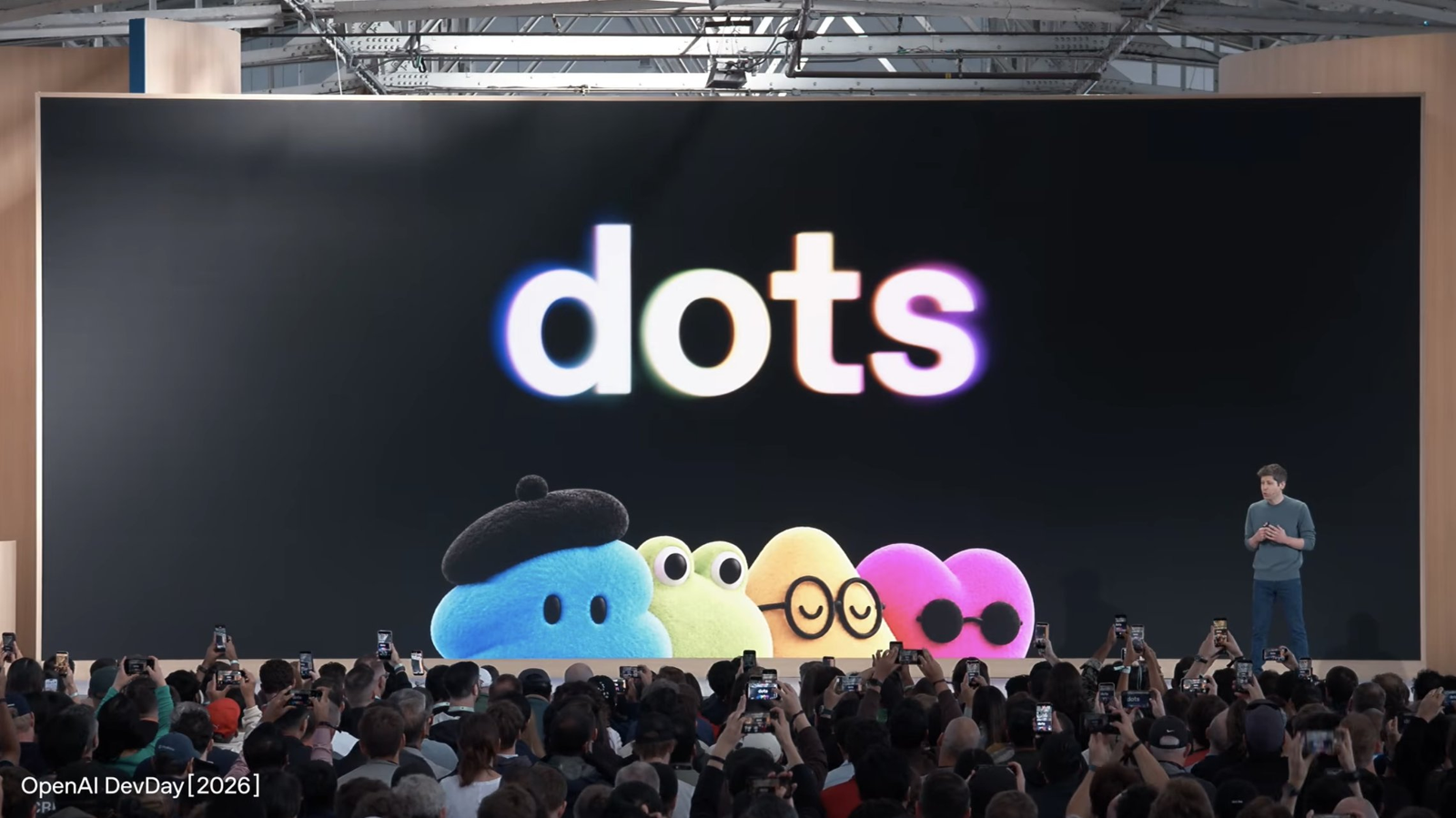
AI is moving into a new phase, and this time the biggest change may not be another chatbot. On September 29, OpenAI introduced Dots, a new type of AI agent designed to work continuously toward a goal rather than simply respond to prompts. OpenAI says Dots can use their own cloud computers, connect to more than 4,000 apps, and work through platforms including ChatGPT, Slack, and Microsoft Teams.
The announcement is part of a broader shift in the AI industry: companies are building systems that can do more than generate an answer. They can plan tasks, use software, retrieve information, and carry out parts of a workflow.
That shift matters for businesses. For a Nigerian company, an AI agent could eventually do more than answer a customer’s question. It could help qualify a lead, update a customer record, prepare a report, monitor information, or move data between business applications.
The technology is still developing, and businesses will need to deal with issues around cost, accuracy, data access, and human oversight, but the direction is becoming clearer: AI is moving from helping people do work to taking responsibility for parts of the workflow.
AI Agents Are Different From the Chatbots We Already Use
The simplest way to understand an AI agent is to look at what happens after it gives you an answer. A conventional chatbot generally receives a prompt, generates a response, and waits for another instruction.
An AI agent is designed to work toward a goal. Depending on how it is built and what permissions it has, an agent can break a task into steps, use external tools, access information, make decisions within defined boundaries, and continue working without requiring a person to direct every step.
Google Cloud describes AI agents as systems that can use reasoning, planning, memory, and tools to pursue goals and complete tasks. Consider customer support. A chatbot could tell a customer that an order is delayed.
An AI agent could potentially check the order system, identify the reason for the delay, retrieve the relevant customer information, and prepare the next action.
That difference is important. The technology is moving from answering questions towards executing tasks.
What OpenAI’s Dots Launch Changes
OpenAI’s September 29 announcement gives a useful picture of where this technology is heading. The company says Dots can operate through its own cloud computers and browsers and continue working on projects independently. Its examples include investigating software bugs, preparing product-launch materials, analyzing research, updating sales proposals, and supporting content-production workflows.
Dots can also connect with thousands of applications, allowing agents to work with the software businesses already use. OpenAI says it is initially rolling out Dots to Pro and Business Premium users in eligible markets, while enterprise users can access a beta when their workspace administrator enables it. That does not mean Nigerian businesses can simply hand over their operations to an OpenAI agent today. What matters is the direction of the product.
AI systems are increasingly being built to operate inside business workflows, rather than sitting separately as tools employees consult when they need help.
Why Businesses Are Paying Attention to AI Agents
Businesses do not only need information. They need work completed. An employee may spend hours each week checking emails, updating spreadsheets, following up with leads, preparing reports, answering routine customer questions, and transferring information between different systems.
Some of those activities are repetitive. That makes them potential candidates for automation.
An AI agent could handle parts of those processes while employees remain responsible for decisions that require judgement, accountability, or direct relationships with customers.
This is already becoming part of the African technology conversation. Techpoint Africa has reported on African startups using AI agents to scale operations without building large development teams, while TechCabal has covered African companies experimenting with AI agents and workplace automation.
The bigger business question is therefore no longer simply, “How can we use AI?” It is becoming: “Which parts of our work can AI actually perform?”
What AI Agents Could Mean for Nigerian Businesses
The impact will differ from one company to another, but several areas are obvious candidates.
Customer support
An AI agent could handle routine inquiries, search a company’s knowledge base, and escalate complicated or sensitive cases to an employee.
For Nigerian businesses receiving large numbers of enquiries through websites, messaging platforms, or other digital channels, this could reduce repetitive work for support teams.
The important point is that an agent could potentially do more than send a pre-written answer. It could interact with other business systems to complete part of the process.
Sales and lead management
Sales teams spend a significant amount of time sorting leads, following up with prospects and updating customer records. An agent could potentially identify new leads, organize them according to predefined criteria, prepare follow-up messages, and update a CRM.
The employee would still decide how and when to engage with an important customer.
Finance and administration
Businesses also have repetitive administrative processes that involve moving information between documents and systems. AI agents could assist with invoice follow-ups, document preparation, reporting, and other routine processes.
However, financial decisions require a higher level of control. A company may allow an agent to prepare information for approval without giving it permission to independently authorize payments.
That distinction—assistance versus unrestricted authority will become increasingly important as businesses adopt agents.
Research and reporting
An agent could monitor selected sources, collect new information, and prepare a report for an employee to review. That could be useful for businesses tracking competitors, market developments, regulations, or customer trends.
Instead of an employee spending hours collecting information, the agent could prepare the first layer of the work.
Content and marketing
AI agents could also become part of content workflows. They could help organize research, monitor information sources, prepare drafts, repurpose approved material, or move content between different platforms.
OpenAI itself lists content-production work among the types of projects Dots can assist with, but there is an important difference between automating parts of production and removing editorial responsibility.
For a publication such as NaysBlog, for example, an AI system could help organize research, but the final article still needs human judgment, fact-checking, and editorial review.
Nigeria Is Already Building an AI Ecosystem
The AI-agent conversation is arriving as Nigeria’s wider AI ecosystem is developing. The National Centre for Artificial Intelligence and Robotics, under NITDA, is working on AI research and adoption, including N-ATLAS, an open-source multilingual Nigerian AI model designed to support languages including Yoruba, Hausa, and Igbo as well as Nigerian-accented English.
In September 2026, the National AI Innovation Challenge also opened applications for Nigerian universities, startups, technology companies, and independent developers to build applications using N-ATLAS.
The program identifies areas including health, agriculture, education, legal services, and financial inclusion. That matters because AI agents need more than a powerful underlying model.
They need useful data, software tools, infrastructure, and people who understand the environment in which the technology will operate. Nigeria’s AI story is therefore developing on several fronts at once: local models, startups, skills development, enterprise adoption, and infrastructure.
The Infrastructure Behind the AI-Agent Race Matters Too
There is a less glamorous part of the AI-agent story that Nigerian businesses cannot ignore: infrastructure. An agent that is expected to work continuously needs computing resources, cloud services, connectivity, and access to the applications it is supposed to operate.
That makes Nigeria’s cloud infrastructure push relevant to the future of AI. Nigeria’s National Digital Cloud Policy targets $750 million in private investment in cloud and digital infrastructure over two years, including a $250 million target in its first 12 months.
The investment target does not automatically mean AI agents will become widespread, but it illustrates an important point. The next stage of AI adoption will depend on more than AI models. It will also depend on the infrastructure underneath them. If businesses cannot reliably access the cloud, data, or applications their agents need, the technology’s potential becomes much harder to translate into everyday business value.
The Skills Question Is Just as Important
AI agents will also create a demand for people who know how to use and supervise them. A business needs someone who can decide which process should be automated, configure the system, monitor its performance, and intervene when something goes wrong.
That means adopting AI agents is not simply a matter of buying software. It is also a skills question.
Nigeria is already investing in AI and emerging-technology skills, while initiatives such as N-ATLAS are intended to expand local participation in AI development. For businesses, that could increase demand for workers who understand both their organisation’s operations and how AI systems work.
AI Agents Also Create New Risks
The ability to act is what makes AI agents potentially more useful and more difficult to control. If a chatbot gives a bad answer, a person may catch the mistake before acting on it.
If an AI agent has permission to send an email, change a record, process an order, or access sensitive information, an error can have a much larger consequence.
OpenAI acknowledges that Dots can make mistakes and recommends reviewing consequential work. The company has also built permissions and approval controls into the system to limit what agents can do independently.
Data privacy is another concern. An agent may need access to customer information, internal documents, emails, or business systems to perform its job.
That creates questions about what data the system can access, where that data is processed, who can access it, and how long it is retained. Nigeria’s data-protection framework makes privacy and responsible handling of personal information an important consideration for businesses deploying AI systems.
For a Nigerian company considering an AI agent, the questions should therefore go beyond: “What can this AI do?”
They should also include: “What information can it access?”
“What actions can it take?”
“What happens when it makes a mistake?”
“Who is responsible for the final decision?”
What Nigerian Businesses Should Watch Next
The next stage of the AI-agent market will likely be less about impressive demonstrations and more about integration. Businesses will want AI systems that can work with the software they already use rather than forcing employees to move between another collection of disconnected tools.
That could eventually mean agents operating across customer relationship management systems, accounting software, communication platforms, databases, and internal business applications.
African companies are already exploring this direction. TechCabal has reported on AI adoption in African workplaces, while Techpoint Africa has documented startups using agents to address business and operational problems.
For Nigerian businesses, the sensible starting point may therefore not be trying to automate an entire company. It could be identifying one repetitive workflow, measuring how much time it consumes, and testing whether an AI agent can handle part of it safely.
That might be customer enquiries, internal research, reporting, lead management, or another clearly defined process. The goal should be measurable improvement, not simply having an AI agent because competitors are talking about them.
Conclusion
OpenAI’s Dots launch is one more sign that the AI industry is moving beyond the chatbot model. The technology is increasingly being designed to work with applications, use tools, and complete multiple steps toward a goal.
For Nigerian businesses, the immediate opportunity is not necessarily to replace employees or automate entire departments. It is to understand where AI can take over repetitive parts of existing workflows while people retain responsibility for decisions that require judgement and accountability.
That distinction could become increasingly important as AI agents become cheaper, more capable, and easier to connect to everyday business software.
The chatbot era is not necessarily ending, but the role of AI is expanding. Instead of only asking AI for an answer, businesses are beginning to ask a different question: What if the AI could actually do the work?
Read more on technology and digital trends on NaysBlog.