
Ghana 5G competition is entering a new phase, with MTN Ghana securing $202 million in spectrum and Telecel Ghana preparing to launch its own 5G network in December 2026.
The developments mark a significant change in Ghana’s approach to 5G. The country is moving away from a model centered on a single wholesale network and toward greater competition between mobile operators.
For consumers, the question now is no longer simply who will provide Ghana’s 5G infrastructure. It is whether MTN and Telecel can turn their new spectrum into faster, wider, and more reliable connectivity.
Ghana 5G Strategy Is Changing
Ghana initially pursued a shared 5G infrastructure model through Next Gen InfraCo (NGIC), which was given exclusive rights to operate the country’s wholesale 5G network. NGIC began commercial operations in March 2026, but the rollout was slower than Ghana’s broader connectivity ambitions required.
In July, Ghana’s National Communications Authority (NCA) removed the exclusivity condition from NGIC’s wholesale 5G license, saying a more competitive market would better support investment, innovation, network resilience, and service quality.
That decision opened the door for operators to pursue spectrum and build their own 5G networks.
The NCA subsequently began a competitive licensing process covering the 700 MHz, 2.3 GHz, and 3 GHz bands. MTN Ghana, Telecel Ghana, and Goal Telecommunications qualified to continue in the process.
The result is the competition now taking shape between Ghana’s two biggest mobile operators.
MTN Ghana has secured $202 million in spectrum.
MTN Ghana has been awarded spectrum in the 700 MHz and 3 GHz bands for a combined license fee of about $202 million.
The operator paid approximately $100.9 million for two 700 MHz lots and $101.1 million for three 3 GHz lots. The licenses are valid for 15 years.
MTN confirmed on October 2 that it had received notice of the spectrum award. The two frequency ranges can play different roles in the network.
The lower-frequency 700 MHz spectrum can help operators provide coverage across wider areas, while the 3 GHz allocation gives MTN additional capacity for locations where demand is high.
That combination could be useful as Ghana tries to expand 5G beyond the most densely populated parts of the country, but there is an important distinction: MTN securing spectrum does not mean its new 5G capacity is already available everywhere.
The company still has to deploy and integrate the spectrum into its network.
Telecel is targeting a December 5G launch.
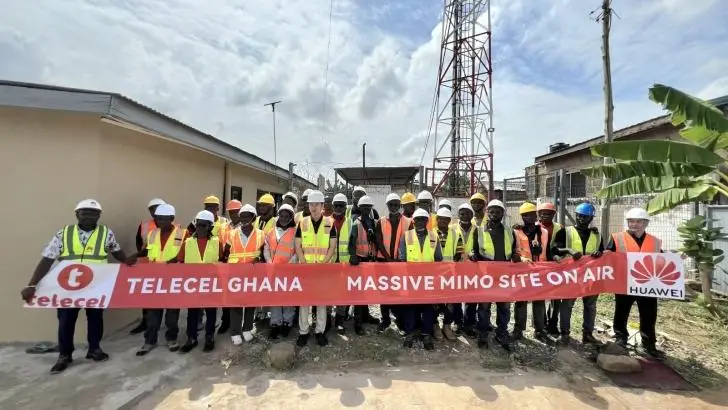
Telecel Ghana is taking a different position in the emerging race. The operator secured three lots in the 2.3 GHz band, giving it spectrum for its own network expansion.
More importantly, Telecel CEO Moh Damush said the company is targeting December 2026 for the launch of its own 5G network.
That puts pressure on MTN to show how quickly it can deploy its newly acquired spectrum. The two companies are starting from different positions.
MTN has a larger existing mobile network and substantial customer base, while Telecel is using the new spectrum opportunity to strengthen its position in Ghana’s telecom market.
That makes the coming months less about who won spectrum and more about who can turn that spectrum into a network customers actually notice.
Why Ghana 5G Is Expanding Faster
Speed matters because Ghana has set an ambitious coverage target. The government wants 5G to reach 70% of the population by March 2027.
That is a tight timeline. It also explains why the change in Ghana’s 5G strategy matters. Giving operators more room to invest in their own networks could accelerate deployment by allowing companies to build on infrastructure they already operate.
Instead of waiting for one wholesale network to carry the country’s 5G expansion, MTN and Telecel can now make their own investments and compete for customers.
The policy change is therefore bigger than the latest spectrum auction. It changes the structure of Ghana’s 5G market.
What Does Ghana 5G Competition Mean for Consumers?
For consumers, Ghana 5G spectrum matters less than what operators do with it.
If MTN and Telecel expand their networks successfully, customers could eventually see:
- faster mobile internet;
- more network capacity in congested areas;
- wider 5G availability;
- improved connectivity for businesses;
- additional high-speed home broadband options; and
- more competition between network providers.
But competition does not automatically mean cheaper data. Operators have to recover the cost of spectrum, network equipment, fibre or other backhaul infrastructure, electricity, sites, and ongoing network operations.
The immediate benefit may therefore be better capacity and service quality, rather than lower prices.
There is also the question of devices. Customers need 5G-compatible phones and equipment that support the relevant spectrum bands before they can take full advantage of the new networks.
That means Ghana’s 5G expansion will depend on more than telecom operators alone.
Ghana 5G Race Is Really an Infrastructure Race
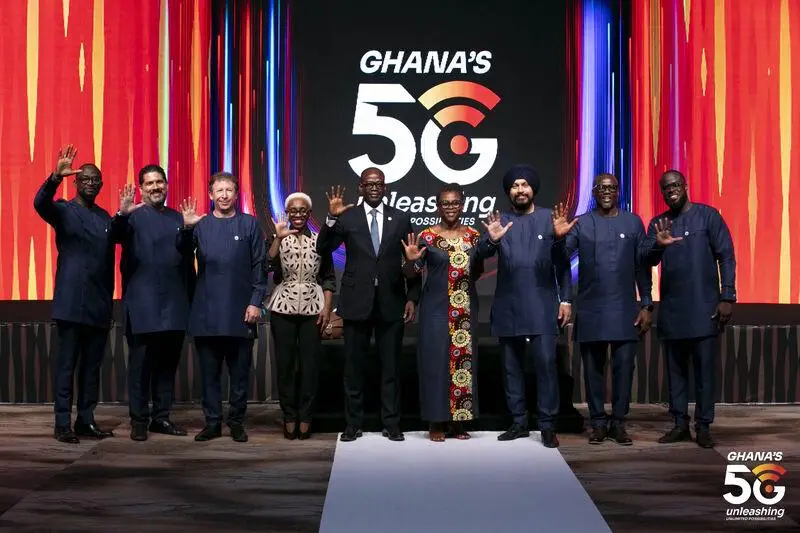
The spectrum awards are only the beginning. MTN and Telecel still need to deploy equipment, connect network sites, provide reliable power and backhaul, and expand beyond the areas where 5G is commercially easiest to deploy.
That will determine whether Ghana can meet its 70% coverage target.
The wider African market is facing a similar challenge. Growing demand for mobile data is putting more pressure on networks, while operators and governments are investing in fibre, 5G, satellite connectivity, and other infrastructure to expand capacity. Nigeria is also seeing changes in its 5G spectrum market, as MAFAB’s spectrum plans could reshape competition among the country’s telecom operators.
Nigeria, for example, recorded a sharp rise in data consumption in 2026 as demand for mobile connectivity continued to grow. Ghana’s 5G rollout is therefore part of a much bigger African infrastructure story.
Conclusion
The next major milestone will be Telecel’s planned December launch. For MTN, the focus will be on how quickly it can deploy the spectrum it has secured and expand 5G capacity across its network.
The NCA and the Ghanaian government will also have to watch whether the new Ghana 5G competitive model delivers the investment and coverage improvements expected from it. If both operators move aggressively, Ghana could soon have a more competitive 5G market, with networks competing on coverage, capacity, reliability, and broadband services.
For now, though, the $202 million spectrum award is not the finish line. The real race starts when MTN and Telecel begin turning spectrum into usable connectivity.
Read more on technology and digital trends on NaysBlog.