
Nigerian games are attracting millions of players, and the bigger story is not simply that two games have gone viral. It is what their success could mean for the commercial potential of African stories.
Lagos Run, a browser game built around driving a Lagos danfo, has grown from a small local project into a viral hit. By October 6, its dashboard reportedly showed more than 1.8 million players, nearly 12 million visits, and about $46,900 in revenue. The figures come from the game’s dashboard and were reported by BusinessDay, rather than independently audited.
Days earlier, Lagos Life, another browser game built around everyday life in Lagos, crossed one million players. It lets users create characters, work virtual jobs, manage money, explore a digital Lagos, and interact with other players.
The two games are different, but they share one important idea: Nigerian life is part of the product. That matters because Africa already has a large and growing gaming audience. The bigger question is whether Nigerian games can turn cultural familiarity and viral attention into sustainable businesses.
Lagos Run and Lagos Life are taking Nigerian gaming in different directions.
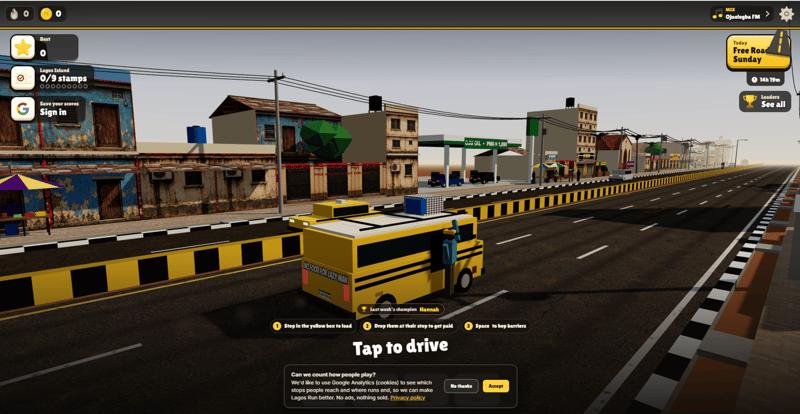
Lagos Run focuses on one of the most recognizable parts of Lagos life: the danfo. Players drive a yellow minibus, pick up passengers, and navigate the city’s chaotic roads. Its creator, Nigerian developer Opeyemi Adeniran, grew up in Lagos and studied computer science at Yaba College of Technology.
The game is also played through a browser, making it easier for people to discover and try without downloading a large application. Lagos Life takes a broader approach.
Instead of turning one part of Lagos into a game mechanic, it creates a virtual city where players can work, earn virtual money, pay rent, explore locations, and interact with others. Different experiences, but the same principle: the setting is not just decoration. Nigerian life is part of the gameplay.
Nigerian developers have used local stories before.
It would be easy to assume that Nigerian games have only recently started using local culture. That is not the case.
Techpoint Africa has highlighted earlier Nigerian gaming projects, including the Danfo series, which dates back to 2007, and Gamsole’s Gidi Run, released in 2016.
What feels different today is distribution. A developer can now build a browser game, share a link on social media or messaging platforms, and potentially reach thousands of people without first securing a major publisher.
That lowers the barrier to discovery. It also means a game based on something Nigerians already understand can communicate its idea almost instantly. A player does not need an explanation of what a danfo is or why Lagos traffic can be chaotic.
Why local stories could give African games an advantage
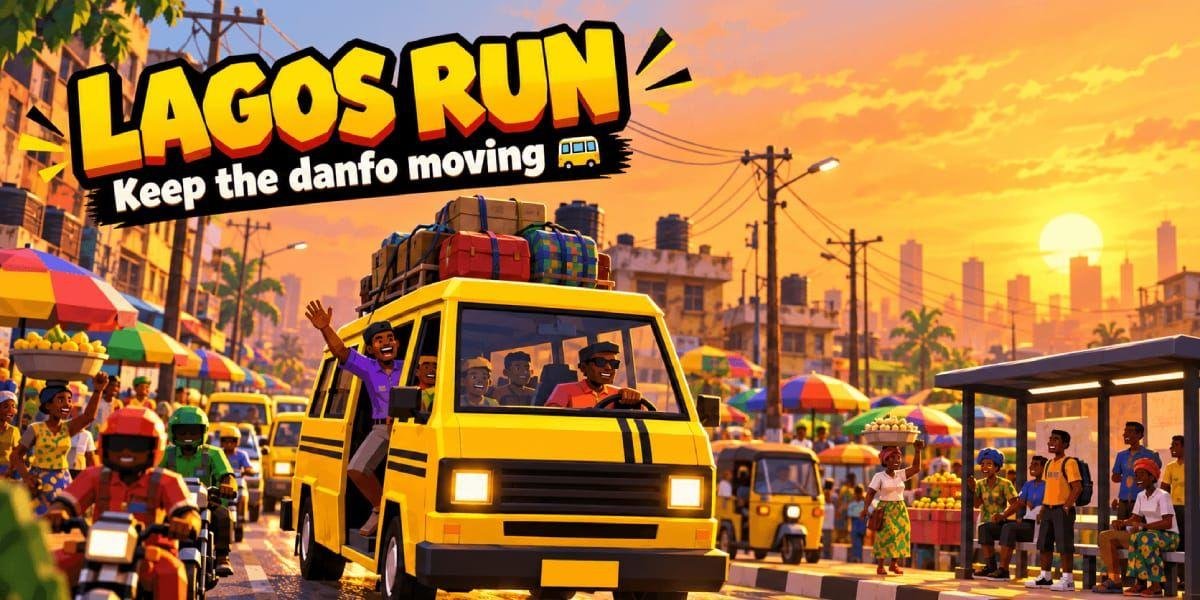
The appeal of Nigerian games is not simply that they contain Nigerian names or locations. The stronger opportunity is turning familiar experiences into the actual mechanics, characters, and stories of a game.
A Nigerian player already understands Lagos traffic, rent pressure, roadside commerce, nightlife, and the job search. Those experiences can become part of the game’s world rather than background decoration.
The same idea can extend beyond Nigeria to African folklore, history, music, sport, languages, and everyday life.
That could give African developers something global studios cannot easily reproduce: stories and experiences that feel deeply specific to the people who live them, but cultural familiarity alone is not enough. The game still has to be fun.
Africa’s gaming market is already growing.
The opportunity behind Nigerian games is also larger than two viral titles. Carry1st and Newzoo forecast that Africa’s games market will generate $1.98 billion in revenue in 2026, up 11.9% from 2025. The number of players is expected to reach about 406 million.
Mobile gaming is particularly important, accounting for an estimated 81.8% of Africa’s gaming revenue, or about $1.62 billion. Nigeria alone is forecast to generate roughly $226.6 million.
Those figures show that Africa already has a substantial gaming audience. The bigger problem is whether African developers can capture more of the money generated by that audience.
The real challenge is turning virality into a business.
Millions of players are a strong signal of interest, but they do not automatically mean a game has become a sustainable business. The harder questions come after the viral moment.
Will players return?
Can developers keep releasing updates?
Can free users eventually generate meaningful revenue?
Can advertising work without damaging the experience?
Can one successful game become the foundation for a studio?
Nigerian Games Are Growing: Why African Stories Are Finding Players
Lagos Run offers an early example. BusinessDay’s October 6 report put the game’s dashboard at more than 1.8 million players and nearly 12 million visits, alongside reported revenue of about $46,900. That is important because it shows how attention can potentially translate into money. But one game’s early revenue is not proof that Nigeria has already built a sustainable game-development industry.
The real test is what happens after the initial excitement fades.
Lagos Life is experimenting with another business model.
Lagos Life is approaching monetization differently. The game is experimenting with advertising inside its virtual environment, including virtual billboards that allow businesses to reach players within the digital city.
That model is interesting because the game itself becomes an advertising space. It also shows that Nigerian developers do not necessarily have to copy the business models used by major console and mobile studios. They can experiment with approaches that fit local audiences, devices, and advertising markets.
Whether that model can generate significant long-term revenue remains to be seen.
Nigeria has gamers, but developers need to capture more value.
A large gaming audience does not automatically create a strong local gaming industry. A September 2026 report from Analytics for Africa estimated that Nigerians spend about ₦41.3 billion annually on consoles, accessories, and physical games. However, much of the spending in its marketplace sample went toward imported products rather than Nigerian-developed games.
That highlights the bigger opportunity. Nigeria does not only need more people playing games. It needs more Nigerian intellectual property, development companies, and revenue streams built around those players.
That requires funding, technical talent, publishing support, and access to international markets. There are already signs of growing interest.
Google Play launched a $1 million Indie Games Fund for Sub-Saharan Africa, with selected studios receiving funding and support to scale their businesses and reach global audiences. Supercell has introduced grants ranging from $20,000 to $200,000 for African developers. The funding does not guarantee global success, but it suggests African game development is receiving more attention as a business opportunity.
Browser games could help Nigerian developers reach more people.
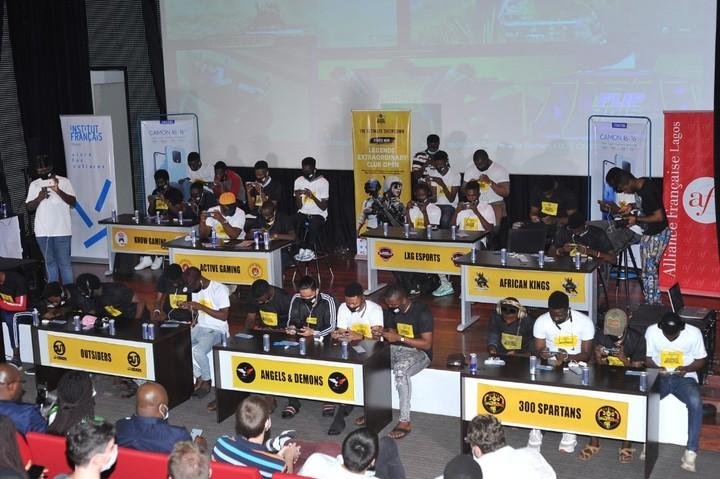
There is another lesson from Lagos Run and Lagos Life: accessibility matters. Both games can be played through a browser, meaning players do not necessarily need a console, gaming PC, or large application download.
For African markets, that can reduce some of the friction between discovering a game and actually playing it.
Nigeria’s growing internet usage also creates a larger potential audience for digital entertainment. NaysBlog previously reported that Nigeria’s data consumption reached about 1.66 million terabytes in July 2026, up nearly 47% from the previous year.
More internet usage does not guarantee gaming success, but it creates a larger digital audience for developers to reach.
What Nigerian games need to prove next
The next stage of Nigeria’s gaming story is not simply another viral player count. It is retention.
Can developers keep players coming back? Can they build communities? Can they release updates consistently? Can a viral project generate enough revenue to hire more developers and become a real studio, and perhaps most importantly, can a game built around Nigerian culture find players outside Nigeria?
Lagos Run’s Danfo is interesting precisely because it is so recognizably Lagos. If developers can turn that specificity into compelling gameplay, local identity could become a competitive advantage rather than a limitation.
Conclusion
Nigerian games have not yet proved that the country has solved the business of game development. But Lagos Run and Lagos Life have provided a powerful signal: people are willing to play digital experiences that feel recognisably Nigerian.
That signal is arriving as Africa’s gaming market approaches $2 billion, hundreds of millions of people across the continent play games, and global companies are beginning to fund African developers.
The opportunity is therefore bigger than the latest viral game. It is whether Nigerian and African developers can turn familiar places, stories, and experiences into intellectual property that people want to play, share, and eventually pay for.
Lagos Run put the Danfo into a game. Lagos Life put an entire Lagos inside one. The next challenge is turning that attention into lasting gaming businesses.
Read more on technology and digital trends on NaysBlog.