
The Africa semiconductor industry is beginning to take shape beyond traditional electronics, with countries exploring chip design, engineering, and other parts of the semiconductor value chain.
Rwanda is the latest example, after its Ministry of ICT and Innovation signed a memorandum of understanding with ChipMango to develop local chip-design capabilities and technical talent.
The September 22 agreement will focus on semiconductor design skills, practical training, and building a pipeline of engineers who can work in the industry. It comes shortly after ChipMango raised $1.9 million to expand its semiconductor engineering and design operations, including its work across Africa.
The deal is small compared with the enormous investments required to build advanced semiconductor factories. But that is also what makes it interesting.
Rwanda is not trying to become the next Taiwan overnight. It is building expertise in one part of a much larger industry.
And it is not alone. Across Africa, governments, companies, and research institutions are exploring ways to participate in the semiconductor value chain, from chip design and engineering to research, testing, and manufacturing.
That raises a more relevant question for Nigeria: where can Africa’s largest technology market fit into this emerging semiconductor ecosystem?
Why Rwanda Is Investing in Chip Design
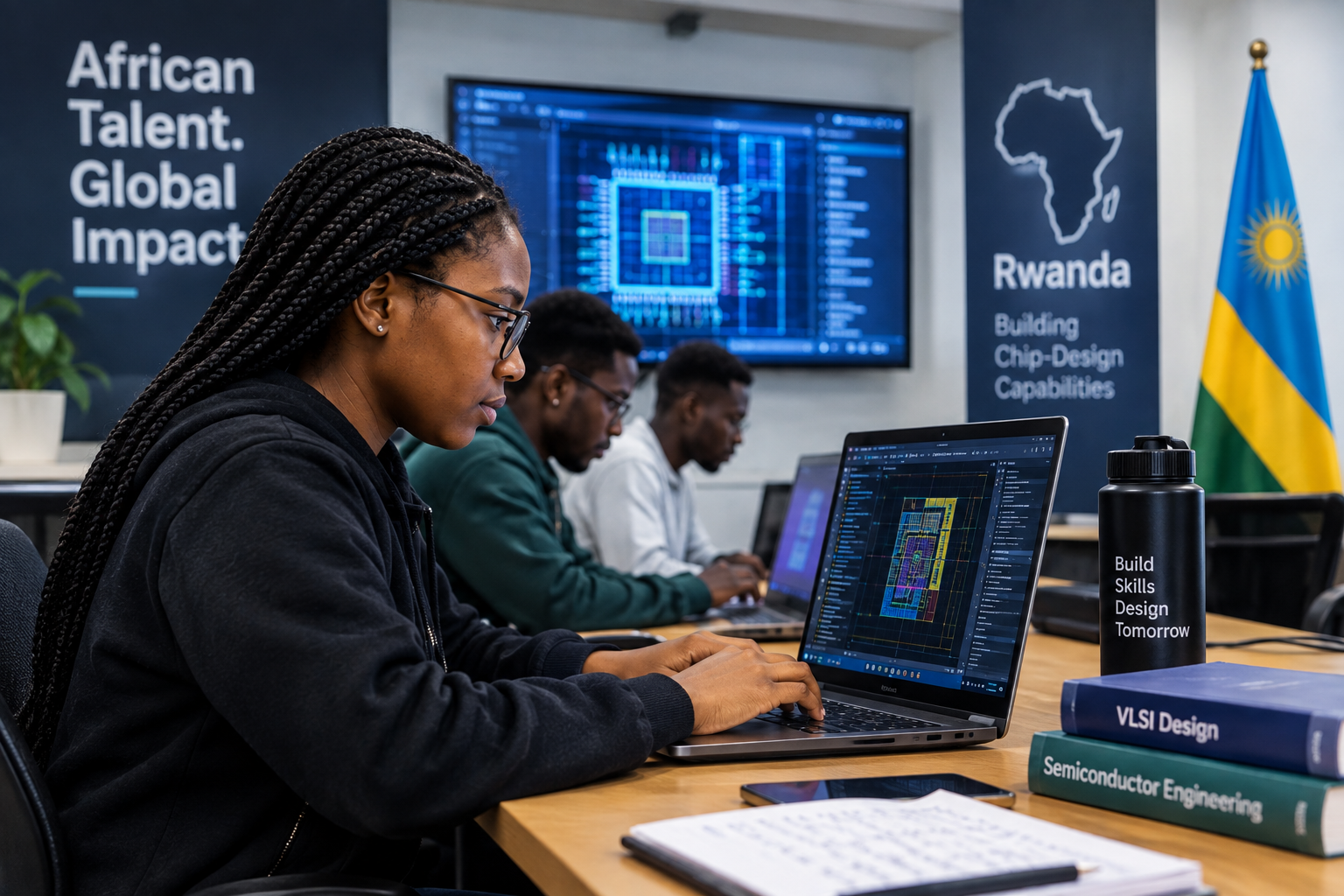
Rwanda’s agreement with ChipMango is centred on skills and semiconductor design, rather than the construction of a large chip fabrication plant.
That distinction is important.
Design is one of several stages involved in producing a semiconductor. Engineers can design and verify chips before the designs are sent to specialized facilities for fabrication. Other parts of the industry include packaging, testing, equipment, materials, and engineering services.
For Rwanda, developing local expertise in design gives it a way to participate in the industry without having to immediately build the digital infrastructure needed for advanced technology development.
The government has also been trying to position the country as a technology and innovation hub, making specialized engineering skills an important part of that strategy.
The ChipMango partnership fits into that broader effort by focusing on technical knowledge that can be developed locally and connected to the Africa semiconductor industry and the wider global market.
Africa Semiconductor Industry: The Opportunity Goes Beyond Rwanda
Rwanda’s move is part of a wider conversation about where African countries can fit into the Africa semiconductor industry and the global semiconductor supply chain.
The continent currently accounts for only a small share of global semiconductor production, and African countries face major challenges in competing with established semiconductor hubs.
But participation does not have to mean building an advanced fabrication plant.
A World Economic Forum analysis has highlighted different potential opportunities across African countries. South Africa has research and industrial capabilities, Egypt has an established electronics and semiconductor-design base, Morocco has links to automotive manufacturing, Kenya has semiconductor-related activity, while Nigeria has a large technology market and growing engineering base.
The African Union Development Agency-NEPAD has also been working on a semiconductor roadmap that considers areas including skills, chip design, fabrication and assembly infrastructure, policy, and investment. The approach recognizes that African countries may need to specialize in different parts of the industry rather than attempting to build the entire value chain independently.
That could make regional cooperation more important.
One country might develop engineering talent. Another could focus on research or design. Others could build capabilities around manufacturing, assembly, testing, or the industries that consume semiconductor technology.
The opportunity is therefore less about finding a single African “chip hub” and more about building connected capabilities.
Where Nigeria Fits Into Africa’s Chip Industry
Nigeria has several advantages that could make it relevant to this emerging ecosystem, particularly its large and growing technology market, engineering talent, chip design, research, and technology services.
ChipMango is one example.
The Nigerian-founded semiconductor company raised $1.9 million in a seed round in September to expand its engineering and product-development activities, semiconductor design engagements, workforce platform, and edge-AI and intelligent-hardware work.
The company has operations spanning Nigeria, Rwanda, South Africa, the United States and Malta, giving it a footprint that connects several African markets with the wider semiconductor industry.
Nigeria’s semiconductor ambitions are not limited to private companies either.
In June, the Raw Materials Research and Development Council signed an agreement with Africhip Research and Development Limited covering research, technology development, capacity building, and policy around Nigeria’s semiconductor industry.
The proposed work spans raw materials, chip design, wafer fabrication, and commercialization.
For the Africa semiconductor industry, Nigeria’s role could therefore develop around design, engineering, research, and technology services rather than immediate large-scale fabrication.
They show something more specific: semiconductor capability is becoming part of Nigeria’s technology and industrial-development agenda.
For Nigeria, the more immediate opportunity may be to build the people, research capacity, and design expertise needed to participate in the global value chain before attempting more capital-intensive manufacturing stages.
Africa Doesn’t Have to Make Every Chip

The semiconductor industry is often discussed as if the only meaningful achievement is manufacturing chips.
It is not. A semiconductor can pass through several stages before it becomes part of a finished product:
Research and materials → chip design → verification → fabrication → packaging → testing → integration
There are also businesses providing the software, equipment, and engineering services needed across those stages.
Fabrication is among the most capital-intensive parts of the chain. Advanced facilities require specialized equipment, reliable electricity, highly controlled environments, large amounts of capital, and years of accumulated expertise.
Chip design presents a different entry point.
It still requires highly specialized engineers and software, but it does not require every country to own a leading-edge fabrication facility.
That distinction could be important for the Africa semiconductor industry, particularly as countries look for ways to participate without taking on the cost of building advanced fabrication facilities.
Instead of asking whether Nigeria, Rwanda, or another country can immediately manufacture the world’s most advanced processors, a more practical question is
Which parts of the semiconductor value chain can African countries build competitive capabilities in?
For Nigeria, that could include chip design, engineering talent, research, and semiconductor-related software and services, while other countries develop complementary strengths.
Why AI Is Adding to the Semiconductor Opportunity
The rapid growth of AI is making semiconductor expertise more important because AI systems depend on increasingly specialized computing hardware.
Data centers, edge-computing systems, and AI-enabled devices all require processors and other components designed for increasingly demanding workloads.
ChipMango has linked its expansion to this wider shift, including work around edge AI and intelligent hardware. Its September funding announcement also highlighted growing demand for semiconductor engineers.
For Africa, that creates a connection between two developing technology priorities: AI capability and semiconductor engineering.
Countries that can train engineers to design or work with specialized hardware could potentially benefit from the growth of AI without having to manufacture every component locally.
But that opportunity depends on whether the continent can build the skills and infrastructure needed to support it.
What Could Hold Africa’s Semiconductor Industry Back?
The biggest challenge is that semiconductor development is technically demanding and expensive.
Talent is one obstacle. Chip design and semiconductor engineering require specialized skills that take years to develop.
Infrastructure is another. Advanced research, design, and manufacturing activities depend on reliable electricity, connectivity, laboratories, and specialized equipment.
Capital is also critical. Moving from training engineers and designing chips to more advanced manufacturing requires substantially more investment.
Then there is competition.
Africa is entering an industry dominated by companies and countries with decades of experience, established supply chains, and enormous research and development budgets.
That makes it difficult for individual African countries to compete across the entire semiconductor chain.
A more realistic route may be specialization and cooperation.
If countries develop complementary capabilities and connect them through regional partnerships, Africa could participate in more stages of the semiconductor ecosystem without every country having to build everything itself.
Conclusion
The Rwanda–ChipMango agreement is still an early step. Its real impact will depend on what follows: how many engineers are trained, whether local chip-design activity grows, whether companies begin using that talent commercially, and whether additional investment enters the sector.
Nigeria faces a similar test.
The country has companies and institutions beginning to work across semiconductor design, research, engineering, and industrial development. The next challenge is turning those individual initiatives into sustainable commercial activity.
That will require more than partnerships.
It will require specialized skills, research, reliable infrastructure, capital, supportive policy, and connections to global semiconductor markets.
For now, Rwanda’s latest agreement is another sign that African countries are looking beyond simply consuming advanced technology and are beginning to ask where they can contribute to the technology behind it.
For Nigeria, the opportunity may not be to build the continent’s biggest chip factory first. It may be to build the engineering talent, design capability, and research base that can give the country a place in the semiconductor value chain.
That is the next part of the Africa semiconductor industry worth watching next.