
Uber Nigeria is no more. After 12 years on Nigerian roads, the ride-hailing company ended its operations in the country on September 2, 2026, bringing an end to a journey that started with its launch in Lagos in 2014.
Uber also exited Uganda on the same day as part of a wider review of its business priorities and investment focus across Africa. For travellers and everyday commuters, the immediate question is simple: what happens now?
The short answer is that ride-hailing is not disappearing from Nigeria. But one of the country’s most recognisable platforms is gone, leaving competitors such as Bolt and inDrive with a bigger opportunity to win riders and drivers.
What happened to Uber in Nigeria?
Uber Nigeria officially stopped providing rides in the country on September 2. The company said it reached the decision after a review of its business, citing evolving priorities and where it wants to focus its investments across Africa. Uber stressed that the decision was limited to Nigeria and Uganda and did not affect its wider operations across the continent.
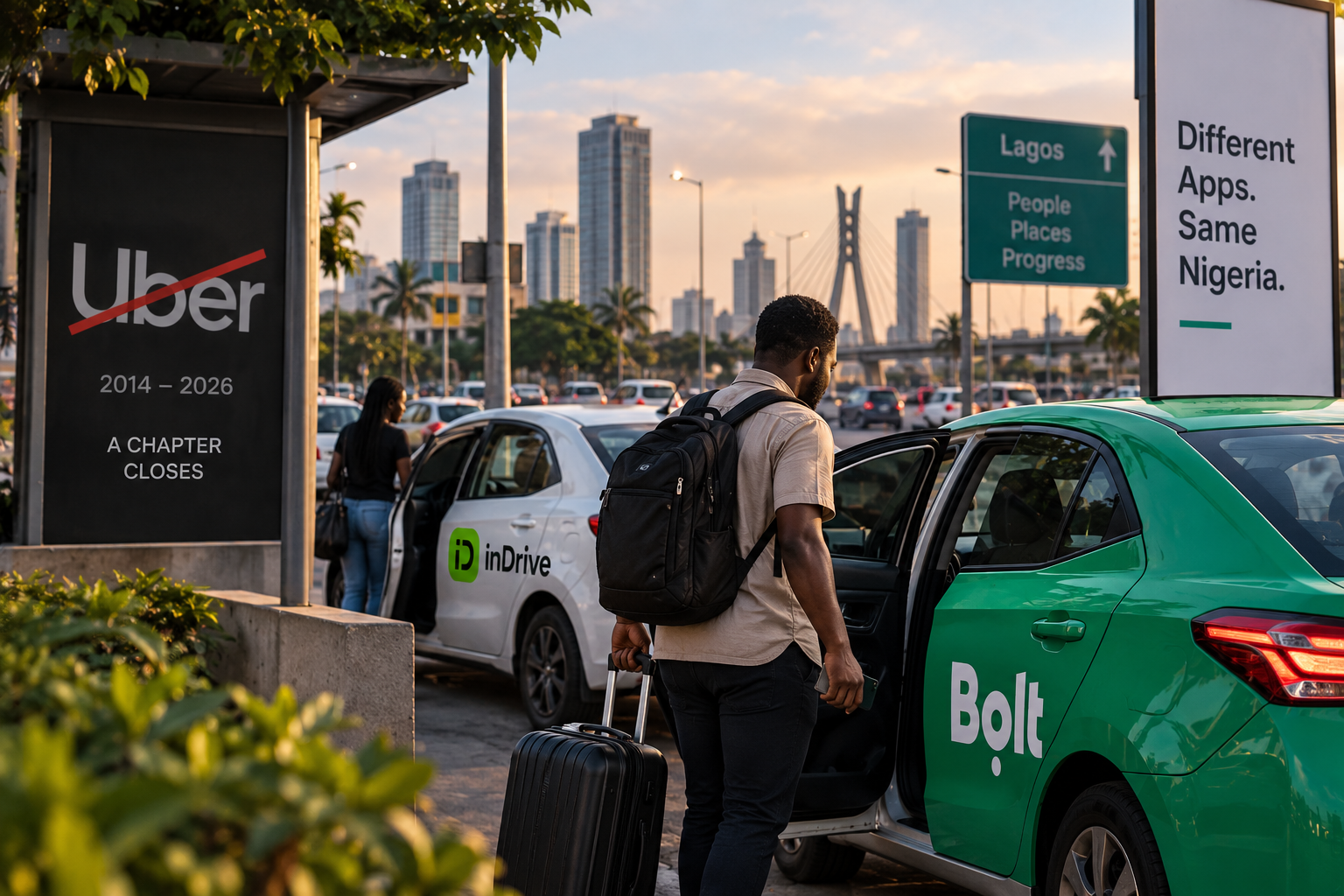
Uber first launched in Lagos in 2014 before expanding its presence to other Nigerian cities.
For more than a decade, the app became a familiar option for getting around cities, meeting up with friends, commuting to work and, importantly for travellers, getting to and from airports.
That routine has now changed.
Why did Uber leave Nigeria?
Uber Nigeria has not given a detailed Nigeria-specific explanation for its departure. Instead, the company said its decision followed a review of its evolving business priorities and investment focus across Africa.
That leaves room for wider industry pressures to be considered.
Nigeria’s ride-hailing market has been operating in a difficult economic environment, with rising fuel and vehicle-maintenance costs, inflation and currency volatility putting pressure on both drivers and platforms.
However, it would be wrong to say Uber officially blamed those factors for leaving. The company’s stated reason was its broader investment strategy.
The timing has also attracted attention because Uber’s exit came shortly after a dispute over ride-hailing operations at Nigerian airports, but Uber has specifically said its decision to leave Nigeria was not related to the recent Federal Airports Authority of Nigeria (FAAN) directive concerning e-hailing services at airports.
Is Uber still available in Nigeria?
Uber Nigeria stopped offering rides from September 2, 2026. That means travellers should no longer depend on the Uber app when planning transportation within Nigerian cities or when arranging a ride after arriving in the country.
Uber’s help centre will, however, remain available until September 23 for users who have outstanding account-related issues. So, if you still have an unresolved payment, account or other issue with Uber, there is a limited window to sort it out.
What Does Uber Nigeria’s Exit Mean for Travellers?
For travellers, the biggest change following the Uber Nigeria exit is not that ride-hailing has disappeared. It is that one of the major choices has disappeared
People who previously compared Uber and other apps before booking a ride will now have to rely more heavily on the remaining platforms.
That could affect how travellers compare:
- Ride prices
- Driver availability
- Waiting times
- Pickup locations
- Safety features
- Customer support
- Airport transportation options
For someone arriving in Nigeria for the first time, this makes it even more important to have a transportation backup instead of assuming that a familiar international ride-hailing app will work.
What can travellers use instead of Uber in Nigeria?
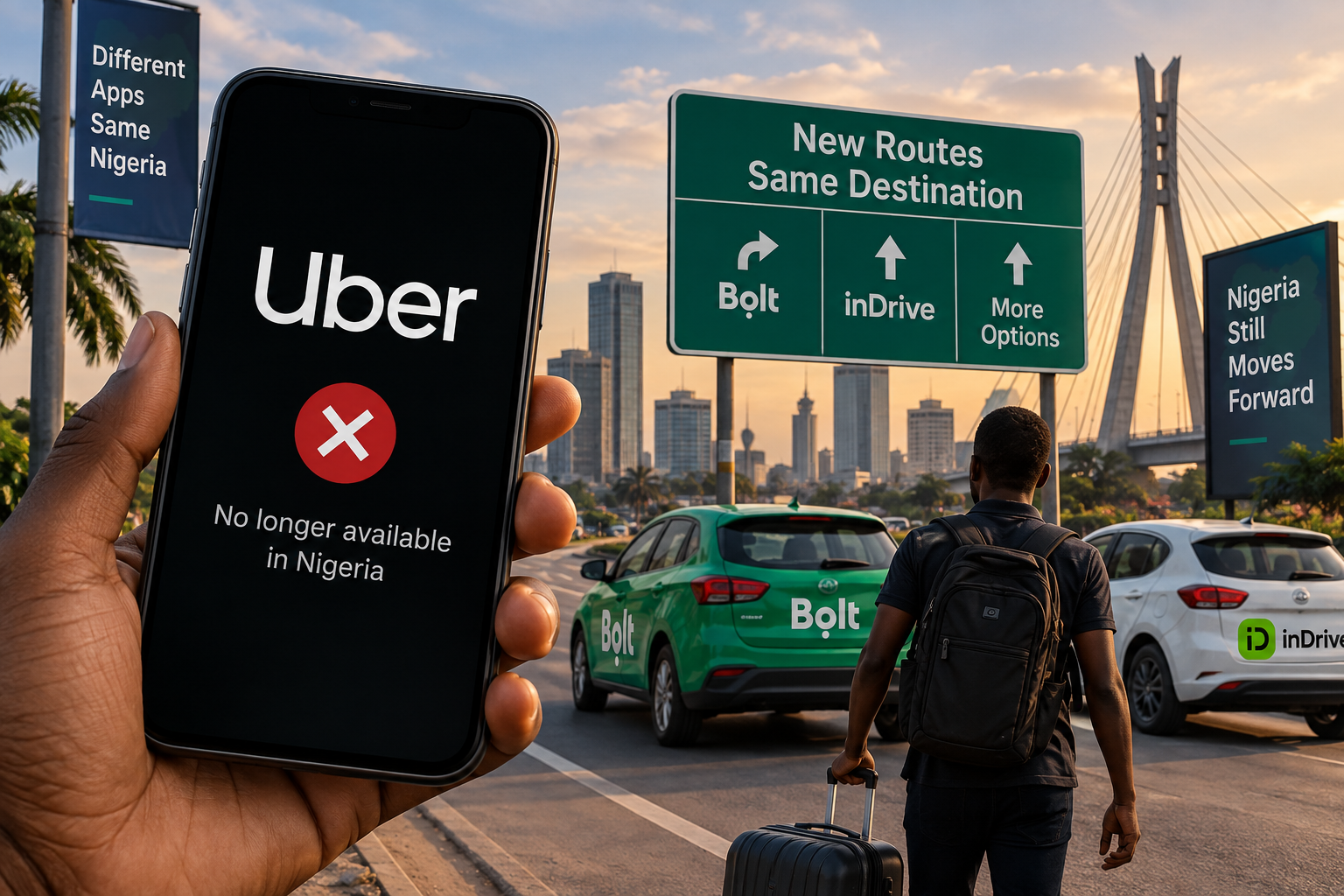
Even with Uber Nigeria gone, travellers still have options for getting around the country.
Bolt
Bolt is arguably the most obvious alternative for many former Uber Nigeria users. Bolt has said Nigeria remains an important market for the company and that it remains committed to operating in the country. That gives the platform an opportunity to attract some of the riders and drivers Uber has left behind.
inDrive
inDrive is another major option. Unlike platforms where the fare is generally determined automatically, inDrive allows passengers and drivers to negotiate the price of a trip.
The company has also reaffirmed its commitment to Nigeria following Uber’s departure and said it intends to continue investing in the market. Its services currently cover cities including Lagos, Abuja, Port Harcourt, Benin City, Ibadan, Owerri and Enugu.
Other local options
Travellers also have other mobility services to consider depending on the city they are visiting. Naysblog previously looked at several ride-hailing alternatives operating in Nigeria, including inDrive, Rida, MAX, SafeBoda and Shuttlers. Availability and coverage can change, so travellers should check which services currently operate in their destination city.
See Naysblog’s guide to ride-hailing alternatives in Nigeria
What about airport rides?
This is where the situation gets a little more complicated. In July, FAAN directed managers of airports under its management to stop commercial operations by Uber and Bolt pending the finalisation of licence agreements.
The decision triggered concerns about higher transportation costs for passengers. By August 27, Bolt had been cleared to resume operations at FAAN-managed airports following intervention by Aviation Minister Festus Keyamo.
Uber Nigeria, meanwhile, subsequently left the country. So travellers arriving at Nigerian airports should not expect to request an Uber ride. If they want to use a ride-hailing service, they should check the current pickup arrangements for the platform they intend to use.
This is particularly important because airport pickup rules can differ from ordinary city pickups.
Will Uber’s exit make rides more expensive?
It is too early to say. With one major competitor gone, other platforms have an opportunity to attract Uber’s former customers. That could encourage competition for riders through better prices, promotions or improved services.
But there is another side to the equation.
Ride-hailing companies are still dealing with the same economic pressures that affected the sector before Uber left. Fuel, vehicle maintenance and other operating costs remain important factors in determining what drivers can realistically earn.
So while competition could help travellers in the short term, there is no guarantee that fares will permanently become cheaper.
What happens to Uber drivers?
Uber’s exit also affects the drivers who depended on the platform. Some may move to competing ride-hailing services, increasing the supply of drivers available on those platforms.
In fact, the competition for Uber’s former drivers could become just as important as the competition for its riders. inDrive has already opened its platform to drivers and fleet owners affected by Uber’s departure.
For drivers, however, the question is bigger than simply finding another app.
They will be looking at fares, commissions, trip volumes, fuel costs and the overall earning potential of each platform. That could shape which companies ultimately benefit most from Uber’s departure.
What does Uber’s exit mean for Nigeria’s ride-hailing market?
The Uber Nigeria exit creates a new phase for Nigeria’s ride-hailing industry. For years, platforms competed for the same basic things: riders, drivers and market share.
Now, competitors have an opportunity to capture users who previously had Uber on their phones, but winning those users will not simply be about being the next available app.
Travellers want affordable and reliable rides. Drivers need an arrangement that makes economic sense. Platforms also have to deal with regulators, safety concerns and the rising cost of operating vehicles.
The company that manages to balance all three sides could emerge stronger from this transition.
What should travellers do now?

If you regularly travel around Nigeria, the Uber Nigeria exit means it is worth having a backup transportation plan.
Before your next trip:
- Download an alternative ride-hailing app before you need one.
- Compare fares rather than assuming one platform will always be cheaper.
- Check airport pickup rules if you are flying into or out of Nigeria.
- Keep a second option available, particularly when travelling late or arriving in an unfamiliar city.
- Check the service coverage of your preferred platform in the city you are visiting.
For international travellers, this is especially useful. Downloading and setting up an alternative app before landing can save time when you need a ride immediately after leaving the airport.
For travellers moving between African countries, transportation is only one part of the challenge, as we explored in our look at why travelling within Africa is still so difficult.
Conclusion
Uber’s departure does not mark the end of ride-hailing in Nigeria. If anything, it opens a new contest.
Bolt and inDrive now have a bigger opportunity to expand their customer bases, while other local mobility companies can try to take a larger share of the market.
For travellers, the real test will be whether that competition translates into better availability, reasonable fares and more reliable service. Uber may be out of Nigeria, but the race to move Nigerians and visitors around the country is far from over.