
The future of mobile money in Africa is being built on a strong foundation of rapid adoption, continuous fintech innovation, and increasing consumer trust. What began as a convenient way to transfer money has evolved into a comprehensive digital financial ecosystem supporting individuals, businesses, and governments.
Today, mobile money in Africa powers everything from utility bill payments and online shopping to salary disbursements, merchant payments, savings, insurance, and international remittances. As smartphone ownership and internet access continue to expand, digital payments are becoming part of everyday life across the continent.
According to GSMA’s mobile money industry reports, Sub-Saharan Africa remains the world’s largest mobile money market, accounting for the majority of registered mobile money accounts and a significant share of global transaction value. Experts believe the future of mobile money in Africa will depend on innovation, regulation, and increased consumer confidence.
This leadership underscores Africa’s role as a global hub for financial innovation. The future of mobile money in Africa will continue to shape financial inclusion, digital commerce, and economic growth across the continent as new technologies emerge.
Rapid Adoption Across the Continent
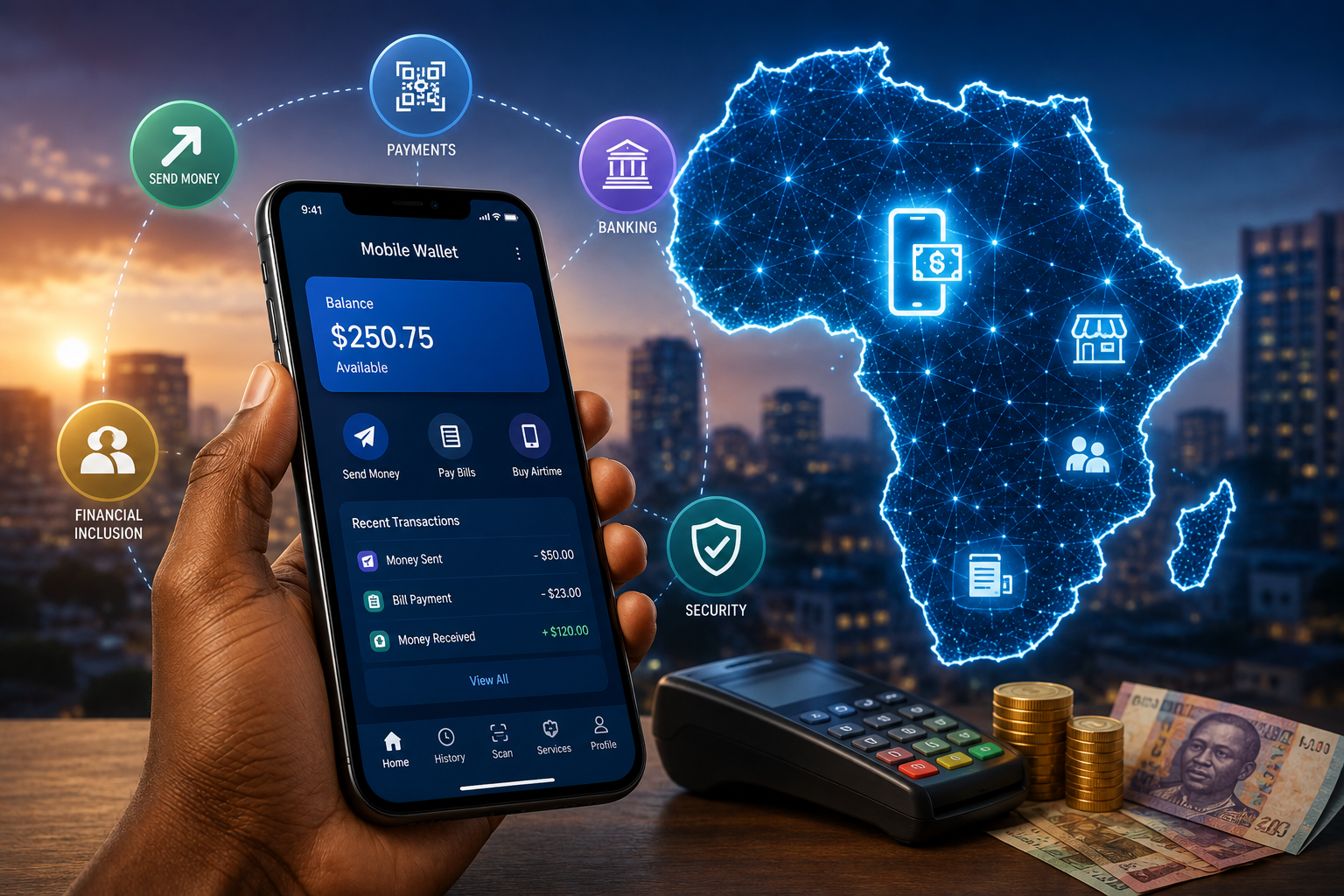
Rapid adoption is one of the strongest indicators that the future of mobile money in Africa is becoming a reality. Every new mobile money user contributes to the future of mobile money in Africa by expanding the continent’s digital economy.
The growth of mobile money has accelerated over the past decade due to several key factors:
- Increasing smartphone adoption.
- Improved mobile internet coverage.
- Affordable digital payment solutions.
- Government-backed financial inclusion initiatives.
- Rapid expansion of Africa’s fintech ecosystem.
Consumers are no longer using mobile money solely to send funds to family members.
Today, digital payment platforms support:
- Retail purchases.
- Merchant payments.
- School fee payments.
- Utility bills.
- Healthcare services.
- Government payments.
- Salary disbursements.
- Insurance premiums.
- Online subscriptions.
- International remittances.
This wider adoption reflects growing confidence in digital payments in Africa, while also creating new opportunities for businesses to serve customers more efficiently.
Leading Mobile Money Markets
Several African countries continue to shape the future of mobile money in Africa through innovation, supportive regulations, and strong consumer adoption.
These countries demonstrate how the future of mobile money in Africa is already taking shape.
Kenya
Kenya remains the benchmark for mobile money success across Africa. The success of M-Pesa transformed the country’s financial landscape by allowing millions of people to send money, pay bills, purchase goods, receive salaries, and access financial services directly from their mobile phones.
Today, mobile payments are deeply integrated into daily life, making Kenya one of the world’s most mature mobile money markets.
Nigeria
Nigeria has rapidly emerged as one of Africa’s largest fintech hubs. Innovative companies such as Flutterwave, Moniepoint, OPay, PalmPay, and Kuda continue expanding digital financial services for individuals and businesses.
With increasing smartphone adoption, agency banking, and strong investment in fintech, Nigeria is becoming one of the continent’s fastest-growing digital payment ecosystems.
READ MORE: 10 Common Email Scams to Watch Out for in 2026 (And How to Avoid Them)
Ghana
Ghana has built one of West Africa’s most successful cashless payment environments. Supportive financial regulations, strong telecom participation, and widespread merchant acceptance have encouraged millions of consumers to adopt mobile money for everyday transactions.
Digital wallets are now commonly used for paying bills, shopping, transferring money, and accessing financial services.
Tanzania
Tanzania has become a leader in payment interoperability. Consumers can increasingly transfer funds between different mobile money providers, creating a more connected and user-friendly payment ecosystem.
This interoperability improves convenience while encouraging healthy competition among service providers.
Uganda
Uganda continues expanding the capabilities of mobile money beyond basic transfers.
Many providers now offer:
- Savings accounts.
- Merchant payment solutions.
- Microloans.
- Utility bill payments.
- Business financial services.
These innovations are helping improve financial inclusion across both urban and rural communities.
South Africa
South Africa combines advanced banking infrastructure with a thriving fintech industry. Consumers increasingly rely on digital wallets, contactless payments, online banking, and mobile payment applications for everyday transactions. The country’s mature financial sector continues driving innovation that influences payment technologies across the continent.
Collectively, these markets provide a glimpse into the future of mobile money in Africa for other emerging economies.
Growth of Africa’s Fintech Ecosystem
Behind every successful mobile money platform is a rapidly expanding fintech ecosystem. African startups are attracting record levels of investment while developing innovative solutions tailored to local challenges. Continued fintech investment will play a major role in the future of mobile money in Africa.
Some of the fastest-growing areas include:
- AI-powered fraud detection.
- Embedded finance.
- Embedded payments.
- Digital lending.
- Payment gateways.
- Merchant payment platforms.
- Open banking.
- API integration.
- Cross-border payment infrastructure.
- Digital identity verification.
Rather than replacing traditional banks, many fintech companies are partnering with financial institutions to deliver faster, more accessible, and more personalized financial services. This collaboration is accelerating financial innovation while strengthening the future of mobile money in Africa.
As innovation accelerates, the future of mobile money in Africa will become even more connected and accessible.
10 Trends Transforming Mobile Money in Africa
The future of mobile money in Africa is not being driven by a single breakthrough. Instead, it is shaped by several technological, regulatory, and economic developments working together.
Artificial intelligence, digital banking, embedded finance, blockchain, and interoperable payment systems are transforming how people and businesses manage money.
Below are the ten trends expected to define the next phase of digital payments in Africa. Each of these trends is helping define the future of mobile money in Africa for consumers, businesses, and governments alike.
1. AI-Powered Payment Services
Artificial intelligence is becoming one of the most influential technologies in Africa’s fintech industry.
Rather than simply processing payments, AI now helps payment providers analyze transaction patterns, detect suspicious activities, automate customer support, and deliver personalized financial recommendations.
Modern payment platforms increasingly use AI to:
- Detect fraud in real time.
- Verify customer identities faster.
- Improve credit scoring for microloans.
- Recommend suitable financial products.
- Automate customer service using intelligent chatbots.
- Predict transaction risks before they occur.
For consumers, AI means quicker, safer, and more personalized financial services. For businesses, it reduces operational costs while improving customer satisfaction and fraud prevention.
As AI continues evolving, it will become a standard component of nearly every major mobile payment platform across Africa. Faster international transactions are becoming an essential part of the future of mobile money in Africa.
2. Faster Cross-Border Payments
Sending money across African borders has traditionally been slow, expensive, and complicated. Multiple intermediaries, currency conversion fees, and fragmented financial systems have long increased the cost of international transactions.
Fortunately, this is changing.
Regional payment initiatives, fintech innovation, and improved payment infrastructure are making cross-border transfers faster, cheaper, and more transparent. Initiatives such as the African Continental Free Trade Area (AfCFTA) are helping create a more integrated digital payments ecosystem across the continent.
These improvements benefit:
- Freelancers working with international clients.
- Importers and exporters.
- Small and medium-sized businesses.
- Families receiving remittances.
- Cross-border e-commerce merchants.
As interoperable payment systems continue expanding, businesses will find it easier to trade across African markets while consumers enjoy faster and more affordable money transfers.
3. The Rise of Digital Wallets
Digital wallets are quickly becoming the center of Africa’s digital financial ecosystem. What started as simple mobile wallets for storing and transferring money has evolved into comprehensive financial platforms that combine payments, savings, investments, insurance, and budgeting tools in one place.
Today, many users rarely need physical cash for everyday transactions.
Modern digital wallets allow users to:
- Send and receive money instantly.
- Pay utility bills.
- Shop online and in-store.
- Purchase airtime and data.
- Save money securely.
- Access microloans.
- Pay school fees.
- Manage multiple payment methods from one application.
For businesses, digital wallets also simplify merchant payments by reducing cash handling, improving transaction records, and enabling faster settlements.
As smartphone adoption continues to increase, digital wallets are expected to become the preferred financial hub for millions of Africans, further strengthening the future of mobile money in Africa. Digital wallets will remain one of the biggest drivers of the future of mobile money in Africa.
4. QR Code and Contactless Payments
Cashless shopping is becoming easier than ever thanks to QR code and contactless payment technologies. Instead of carrying cash or even a payment card, customers simply scan a merchant’s QR code or tap their smartphone to complete a payment within seconds.
This technology is becoming increasingly popular because it offers benefits for both businesses and consumers.
Some of those benefits include:
- Faster checkout experiences.
- Lower payment processing costs.
- Reduced cash handling.
- Improved transaction accuracy.
- Better financial record keeping.
- Enhanced customer convenience.
Unlike traditional card terminals, QR code payment systems are affordable and easy to deploy, making them especially attractive to small businesses and informal traders.
As more merchants adopt QR code technology, contactless payments will become a normal part of everyday commerce across Africa. QR technology is expected to play a significant role in the future of mobile money in Africa.
5. Greater Financial Inclusion Through Smartphones
One of the biggest reasons the future of mobile money in Africa remains so promising is its ability to bring financial services to people who have never had access to traditional banking.
Affordable smartphones and expanding mobile networks are enabling millions of Africans to participate in the formal financial system for the first time.
Today, users can:
- Open digital accounts.
- Save money securely.
- Receive salaries.
- Access microcredit.
- Buy insurance.
- Invest digitally.
- Build financial histories.
This is particularly important for rural communities, women, students, and small business owners who were previously underserved by conventional financial institutions.
For many Africans, a smartphone has effectively become their first bank branch. As mobile internet continues expanding, world bank financial inclusion will reach even more communities.
6. Stronger Cybersecurity and Fraud Detection
As digital payments continue growing, cybersecurity has become more important than ever. Cybercriminals constantly develop new tactics to exploit users through phishing emails, fake SMS messages, SIM swap attacks, identity theft, and fraudulent payment requests.
To stay ahead of these threats, mobile money providers are investing heavily in advanced security technologies.
Modern platforms increasingly use:
- Artificial intelligence for fraud detection.
- Multi-factor authentication.
- Biometric verification.
- End-to-end encryption.
- Behavioral analytics.
- Real-time transaction monitoring.
- Device verification.
Consumers also have an important role to play.
Simple habits like protecting PINs, enabling two-factor authentication, avoiding suspicious links, and verifying payment requests can significantly reduce the risk of fraud.
As security continues improving, user confidence in mobile money in Africa will continue to grow.
7. Mobile Money Integration With E-commerce
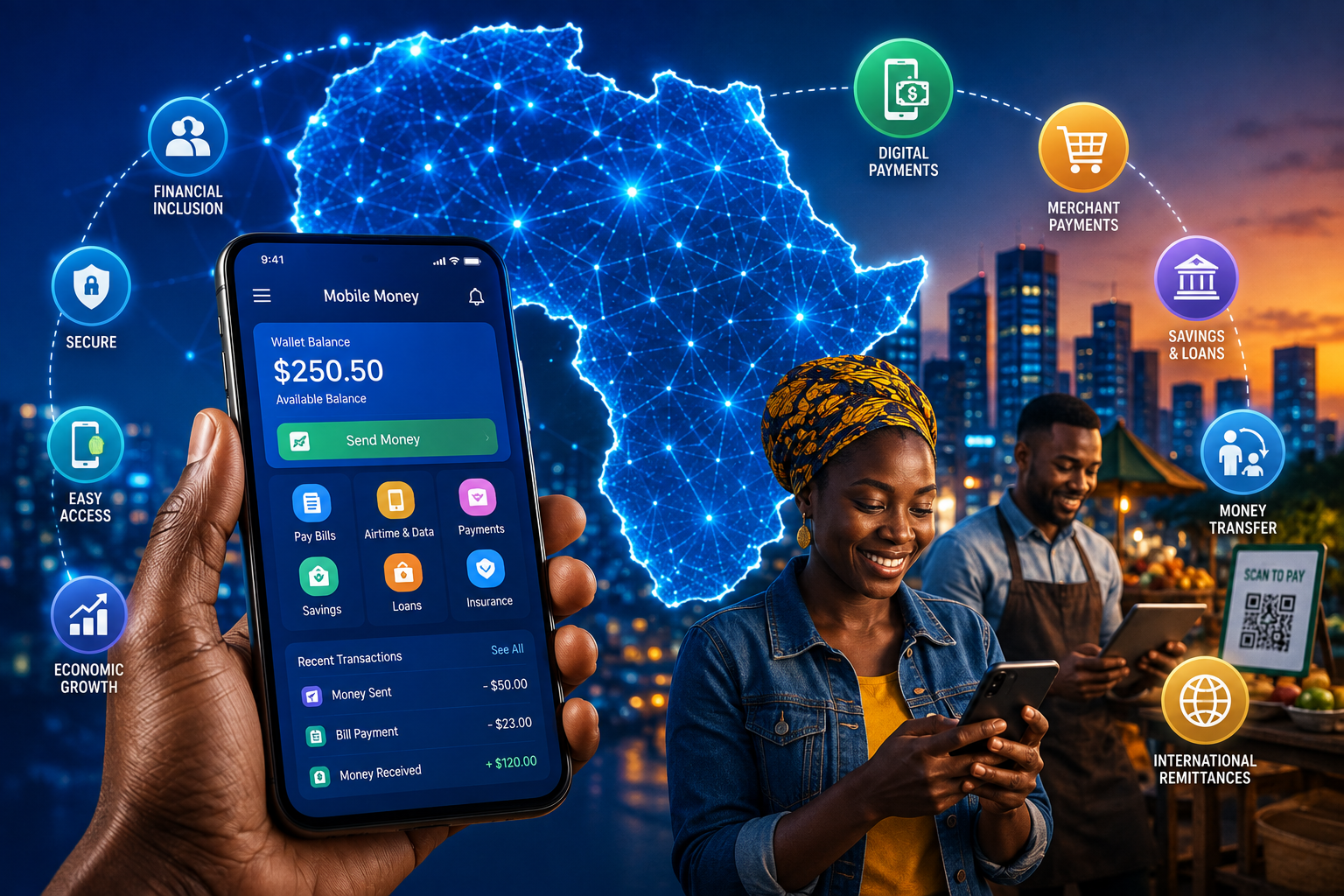
Africa’s e-commerce industry is expanding rapidly, and mobile money is playing a central role in that growth. Consumers increasingly expect to complete purchases quickly without needing debit or credit cards.
By integrating mobile money into online stores, businesses can offer customers a seamless checkout experience while reaching millions of previously underserved shoppers.
Benefits include:
- Faster payment confirmation.
- Higher customer trust.
- Lower cart abandonment rates.
- Better accessibility.
- Improved cash flow.
- Reduced payment processing delays.
For many online retailers, mobile money has become the preferred payment gateway because it aligns with how consumers already manage their finances.
As online shopping continues growing, the connection between e-commerce and digital payments in Africa will become even stronger.
8. Government Support for Cashless Economies
Governments across Africa increasingly recognize the economic benefits of digital payments. Cashless economies improve financial transparency, reduce the costs of handling physical cash, strengthen tax collection, and support financial inclusion.
Many governments now encourage citizens to use digital payment platforms for:
- Tax payments.
- Utility bills.
- School fees.
- Business registration.
- Transport services.
- Government permits.
- Social welfare payments.
Regulators are also introducing policies that encourage innovation while improving consumer protection and payment security.
As governments continue investing in digital infrastructure, the future of mobile money in Africa will benefit from stronger public-private collaboration.
9. Open Banking and Fintech Collaboration
The future of digital finance depends less on competition and more on collaboration. Banks, fintech startups, mobile network operators, and payment providers are increasingly working together through secure APIs and open banking frameworks.
This collaboration enables customers to enjoy:
- Faster account verification.
- Better payment integration.
- Personalized financial products.
- Easier access to loans.
- Improved financial management.
- More connected digital banking experiences.
Rather than replacing traditional banks, fintech companies are helping them modernize their services while expanding access to millions of new customers. The result is a stronger, more innovative financial ecosystem that benefits consumers, businesses, and governments alike.
Collaboration between banks and fintech companies will strengthen the future of mobile money in Africa.
10. Blockchain and Instant Payment Technologies
Blockchain technology is gradually finding practical applications within Africa’s payment ecosystem. Although blockchain is often associated with cryptocurrencies, its potential extends far beyond digital assets.
For mobile money providers, blockchain offers opportunities to improve:
- Transaction transparency.
- Payment security.
- Cross-border settlements.
- Digital identity verification.
- Instant settlement.
- Operational efficiency.
When combined with real-time payment infrastructure, blockchain can significantly reduce delays and costs associated with domestic and international transactions.
While widespread implementation will take time, blockchain technology is expected to become an important component of the future of mobile money in Africa, particularly as demand for faster and more secure digital payments continues to increase.
Key Trends at a Glance
| Trend | Impact | Main Beneficiaries |
|---|---|---|
| AI-powered payments | Faster transactions and improved fraud detection | Consumers, banks, fintech companies |
| Cross-border payments | Lower transfer costs and faster settlements | SMEs, freelancers, exporters |
| Digital wallets | Greater convenience and financial access | Everyday users |
| QR code payments | Faster retail transactions | Merchants and retailers |
| Financial inclusion | More people gain access to financial services | Rural communities and the unbanked |
| Cybersecurity | Safer digital transactions | All mobile money users |
| E-commerce integration | Seamless online shopping experiences | Online businesses and customers |
| Government support | Accelerated cashless adoption | Citizens and businesses |
| Open banking | Better financial products and innovation | Banks, fintech companies, consumers |
| Blockchain technology | Faster, transparent payment infrastructure | Cross-border businesses and payment providers |
How Businesses Can Prepare for the Future
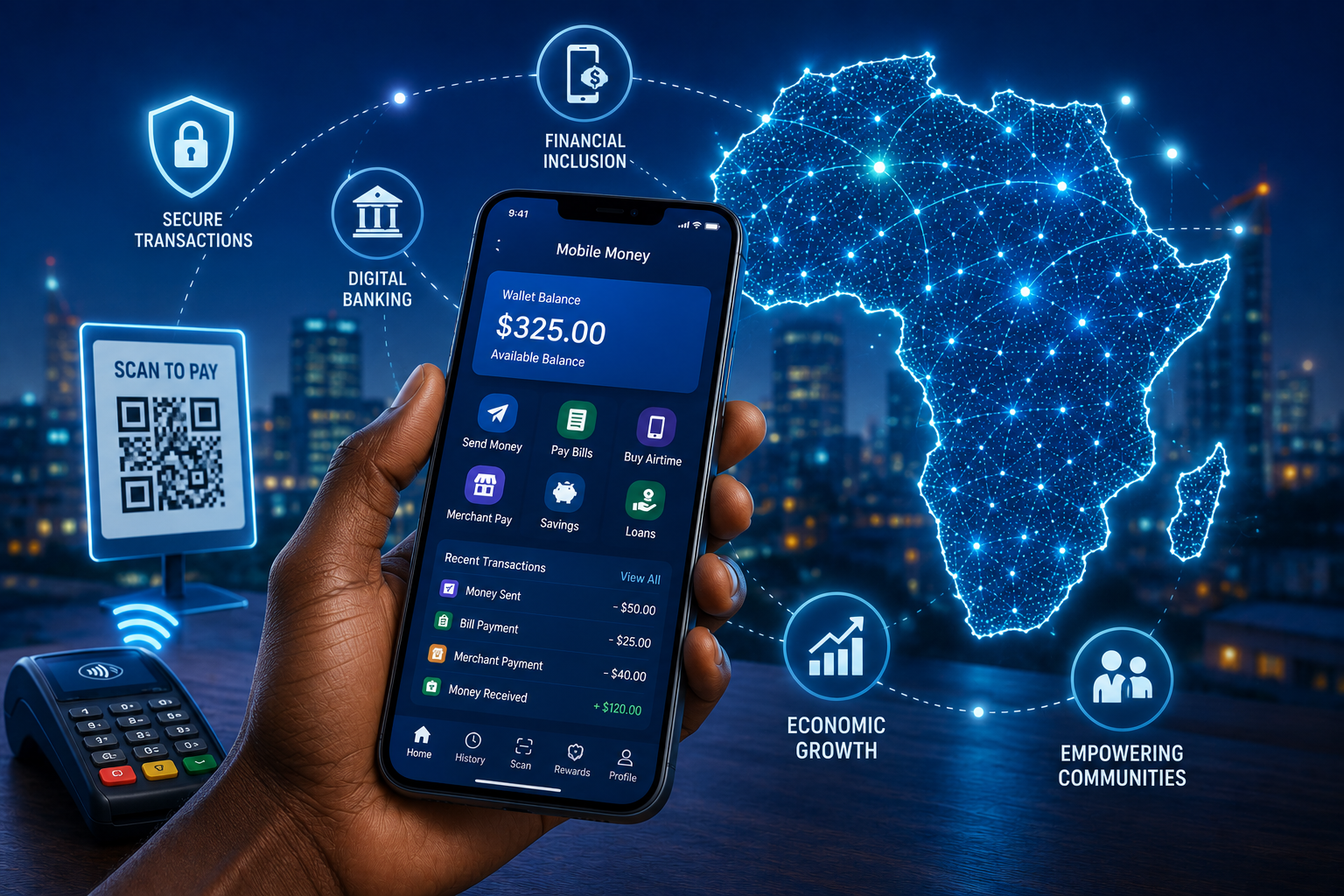
Businesses that understand the future of mobile money in Africa will be better prepared to compete in the digital economy. The future of mobile money in Africa presents enormous opportunities for businesses of every size.
Whether you run a small retail shop, an online store, a fintech startup, or a large enterprise, adapting to the changing payment landscape can improve customer experience, increase sales, and strengthen long-term growth.
The businesses that embrace digital transformation today will be better positioned to compete in tomorrow’s increasingly cashless economy.
Offer Multiple Digital Payment Options
Modern consumers expect flexibility when making payments. Limiting customers to cash or a single payment method can result in abandoned purchases and lost revenue. Flexible payment solutions are becoming a competitive advantage in the future of mobile money in Africa.
Businesses should consider accepting:
- Mobile money
- Digital wallets
- Bank transfers
- QR code payments
- Contactless payments
- Online payment gateways
Providing multiple payment options improves convenience while reaching a broader customer base.
Invest in Payment Security
Trust is one of the biggest factors influencing digital payment adoption. Customers are far more likely to complete transactions when they feel their financial information is protected. Strong security practices are essential to the future of mobile money in Africa.
Businesses should invest in:
- Secure payment gateways
- End-to-end encryption
- Two-factor authentication
- Employee cybersecurity training
- Fraud detection systems
- Regular software updates
A strong security strategy protects both customers and business reputation.
Use Data and Artificial Intelligence
Every digital transaction generates valuable business insights. When analyzed responsibly, payment data can help businesses better understand customer behavior and improve decision-making.
Artificial intelligence can help companies:
- Detect suspicious transactions.
- Predict purchasing trends.
- Personalize marketing campaigns.
- Improve inventory planning.
- Deliver better customer support.
- Automate routine financial processes.
Businesses that leverage AI will gain a significant competitive advantage as digital payments continue to evolve.
Prepare for Cross-Border Commerce
Africa’s digital economy is becoming increasingly interconnected. With initiatives such as the African Continental Free Trade Area (AfCFTA), businesses will find it easier to sell products and services across multiple African markets.
To prepare, companies should:
- Support multiple currencies where possible.
- Understand local payment regulations.
- Integrate cross-border payment solutions.
- Partner with trusted fintech providers.
- Optimize websites for international customers.
As cross-border payment systems improve, businesses that expand beyond their domestic markets will unlock new opportunities for growth.
Stay Updated With Financial Innovation
Technology is changing rapidly. Businesses that continuously monitor developments in mobile money in Africa will be better equipped to adapt to customer expectations and emerging market trends. Keeping pace with innovation ensures businesses remain part of the future of mobile money in Africa.
Areas worth watching include:
- Embedded finance.
- Open banking.
- Real-time payments.
- Digital identity verification.
- Blockchain applications.
- API-driven financial services.
- AI-powered financial automation.
Keeping pace with innovation today can prevent costly adjustments tomorrow.
READ MORE: World’s Largest Data Center: The Technology Powering AI, Cloud Computing, and the Internet
Conclusion
The future of mobile money in Africa is no longer a prediction—it is already transforming how millions of people live, work, and do business.
Artificial intelligence, digital wallets, QR code payments, real-time cross-border transfers, open banking, and blockchain technologies are reshaping Africa’s financial landscape at an unprecedented pace.
Beyond making payments more convenient, mobile money in Africa is driving financial inclusion, supporting entrepreneurship, expanding e-commerce, and accelerating the continent’s digital transformation. Millions of individuals who once lacked access to formal financial services can now save money, receive payments, access credit, and participate in the digital economy using nothing more than a mobile phone.
Challenges such as cybersecurity risks, digital literacy gaps, inconsistent internet connectivity, regulatory differences, and interoperability remain. However, continued investment by governments, financial institutions, telecom operators, and fintech companies is steadily addressing these barriers while creating a stronger and more inclusive financial ecosystem.
For businesses, the message is clear. Investing in secure digital payment solutions, embracing artificial intelligence, supporting multiple payment methods, and preparing for cross-border commerce will become essential for long-term competitiveness.
For consumers, adopting mobile money means greater convenience, faster transactions, improved financial security, and access to a growing range of digital financial services. Ultimately, the future of mobile money in Africa will depend on continued collaboration between governments, financial institutions, fintech innovators, businesses, and consumers.
As Africa continues to lead the world in mobile money adoption, the opportunities ahead are enormous. Organizations and individuals that embrace innovation while prioritizing trust, accessibility, and security will be best positioned to thrive in the next era of digital payments in Africa.
The future of mobile money in Africa is being written today, and it promises to reshape not only how money moves across the continent but also how businesses grow, communities prosper, and economies become more connected than ever before.